
President Donald Trump just turned drifting wildfire smoke into a trade weapon, and that should make every American who buys lumber, cars, or whiskey sit up straight.
Story Snapshot
- Trump tied toxic Canadian wildfire smoke to new tariffs on autos, alcohol, cheese, and more.
- He accused Canada of “willful negligence” in forest management and said U.S. taxpayers deserve compensation.
- Canadian leaders fired back with numbers and history, not insults, undercutting the blame game.
- The legal and economic ground under this tariff threat is far shakier than the rhetoric makes it sound.
Trump turns dirty air into a trade fight
President Trump’s Truth Social post did not dance around the issue. He claimed the United States was being “unnecessarily invaded by filthy, polluted, and unhealthy air” from Canadian wildfires and called this “willful negligence” that is “costing the United States Billions of Dollars.”
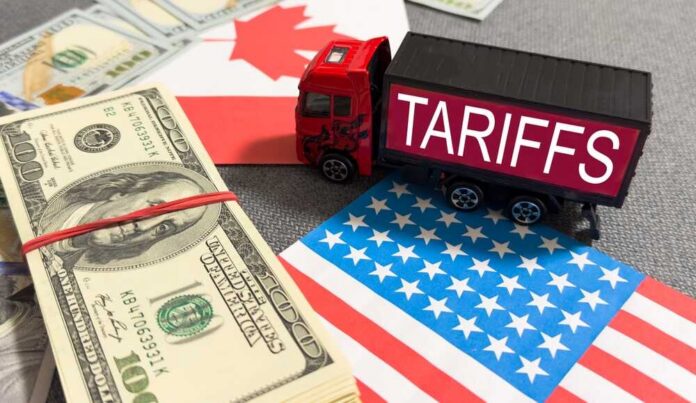
He argued that the “cost of this pollution must of necessity be added to the TARIFFS Canada is currently paying,” tying smoke directly to trade penalties on Canadian goods already under heavy fire.
That post landed on top of an existing trade war. Since 2025, Trump has used national security emergencies under the International Emergency Economic Powers Act to slap broad tariffs on Canadian imports, including 25 percent on most goods and 10 percent on energy.
By early 2026, the average effective tariff rate on Canadian products had already jumped to about 8.1 percent for U.S. buyers. The wildfire threat is not a fresh start; it is the third chapter in a long-running pressure campaign.
Congressional allies frame Canada as reckless
Trump’s words did not stand alone. Four Republican lawmakers sent an open letter to Canadian officials saying their “patience has run out,” blaming “chronic under-investment in forest thinning, fuel reduction, and prescribed burns” and warning that American lungs were “paying the price for Canadian inaction year after year.”
They even floated the idea of the United States taking direct control over cross-border wildfire protection if Ottawa did not change course. That is more than a policy debate; it is a sovereignty shot.
.@USTradeRep Ambassador Greer explains the tariffs on a set of Canadian imports: "They banned the sale of U.S. liquor and other booze on Canadian shelves. They capped and limited the amount of autos that could be shipped [from] the United States from companies who were reshoring… pic.twitter.com/cQrySGrv1L
— Rapid Response 47 (@RapidResponse47) July 21, 2026
U.S. Ambassador to Canada Pete Hoekstra backed the president’s line, saying he was “on the same page as the president” and confirming the administration was “seriously considering” more tariffs.
He highlighted the smoke’s impact on Michigan, pointing to business closures and damage to the tourism industry as proof of real economic harm. This frames tariffs as a kind of user fee: if Canadian policies raise costs for American workers and small businesses, Canada should help pay the bill.
Canada answers with facts, not apologies
Canadian leaders did not accept the “willful negligence” label. Prime Minister Mark Carney countered with a simple number: 12 billion Canadian dollars invested in forest sustainability and fire prevention since 2020, including aerial tanker fleets, ground crews, prescribed burns, and early detection systems.
That level of spending sits badly beside claims of “refused basic forest management,” and it directly challenges the idea that Ottawa is shrugging at American health.
TRUMP ANNOUNCES 50% TARIFFS ON BROAD RANGE OF CANADIAN GOODS
President Trump is escalating a trade fight with Canada. WWNN's Stacy Lyn reports:: “President Trump announced new 50% tariffs on a broad range of Canadian goods including wine, hockey equipment, furniture, clothing,…
— Worldwide News Network (@WorldwideNNX) July 21, 2026
Ontario Premier Doug Ford went further on camera, calling Trump’s accusations “ridiculous” and “a bunch of rubbish,” and reminding Americans that Canadian firefighters have crossed the border to help the United States in past fire seasons.
Natural Resources Minister Tim Hodgson said Canada would keep responding to cross-border emergencies by “working together instead of pointing fingers,” and flatly dismissed the tariff talk. From a common-sense lens, that response sounds more like a neighbor who shows up with a hose than one who lights matches.
Law, climate, and the limits of blame
The biggest problem for Trump’s position is not emotional; it is legal. Trade experts note there is no clear way in U.S. law to tariff a neighbor for air pollution from naturally occurring wildfires. Section 232 national security powers focus on specific goods, not weather.
A recent Supreme Court ruling already narrowed Trump’s emergency tariff authority, making creative new uses of these tools much harder to defend. Without a statute that covers cross-border smoke, this threat looks more like pressure than policy.
Scientists also push back on the core charge. Trump blames “not properly maintaining” forests and brushes off climate change, but fire researchers point to hotter, drier seasons as the main reason megafires are growing.
One report notes Canada’s boreal forest spans about 552 million largely uninhabited hectares, a scale that makes total management impossible. Controlled burns and thinning help near communities, but they cannot turn millions of wilderness acres into a manicured park. Blaming policy alone ignores the climate math.
Who really pays when tariffs follow the smoke?
History gives a clear warning. Earlier waves of Trump tariffs on Canadian steel, aluminum, lumber, and energy produced Canadian retaliation and higher costs for U.S. consumers. The Brookings Institution found average effective U.S. import tariffs jumped sharply between 2024 and 2026, with Canada hit much harder than before.
Every new percentage point on autos, alcohol, cheese, or building materials lands on American wallets in the form of higher prices and slower growth.
From a pocket-book view, the real test is simple: Do these tariffs fix the fire problem or just tax Americans more for groceries and home repairs? Canadian smoke will not stop at the border because Washington raises duties on Cheddar and pickup trucks.
Canada’s investment and cooperation record weakens the “willful negligence” story, and U.S. law does not clearly support a smoke tariff. When trade tools meant for security emergencies are stretched to cover the weather, the risk is that politics wins, but the American consumer loses.
Sources:
apnews.com, bbc.com, easternherald.com, youtube.com, en.thairath.co.th, congress.gov