When the Danube River dropped, it did not just reveal mud and rocks – it pulled a Nazi war fleet out of hiding.
Story Snapshot
- Record-low Danube water near Prahovo, Serbia, has exposed World War II German warships sunk in 1944.
- Many wrecks still carry explosives, posing real danger to boat traffic and local communities.
- The ships are part of a retreat operation by Nazi Germany’s Black Sea fleet as it fled the Soviet advance.
- Repeat droughts now turn this hidden graveyard into a warning about war, risk, and long-term costs.
A mighty river exposes a buried retreat
The Danube River is Europe’s second-longest river, and for decades it hid a secret war graveyard near the Serbian town of Prahovo.
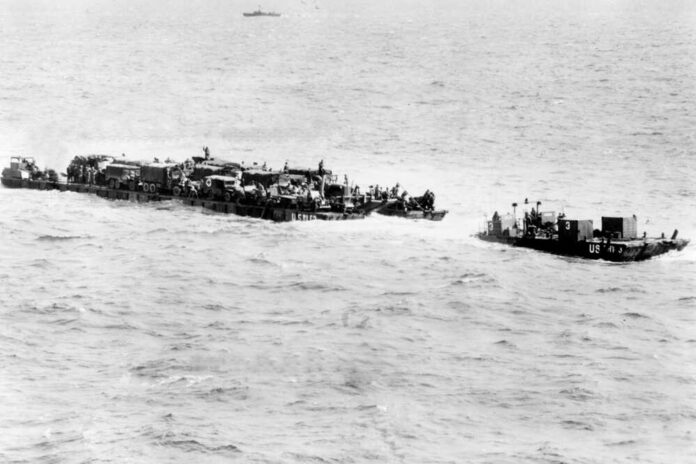
During late World War II, German naval forces scuttled, or sank on purpose, dozens of ships along this stretch as they retreated from the Soviet army. Historians say the goal was simple and ruthless: block the river, slow the enemy, and protect their own escape routes.
Dozens of German battleships from the Second World War have resurfaced along the Danube river, which separates Serbia and Romania.
Water levels have reached a record low due to the dry weather in Europe this summer.
Read more: https://t.co/xjNNcoerex pic.twitter.com/b1FK4MFTPy
— Sky News (@SkyNews) August 4, 2026
Recent summers have been dry and brutally hot across central and southeastern Europe. Water levels on the Danube dropped to some of the lowest recorded in almost a century.
As the river fell, rusted hulls, twisted steel, and gun turrets pushed up through the surface near Prahovo. Residents who once fished above a flat brown current now walk past the skeletons of warships that once carried Nazi weapons.
Warships full of explosives in a working river
The ships are not harmless relics. Many still hold ammunition and explosives that never went off. When a river runs high, those dangers sit out of sight. When the river shrinks, jagged metal and hidden munitions crowd the navigation channel.
Local boat captains must thread narrow paths between wrecks, and cargo traffic that feeds Europe’s economy slows or reroutes. That risk is not abstract; these are live hazards in a river that moves fuel, grain, and people.
Authorities and engineers now treat the wreck field as both a historic site and a live engineering problem. Serbia, with support from the European Union, has begun a major effort to clear many of the most dangerous vessels.
Salvage teams must map each wreck, stabilize it, remove or neutralize explosives, and then either raise it or cut it apart. Every step costs money, time, and risk to divers and workers. That bill lands on today’s taxpayers, not the regime that caused the mess.
A war decision that sends the bill 80 years later
Scuttling those ships in 1944 looked like a short-term military tactic for Nazi Germany. Block the Danube, buy a little more time, and push a problem onto whoever comes next. Eighty years later, farmers, barge operators, and families in Serbia still live with that choice.
This is what war often does: it moves costs from the battlefield into the future, where people who never touched a rifle still pay in cash, safety, and lost opportunity.
When leaders make reckless decisions, they rarely pay the full price. Ordinary people do. Today’s European projects to clear the wrecks show huge public spending to fix a danger created by a dictatorship that mocked restraint and property rights.
That should make modern voters skeptical whenever officials treat long-term damage as “someone else’s problem down the line.” History shows that “someone” is usually your grandchildren.
Drought, climate, and the stories we choose to tell
Many outlets frame these rising wrecks as a climate story: drought, heatwaves, and record-low rivers exposing history. That frame is not wrong; repeated low-water years make the wrecks visible again and again.
Scientific reports link more frequent extreme heat and drought in Europe with a warming climate. But the steel hulls in the Danube remind us that human choices, not just weather, decide how dangerous nature’s swings become.
Low rivers hurt shipping and tourism all by themselves, yet the danger multiplies when the riverbed holds live explosives, sunken metal, and toxic fuel. The Danube near Prahovo now forces a double conversation.
One is about how to handle changing weather with better planning and stronger infrastructure. The other is about how we keep bad political decisions from turning natural stress into full-blown crisis eighty years later.
Memory, warning, and what to do next
For locals, the wrecks are not just news images; they are part of the landscape. People watch old German ships rise and sink back again as the seasons change. Some see them as grim monuments to a defeated regime. Others see them as proof that the river can no longer be taken for granted.
As more hulls come into view along the Danube in Serbia, Croatia, and Hungary, governments face pressure to catalog, secure, or remove them before accident turns into tragedy.
The facts are clear enough. Nazi Germany scuttled a fleet in the Danube to serve its retreat. Drought and low water now pull those warships back into view.
Explosives and metal in a busy river threaten lives and trade today. The lesson is not abstract. When a society lets reckless power write checks on the future, its children will be the ones forced to cash them.
Sources:
apnews.com, cnn.com, chosun.com, instagram.com, hungarianconservative.com, facebook.com, euronews.com, aljazeera.com