

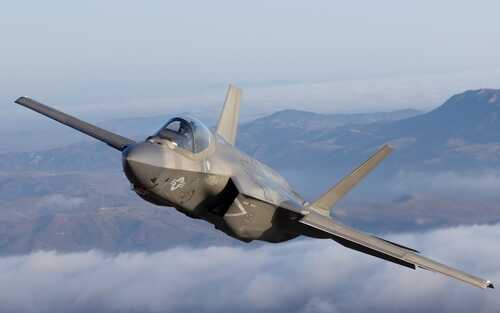
NATO fighter jets shot down an unauthorized drone over Lithuania just after midnight, and the message could not be louder.
Story Snapshot
- Italian jets on NATO duty downed a drone near Pratkūnai, Lithuania.
- Lithuania says it likely crossed in from Belarus, with no injuries reported.
- NATO’s air command in Germany coordinated the scramble and intercept.
- Officials called it a first-of-its-kind moment for the Baltic air defense mission.
What Happened, Where, and Who Made the Call
Lithuania reported a drone entered its airspace shortly after midnight on September 15. Lithuanian President Gitanas Nausėda said NATO jets destroyed it after it crossed the border, with the intercept occurring near the village of Pratkūnai, not far from Kaunas.
The Lithuanian national crisis management center said the aircraft likely came from Belarus. A NATO official said two Italian Eurofighters scrambled from Šiauliai Air Base and carried out the shootdown under alliance air defense procedures.
NATO jets down drone in Lithuanian airspace after bloc warns strikes will drive support for Ukraine https://t.co/W1hK56U6z7 pic.twitter.com/IYRtPnQYZp
— New York Post (@nypost) September 15, 2026
NATO’s Combined Air Operations Centre in Uedem, Germany, coordinated the response, according to allied briefings cited in contemporaneous reports.
The Italian Ministry of Defense said the crews intercepted and neutralized the unmanned aircraft in line with NATO procedures.
Estonian Foreign Minister Margus Tsahkna described the downing as a first for the newly upgraded Baltic Air Defense mission, underscoring the significance for the region’s layered security. No injuries or damage were reported on the ground after the drone came down.
Why This Intercept Matters Now
This intercept lands in the middle of a season of drone incursions that have raised tensions across the northern flank.
Since spring 2026, military drones have strayed into the airspace of Finland, Estonia, Latvia, and Lithuania, sometimes as spillover from strikes in Russia’s Baltic region, and sometimes amid electronic warfare that scrambles navigation links.
Lithuania and its neighbors have pressed allies to shift from simple air policing to fuller air defense, and this shootdown shows that shift taking hold in real time.
Leaders also linked the episode to a pattern of risk-taking near NATO’s borders. Outlets reported calls to keep air defenses primed and to treat unauthorized drones as a serious test of resolve.
That view fits a reading of national defense: protect borders, act fast, and send clear signals. A drone that lingers for half an hour over allied terrain is not a curiosity; it is a trial balloon. The right answer is readiness backed by action.
The Timeline, From Radar Track To Debris
Reports place the drone inside Lithuanian airspace for roughly thirty minutes before the intercept near Pratkūnai. Lithuanian authorities logged the engagement at about 01:19 local time on September 15, marking the decisive moment when the Italian Eurofighters executed their orders.
Reuters and the BBC both cited Lithuanian officials who confirmed the airspace breach and the destruction of the drone by NATO jets. The origin remains under investigation, with Lithuanian statements stressing a likely crossing from Belarus but no final attribution yet.
🚨 NATO fighter jets have shot down a drone over Lithuania—a first for the Baltic ally.
Two Italian Eurofighter Typhoons scrambled under NATO command overnight and destroyed the drone roughly 60 miles from Vilnius. Lithuanian officials say it most likely entered from Belarus and…
— Erik Hoffmann (@TheErikHoffmann) September 15, 2026
The command chain followed standard alliance lines. The jets launched from Šiauliai Air Base, where allies rotate air policing duties. The Combined Air Operations Centre oversaw the engagement, ensuring tight rules and clear authority.
Breaking Defense reported that Italy’s Ministry of Defense affirmed compliance with alliance procedures during the intercept. That matters for deterrence.
Procedures turn quick action into trusted action. Adversaries hear that message when the jets take off, not only when the debris hits the ground.
What Comes Next For The Baltics
Expect more integration of sensors, faster scrambles, and firmer engagement thresholds along the eastern flank. Recent incursions have pushed Baltic leaders to argue for denser radar nets and better counter-drone tools to close gaps under the lowest flight levels.
This event will strengthen that case. The region’s goal is simple: detect sooner, decide faster, and deny any gray-zone actor time to probe defenses. One clear intercept builds confidence, which discourages the next test.
Sources:
foxnews.com, ilfoglio.it, breakingdefense.com, reuters.com, wfmd.com, news.err.ee, euronews.com