
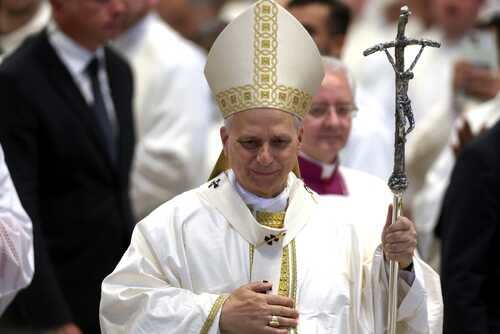
At Lourdes, a shrine famous for healing, Pope Leo XIV warned that ending life is not care but “false compassion.”
Story Snapshot
- Pope Leo XIV denounced assisted dying as immoral “false compassion.”
- He spoke at Lourdes before a large crowd, including many sick pilgrims.
- He tied the message to human dignity and care for the vulnerable.
- France’s assisted-dying push forms the backdrop to the debate.
A clear moral line drawn at a place known for cures
Pope Leo XIV told pilgrims at Lourdes that human dignity does not fade with illness or age. He said, “What is legal is not necessarily moral,” and called medically assisted death a temptation to “cause death under the guise of false compassion.”
He delivered the message during a public Mass in the shrine’s prairie, where many in wheelchairs gathered to pray. The setting mattered; Lourdes is linked to care, cures, and hope for the sick.
The pope’s remarks stressed a duty to care, not to end life. He urged health workers and families to stand with the suffering and to reject shortcuts that treat death as therapy. He repeated core Catholic teaching that each person has inviolable worth from conception to natural death.
Pope Leo XIV criticized the legalization of medically assisted dying, calling it immoral and an example of "false compassion" during a visit on Sunday to Lourdes, the Catholic shrine in France associated with miraculous cures of the sick.
https://t.co/RKJ7axZh2A— CBS News (@CBSNews) September 27, 2026
Lourdes as stage and symbol for the dignity claim
Lourdes draws millions who seek healing and peace. The shrine’s history makes it a potent stage for this message. A sermon against assisted dying lands differently when wheelchairs ring the altar.
The crowd, estimated in media accounts at well over one hundred thousand, included volunteers who bathed and fed the sick that weekend. The visual answer to “false compassion” sat right there: people choosing to serve the weak, day after day, at personal cost.
That visible service sharpened one line of his appeal: do not measure a life by pain or productivity. The Church teaches that sickness never cancels a person’s claim on our care. Ending a life to end suffering crosses a line that medicine exists to hold.
The pope praised those who provide palliative care and family support. He warned that systems which make death an option can nudge the lonely, the poor, and the disabled toward it. That is not neutral policy; it forms culture.
France’s policy push and the split between people and professionals
The pope spoke as France moves toward legal assisted dying. Lawmakers advanced a bill this summer and cited wide public support. A recent survey reported large majorities favor some end-of-life option under rules.
Supporters say the change offers autonomy and a regulated path for rare, hard cases. Critics argue that the right answer is better hospice and palliative care so no one feels pressed to choose death out of fear or isolation.
Medical voices in palliative care show deeper caution. A national consultation reported that most palliative care stakeholders opposed legal change. Their daily work centers on pain control, spiritual care, and family support. Many warn that once the state endorses ending life, subtle pressure follows.
Insurance tables notice. Hospital beds turn over faster. Families get told there is a “pathway.” The science of relief already exists. The question is will and funding, not a lack of tools.
“False compassion” names care that looks kind but cuts corners. It removes the sufferer instead of the suffering. Most people know the difference when they sit at a bedside. Real compassion shows up, holds hands, and fights for comfort, clarity, and time. It does not rush the clock.
Leo’s line also defends trust. Patients must believe a nurse aims to heal, a doctor to relieve. Blur that duty and fear creeps in. Once trust cracks, medicine loses its soul.
Pope Leo XIV criticized the legalization of medically assisted dying, calling it immoral and an example of "false compassion" during a visit on Sunday to Lourdes, the Catholic shrine in France associated with miraculous cures of the sick.
https://t.co/RKJ7axZh2A— CBS News (@CBSNews) September 27, 2026
Policy will keep grinding forward. The pope’s task was different: put a stake in the ground at a place that believes in miracles. Lawmakers can count votes. Leaders must guard meaning.
The better test is simple and old: Will the most fragile be safer, more loved, and never feel like a burden? If not, the label “compassion” rings hollow. Lourdes offered the counter-vision in plain sight—care that does not quit, even when cure is out of reach.
Sources:
abcnews.com, americamagazine.org, 2news.com, audacy.com, reuters.com