

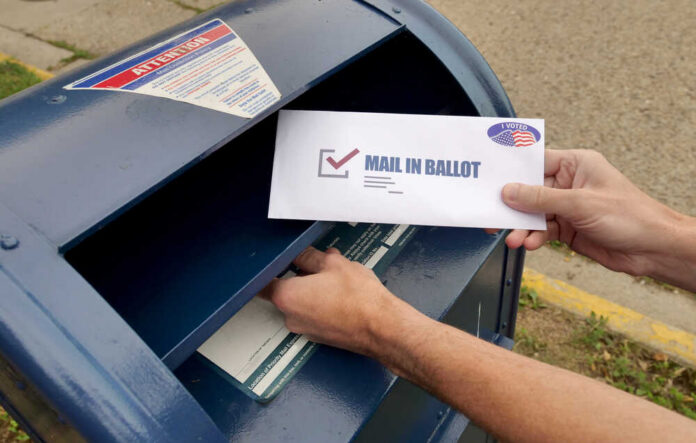
A federal appeals panel slammed the brakes on the Justice Department’s rush to sideline about 20,000 California ballots, but left the core fight very much alive.
Story Snapshot
- The Justice Department targeted roughly 20,000 ballots tied to likely noncitizens and sought to set them aside.
- The Ninth Circuit held a rare Sunday hearing, then dismissed the appeal on procedural grounds.
- The panel said the lower court must get a real chance to rule first; no merits decision yet.
- One judge dissented, signaling the emergency claim had some traction.
What the Court Actually Did, Not What the Headlines Suggest
The United States Court of Appeals for the Ninth Circuit did not decide if California wrongly handled ballots. The court said it lacked jurisdiction because the district judge had not ruled on the emergency request yet. That means no final answer on the lawfulness of the ballots or the process. The case now returns to the district court for first crack at the dispute. The Ninth Circuit acted on timing and procedure, not on who is right about the ballots.
The Department of Justice had asked to segregate and not count more than 20,000 mail ballots flagged as linked to people the federal government believed were likely noncitizens. That is a blunt tool. It affects many ballots at once and does so before a voter-by-voter check. The government pointed to an urgent need as ballots arrived daily. The appeals court focused on whether the lower court got a fair window to act and said it did not, at least not yet.
Why the Emergency Push Fell Short
The panel stressed process. The judges said the Justice Department moved in a way that limited the trial court’s ability to weigh facts and law before the appeal. Reports indicate the court viewed the rush as partly self-made. Courts often avoid changing election rules close to voting. That is common sense: last-minute orders confuse voters and officials. The government’s delay made its own ask harder to grant on appeal, especially before any trial judge ruled.
California officials pushed back hard. State lawyers and local election leaders said the federal ask would upend counting and cast doubt on lawful votes. California Attorney General Rob Bonta called the federal filing an attempt to jump past normal court steps. The Ninth Circuit’s two-judge majority agreed on the narrow point that the district court should go first. Judge Patrick Bumatay dissented, signaling concern that the claimed harm might justify quicker appellate action.
The Evidence Question Still Hanging Over the Case
The reporting does not reveal the list, the data-matching rules, or the error rates used to flag about 20,000 voters as likely noncitizens. Without that, outsiders cannot judge how many names are wrong, how many people became citizens, or whether typos drove the matches. That gap matters. A large group flag can hide many false hits. A court will likely ask for the method, the sources, and a sample audit. Precision, not headlines, should decide which ballots count.
𝟗𝐓𝐇 𝐂𝐈𝐑𝐂𝐔𝐈𝐓 𝐓𝐎𝐒𝐒𝐄𝐒 𝐃𝐎𝐉 𝐁𝐈𝐃 𝐓𝐎 𝐅𝐋𝐀𝐆 𝟐𝟎,𝟎𝟎𝟎 𝐒𝐔𝐒𝐏𝐄𝐂𝐓𝐄𝐃 𝐍𝐎𝐍𝐂𝐈𝐓𝐈𝐙𝐄𝐍 𝐁𝐀𝐋𝐋𝐎𝐓𝐒 𝐈𝐍 𝐂𝐀𝐋𝐈𝐅𝐎𝐑𝐍𝐈𝐀—𝐍𝐄𝐖𝐒𝐎𝐌 𝐂𝐇𝐄𝐄𝐑𝐒
The Trump Justice Department wanted a federal appeals court to force California to set aside… pic.twitter.com/KSvdBpt9lw
— M.A. Rothman (@MichaelARothman) October 27, 2026
Conservative values point to two duties at once: count every legal vote and count only legal votes. Both require careful process. A mass set-aside can protect integrity if accurate, but it can also sweep in citizens if sloppy. The smarter path is speed with proof: show the list logic, test its accuracy, and let a judge order targeted fixes. That thread-the-needle approach avoids chaos while honoring the law’s bright line against noncitizen voting and the voter’s right to be heard.
What Happens Next and What To Watch
The district court will now decide whether to grant temporary relief, likely on a fast track. Expect the judge to probe the government’s authority to direct state ballot handling and to demand hard evidence that the flagged voters are truly ineligible. Watch for a tighter remedy, such as segregating only ballots linked to verified ineligible voters after a quick check, rather than freezing a whole bucket. Also watch whether the dissent’s concerns shape any renewed appeal after a trial-court ruling.
The political noise will treat the dismissal as a win or loss. The legal reality is simpler. The appeals court reset the order of operations and told everyone to use the front door. The Justice Department must now prove its case with specifics. California must show its process protects both lawful votes and election integrity at scale. The clock is ticking, but speed without accuracy is a shortcut to error—and error is the one thing elections cannot afford.
Sources:
cbsnews.com, politico.com, edition.cnn.com