

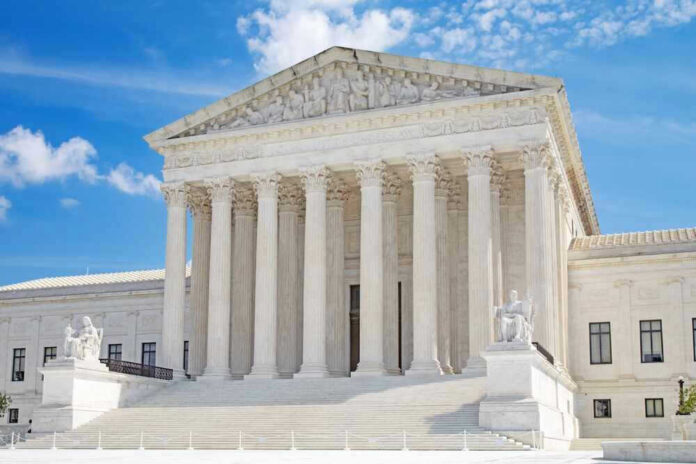
The Supreme Court may soon bolster presidential power, dismantling a precedent that has safeguarded independent agencies for decades.
Key Points
- Conservative justices support Trump’s dismissal of an FTC member, challenging a 90-year-old precedent.
- This decision could redefine presidential powers, affecting the autonomy of independent agencies.
- The case tests the balance between executive authority and legislative protections.
Supreme Court’s Stance on Presidential Authority
Conservative justices on the U.S. Supreme Court are signaling support for President Trump’s decision to dismiss FTC member Rebecca Slaughter. This move challenges the longstanding Humphrey’s Executor v. United States ruling, which has limited presidential powers over independent agencies since 1935.
The court’s 6-3 conservative majority suggests a favorable outcome for Trump, as the justices appear inclined to view the precedent as outdated, potentially paving the way for expanded executive authority.
CNN: Supreme Court appears ready to side with Trump on power to fire independent regulators pic.twitter.com/4fFkppEjdq
— OSZ (@OpenSourceZone) December 8, 2025
Implications for Independent Agencies
If the court overturns or narrows this precedent, it could significantly enhance presidential control over independent agencies. These entities, protected by tenure laws, have historically operated free from direct political interference.
Critics argue that such a shift would lead to unchecked presidential power, allowing future presidents to reshape these agencies based on political agendas rather than expertise. This prospect alarms those who value the separation of powers and the independence these agencies have maintained throughout U.S. history.
Meanwhile, liberal justices caution against the potential for excessive executive power, arguing this change could undermine the nonpartisan nature of decision-making in crucial areas like the FTC and other significant bodies.
The Broader Impact on Government Structure
As the Trump administration pushes for more control over the executive branch, the Supreme Court’s decision in this case could redefine the boundaries of presidential authority.
The implications extend beyond the FTC, possibly affecting entities like the Federal Reserve and the National Labor Relations Board. This shift challenges the long-held belief that certain government functions should remain insulated from political influence, preserving their objectivity and effectiveness.