

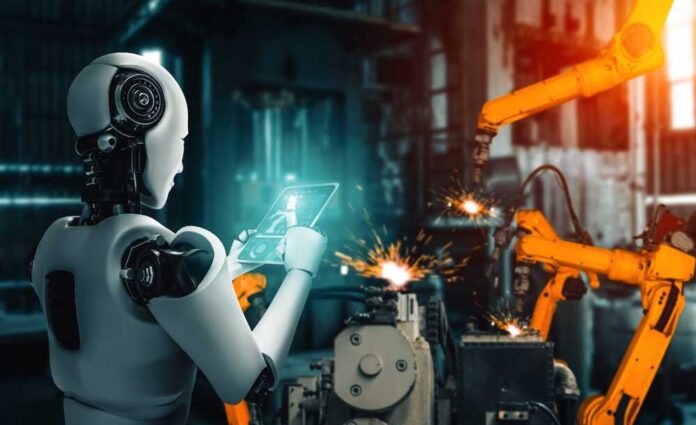
A new wave of AI-driven automation threatens to obliterate white-collar jobs, leaving many Americans concerned about their future.
Story Snapshot
- AI is primarily targeting repetitive, digital white-collar jobs.
- Mike Rowe, a well-known advocate for skilled trades, argues that these jobs are less vulnerable to AI threats.
- There is a growing demand for skilled trades amidst AI disruptions.
- Industry leaders note significant labor shortages in trades, highlighting a shift in job security.
Mike Rowe’s Warning on AI and White-Collar Jobs
Television host and skilled-trades advocate Mike Rowe recently highlighted the growing threat that artificial intelligence poses to white-collar jobs. Speaking on FOX Business’ “Varney & Co.,” Rowe pointed out that repetitive, digital jobs in fields such as finance, marketing, and administration are at risk.
This contrasts with skilled trades like welding and plumbing, which remain relatively safe because they rely on human dexterity and judgment.
Rowe’s message reflects a broader concern shared by many Americans who have witnessed the rapid adoption of AI across various industries. With corporate America increasingly turning to AI for efficiency, the job market is experiencing significant shifts. As these technologies streamline operations, they also displace entry-level office roles, raising fears of a “white-collar bloodbath,” as some industry analysts describe it.
The Growing Demand for Skilled Trades
Even as AI disrupts office jobs, the demand for skilled trades continues to surge. Companies in sectors like automotive and maritime are facing acute shortages, with estimates suggesting a need for hundreds of thousands of workers. Rowe’s advocacy for vocational training aligns with these industry needs, highlighting an opportunity for those willing to pursue these careers. Despite the challenges, Rowe remains optimistic about the role of trades in the modern economy.
Mike Rowe: “Learn to code, they said.”
“Now AI’s coming for the coders.”
“The workers least likely to be disrupted by AI are welders and electricians and steamfitters and pipefitters and energy workers.”
“For the last 40 years … we have promoted [4-year colleges] at the… pic.twitter.com/Rwzd8adifl
— Holden Culotta (@Holden_Culotta) January 26, 2026
The mikeroweWORKS Foundation, spearheaded by Rowe, plays a crucial role in addressing these labor shortages. By providing scholarships and promoting vocational education, the foundation seeks to fill gaps left by decades of declining trade enrollment.
This aligns with Rowe’s vision of balanced workforce development, emphasizing the importance of skilled labor alongside traditional academic paths.
Impact on the American Workforce
The implications of AI’s rise are profound, affecting both short-term job stability and long-term career prospects. While white-collar professionals face layoffs and stagnant wages, trades workers find themselves in high demand, gaining leverage in the job market.
This shift underscores the need for a national reevaluation of “safe” job paths, challenging societal norms that have long favored college degrees over vocational training.
Economically, the expanding demand for trades could alleviate some pressures caused by AI-induced disruptions. Politically, there is a growing focus on workforce development policies that emphasize practical skills and a work ethic.
As Rowe noted, the crisis is not just technological but also cultural, requiring a renewed commitment to training and education that prepares Americans for the realities of a rapidly evolving job market.
Sources:
Mike Rowe Warns AI Will Crush White-Collar Jobs
Mike Rowe Warns AI Will Hit White-Collar Workers Hardest, Welders Safe for Now
Mike Rowe Warns of Real Crisis in Workforce