
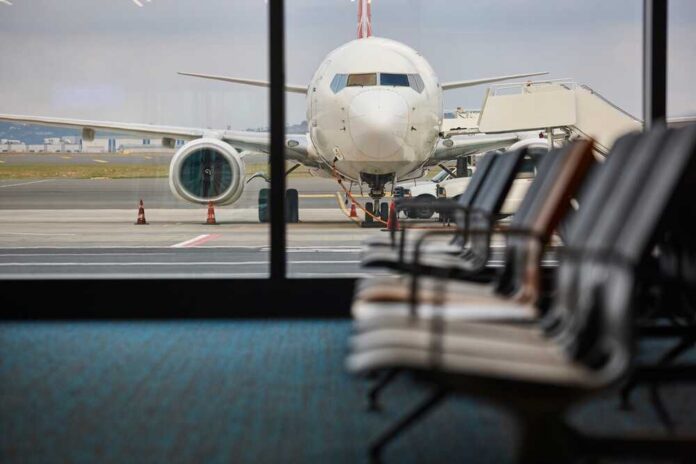
Surging airfares and airport meltdowns in 2026 are hitting working American families hardest, fueling frustration over endless government overreach and fiscal mismanagement that betray promises of affordable living.
Story Snapshot
- Airfares are rising due to wage hikes, fuel costs, and regulatory mandates, squeezing middle-class budgets amid war-driven energy price spikes.
- Airport chaos from IT outages and air traffic controller shortages disrupts travel, echoing failures of past leftist infrastructure neglect.
- Resilient demand persists, but structural pressures test whether families will keep flying as costs outpace revenues.
- Globalist regulations like EU SAF mandates add burdens, limiting U.S. airline flexibility and competition.
Rising Costs Squeeze Family Wallets
Airlines face escalating expenses due to higher wages, maintenance costs, fuel prices, and interest rates in 2026. These pressures outpace revenues despite premium travel gains.
Cost per available seat kilometer (CASK) rises faster than revenue per available seat kilometer (RASK). Families planning vacations or visits to loved ones encounter pricier tickets.
This strains household budgets already hit by inflation from prior fiscal irresponsibility. Conservative values of self-reliance suffer as everyday Americans pay more for basic mobility.
Travelers hoping for a drop in long-haul airfares are in for a brutal reality check. Ticket prices on major routes connecting Asia and Europe have surged up to 560% this month, and are likely to stay elevated as war-related disruptions ripple through the Persian Gulf, according… pic.twitter.com/aWDm55Xrvq
— Bloomberg (@business) March 26, 2026
Airport Disruptions Compound the Pain
IT outages and air traffic controller shortages plague U.S. airports, causing delays and cancellations. These operational failures trace to lingering supply chain issues and staffing gaps from 2025.
Travelers endure long lines and missed connections, testing patience amid war-related energy volatility. Regional carriers cut routes under pilot cost pressures, hurting rural communities’ access. Such chaos underscores government overreach in regulation without fixing core infrastructure deficits.
Industry Strains Amid Resilient Demand
Passenger demand grew 3.8% early in 2026, with aircraft orders surging 71% in January. International capacity outpaces domestic markets, favoring global routes.
Yet, airlines reassess fleets amid margin squeezes—China Airlines trimmed A350 and A321 orders. OEMs like Airbus and Boeing ramp production, but backlogs pressure operators. IATA warns of the slowest new airline startups since 1999, signaling barriers from costs and rules that stifle competition and innovation.
Regulators enforce EU sustainable aviation fuel mandates, starting at 2% and rising to 70% by 2050. FAA approvals aid Boeing 737 MAX increases, yet sustainability pushes the limit of flexibility.
IATA’s Walsh predicts real-term fare drops despite costs, but experts like Cirium flag U.S. policy risks and weakening consumer sentiment. AI and tech rollouts offer some resilience, though geopolitical uncertainty remains.
Pricy airfare, airport chaos test travelers' willingness to fly this year https://t.co/IRoYKeLBcQ
— CNBC (@CNBC) March 28, 2026
Impacts Echo Broader Conservative Concerns
Travelers face affordability tests, with pricier fares slowing the trend of cheap flights. Regional communities lose connectivity as low-cost carriers restructure.
Economic growth remains fragile, amplified by U.S.-centric risks and trade tensions. Political burdens from energy transitions and tariffs hit harder during wartime fuel spikes. Long-term, higher costs force fleet overhauls and pragmatic sustainability, but fewer startups reduce choices for Americans.
Experts from BCG note modest revenue gains from premiums, optimistic about deliveries. FTI calls for structural changes beyond efficiencies. Cirium stresses international yields amid turbulence.
Consensus highlights cost pressures testing resilience, with no demand weakness yet uncertainties from shocks. This scenario relates to MAGA frustrations over unkept promises—no new wars, lower energy costs—while globalism erodes domestic priorities.
Sources:
BCG: Air Travel Outlook – Revenues and Costs Are Rising
eplaneai: Key Trends in Global Aviation for 2026
FTI Consulting: Global Aviation Themes 2026 – Key Trends
Cirium: Aviation in 2026 – A Stable Climb or Turbulence Ahead?
IATA Pressroom: 2026-03-02-02 Release