
Two tiny gold rings pulled from a Thai rice field may quietly rewrite how we picture power, trade, and faith in Asia 2,000 years ago.
Story Snapshot
- Archaeologists in Thailand uncovered two Indian gold rings in a 2,000-year-old burial site.
- One ring carries ancient Brahmi script tied to Hindu astrology and merchant life.
- The find strengthens evidence of early trade between India and mainland Southeast Asia.
- Phetchaburi leaders now want UNESCO status built on this buried golden past.
Gold rings in a rice field and a window into an ancient world
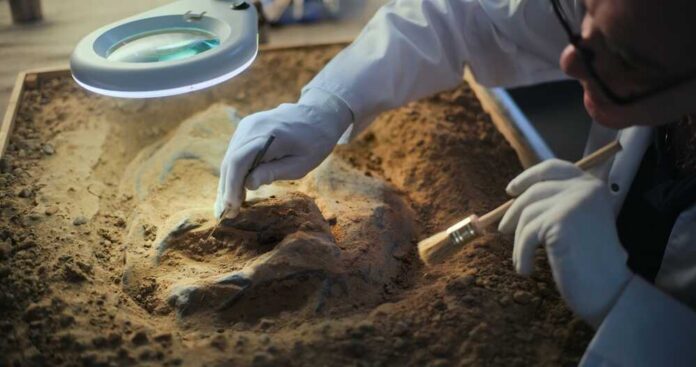
Thai farmers in Phetchaburi thought they had a simple rice field, not a graveyard holding a secret from two millennia ago. At the Don Yai Thong archaeological site in Ban Lat district, archaeologists uncovered a burial area filled with human skeletons, bronze drums, beads, and jewelry.
Mixed in with the bones of one person, they found two gold rings. Officials from Thailand’s Fine Arts Department say these rings are about 1,900 to 2,100 years old and linked to ancient India.
Gold rings around 2,000 years old found at Thail archaeological site https://t.co/0tj6feMkkL
— Express & Star (@ExpressandStar) July 6, 2026
One ring grabbed immediate attention. It is a signet ring, made of gold, with an inscription believed to be in the ancient Brahmi script of India.
Early expert reading of the letters suggests the word “pusarakhitasa,” interpreted as “the one protected by Pushya,” a powerful and auspicious zodiac sign in Indian astronomy. That short line tells us the owner was not only wealthy but also deeply tied to Hindu-style beliefs about fate, stars, and protection.
An Indian merchant buried far from home
Archaeologists and epigraphers think the rings probably belonged to a merchant from an Indian trading community. The script language, the zodiac reference, and the style of the gold point to India rather than to local Thai production.
The second ring is plain gold with no design, but its presence, along with the inscribed ring and a gold bracelet on the same skeleton, paints a clear picture: this was not a poor farmer. Researchers say the burial looks like that of a member of the upper classes, someone whose wealth and status followed him into death.
The site itself sits about 130 kilometers southwest of Bangkok. It dates to the late prehistoric Iron Age in Thailand, spanning roughly 1,500 to 2,500 years ago. During this period, mainland Southeast Asia saw major shifts. Iron tools spread. Settlements grew more complex.
Trade routes joined river valleys, coasts, and uplands. When the Don Yai Thong field yielded five bronze drums, eight human skeletons, jewelry, pottery, and now these gold rings, it signaled that this corner of Phetchaburi was a busy node, not a forgotten backwater.
Trade networks and why gold almost always means movement
Gold in early Southeast Asia rarely tells a simple local story. Large-scale studies of ancient gold ornaments across Thailand, Vietnam, Cambodia, Myanmar, and southern China show a clear pattern: high-quality gold pieces appear in graves and sacred sites,
Yet, firm evidence of large local gold mining and refining operations is scarce. Scholars argue that much of the gold came through exchange networks centered on India and China, brought by merchants who saw the region as a rich frontier.
Archaeologists in western Thailand have unearthed two gold rings believed to be around 2,000 years old at a newly discovered archaeological site, officials said. One of the rings found on Thursday was engraved with characters believed to be Bhrami script, an ancient Indian… pic.twitter.com/RHq56EFbwi
— Hindustan Times (@htTweets) July 6, 2026
These Phetchaburi rings fit that model. The Brahmi script and zodiac wording align with what we know about Indian cultural exports of the time. For readers who value concrete evidence over theory, this is exactly that: physical proof of early global trade.
Two small pieces of gold show that 2,000 years ago, people were already moving long distances, investing in foreign markets, and carrying their faith and language with them.
The find undercuts the modern idea that globalization is brand new; trade and travel were baked into human nature long before modern states and borders.
Power, heritage, and modern stakes in an ancient grave
Discovery of the rings is not just an academic win. It arrives as Thai leaders push for UNESCO World Heritage status for nearby Phra Nakhon Khiri in Phetchaburi.
A member of parliament from the province has already argued that the Don Yai Thong supports this bid by proving its “deep cultural significance.”
More artifacts mean more prestige, more tourism, and more leverage in national debates over budget, museums, and conservation. From this view, tying heritage claims to solid physical evidence like these rings makes far more sense than chasing trendy narratives with no proof.
Authorities know the clock is ticking. Rising groundwater and heavy seasonal rains can damage fragile bronze and human remains. To protect the site, officials have moved skeletons and artifacts to a museum for temporary safekeeping during the monsoon, with plans to return them later for public display.
This approach respects both science and community: experts can study the finds carefully, and local residents will eventually see, in glass cases, the gold that once rested under their fields.
Why this matters beyond Thailand’s borders
For many Western readers, Southeast Asian history is often reduced to a few imperial names and modern headlines. These rings push back against that lazy shorthand.
They show a world where Indian merchants sailed or rode out to new lands, where local elites welcomed foreign goods and ideas, and where belief in the stars shaped life and death.
They join other gold finds across the region that scholars use to map how trade, faith, and technology traveled without Twitter, cargo ships, or central banks.
The bigger lesson lands close to home. When you see a small gold ring in a news photo, it is easy to shrug and scroll on. Yet that ring may be the only surviving witness from a life lived 2,000 years ago, at the edge of a booming trade network.
It may hold writing that links three modern nations. It may drive decisions about heritage policy today. In Phetchaburi, two such rings did all of that, and they did it from a quiet grave in a rice field.
Sources:
abcnews.com, aa.com.tr, facebook.com, world.thaipbs.or.th, news.abplive.com, youtube.com, academia.edu