

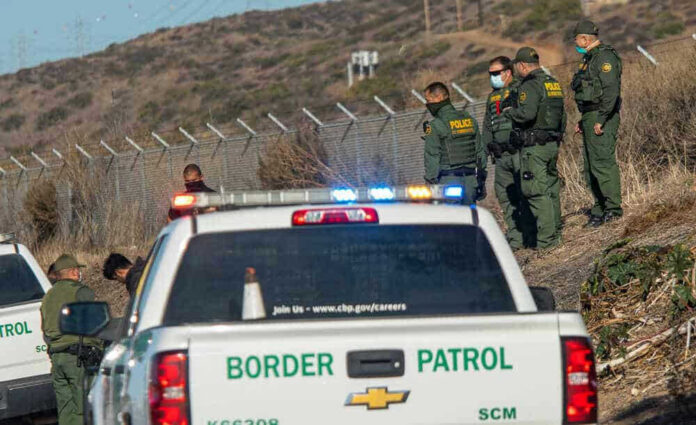
October’s southwest border apprehensions fell to 8,288, and the government says releases at the border have stayed at zero for 18 straight months.
Story Snapshot
- Border Patrol recorded 8,288 southwest border apprehensions in October.
- The total was 7% lower than September’s level, per agency data.
- The Department of Homeland Security says zero releases have continued for 18 months.
- Officials say October was the lowest start to a fiscal year on record.
What the government reported and why it matters
U.S. Customs and Border Protection reported 8,288 southwest border apprehensions in October. The agency said that figure started the new fiscal year at the lowest level on record and ran 7% below September. The Department of Homeland Security also stated that October marked the 18th straight month of zero releases at the border. The agency framed the drop as a sharp break from the previous administration’s highs and averages, citing a 95% decline from that era’s monthly norm.
Customs and Border Protection maintains public series that outline how it counts encounters. The government uses several categories, including Border Patrol apprehensions between ports of entry and Office of Field Operations findings at ports of entry. Nationwide tallies combine these categories and historically included public health expulsions when in effect. The definitions matter because reporters and readers often mix these terms, which can blur apples-to-apples comparisons across time.
How October stacks up against recent months
The October number sits just under September’s published total for southwest apprehensions, which the agency listed as 8,386. The month-over-month decline lines up with the 7% figure in the release, using the agency’s own posted tables as a cross-check. Officials also cited the prior peak month of December 2023 to show the scale of the shift. That comparison highlighted a 97% fall from the earlier high to October’s count, using the agency’s metrics.
Officials credited administration policy for the decline. The release linked the low October start and the ongoing zero-release streak to enforcement measures and processing rules now in place. The agency’s language matched a firm deterrence message. The tone pointed to a simple goal: cut unlawful crossings and end catch-and-release. That message aligns with common sense and with conservative priorities on border control, which stress order, clarity, and consequences for breaking the law.
What “zero releases” signals about border operations
The zero-release claim signals a shift in what happens after apprehension. While the release did not spell out each legal pathway, the plain reading is that people are not being released from border custody pending later action. Instead, cases appear to end in returns, removals, transfers, or detention. That operational stance changes incentives and reduces the pull of quick entry with later court dates. The department stated this zero-release pattern has held for 18 months in a row.
RELEASE
ICYMI: “Trump border crackdown drives encounters to record October low as zero-release streak hits 18 months”Eighteen months of zero releases coincide with a record October low of 27,890 nationwide encounters and 8,288 southwest border apprehensions under Trump, down…
— whitehouse.gov News (@whgovnews) November 17, 2026
Apprehensions remain a real-time window into migration pressure. They are not a perfect measure of total attempts, but they help track change fast. Researchers have used them as a nowcasting tool for shifts that surveys will not show for months. As a result, a broad, sustained drop in apprehensions usually points to a cooler flow or a stronger deterrent effect at and near the border, even if some routes or methods shift over time.
How to read the numbers without missing the plot
Customs and Border Protection’s categories separate between-port apprehensions from port-of-entry findings. News about “encounters” can roll these together, while policy debates often focus on Border Patrol apprehensions alone. The October figure refers to apprehensions between ports on the southwest border. That clarity matters because it keeps claims consistent. The safer way to compare months and years is to match the same series, geography, and counting rules each time.
Policy often drives results by changing both motivations and capabilities. Tougher processing and no-release outcomes reduce the reward for crossing. More agents, better surveillance, and faster removals make crossing harder and raise the cost of trying. That one-two punch is how deterrence works in practice. When the government enforces the law, predictable results follow: fewer attempts, fewer apprehensions, and less strain on border towns and officers who carry the load.
Bottom line for taxpayers and border communities
October’s low start, paired with 18 months of zero releases, tells a simple story: consistent rules and steady enforcement can cool the border. The government’s series shows a clean decline from late-2023 highs to today’s leaner numbers. The approach respects the rule of law, cuts chaos at processing sites, and protects finite resources. Voters want borders that work and policies that last. These numbers show what that looks like when carried out day after day.