

Washington just slammed the door on Canadian dairy, most alcohol, and motorcycles—and the hinges are Section 338 and a White House that says Canada crossed a line.
At a Glance
- The United States imposed bans and sweeping 50% tariffs on select Canadian goods.
- The White House cites discriminatory treatment of U.S. autos, alcohol, and dairy.
- Canada hit back with tariffs on about $20 billion in U.S. goods.
- Section 338 of a 1930 law took center stage after decades on the shelf.
What Washington Did, And Why It Says It Did It
The White House announced bans on Canadian dairy products, most alcoholic beverages, and motorcycles. The move follows earlier 50% tariffs on targeted Canadian imports. The administration says Canada “increased its discrimination” against U.S. commerce and forced America’s hand.
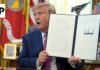
President Trump signed multiple proclamations under Section 338 of the Tariff Act of 1930 to block and tax products tied to disputed sectors, including autos, alcohol, and dairy. This is a blunt tool, but it is legal authority Congress gave a president long ago.
The U.S.-Canada trade fight is escalating fast, and President Trump is now moving beyond tariffs.
The administration is banning certain Canadian alcohol, dairy products, and motorcycles from entering the U.S., while reshuffling the list of Canadian goods facing 50% tariffs. The… pic.twitter.com/QhXVeY9msF
— Fox News (@FoxNews) September 9, 2026
Reporters and trade lawyers focused on the method as much as the message. Section 338 had gone quiet for generations.
The administration revived it to slap 50% tariffs—its ceiling—on Canadian goods and then added bans that land with more shock than a duty at the dock.
The step was not symbolic. Tariffs of that size hit prices and margins fast, especially in sectors with narrow profit windows like beverages and food.
How Canada Responded, And What It Means On Main Street
Ottawa answered with tariffs on about $20 billion in U.S. goods, matching Washington dollar-for-dollar across key categories.
Canada’s finance ministry said rates would mirror U.S. levels, including 15%, 25%, and 50% lines, and would focus on sectors most exposed to the U.S. action, such as steel, dairy, appliances, farm equipment, and electronics.
This tit-for-tat raises shelf prices on both sides of the border. It also squeezes small producers and local distributors who cannot easily swap suppliers overnight.
American shoppers will feel the pinch in niche categories first, then in mainstream brands if the fight drags on. Import bans cut choice entirely; tariffs only add cost.
Craft whiskey buyers who loved Canadian rye will hunt for substitutes. Cheesemakers who used Canadian whey will rewrite recipes or pass on costs.
Motorcycle dealers who relied on Canadian models will draw down stock, then stall. That chain reaction is how trade shocks travel from a press room to your pantry and garage.
The Legal Lever: A Dormant Statute Wakes Up
Section 338 is a Depression-era tool that lets a president hit a country that discriminates against U.S. goods. The cap is 50%, and the law does not require a lengthy case at a trade court to act.
The Congressional Research Service notes that the administration used Section 338 to “offset Canadian discrimination,” signaling a break from the usual free trade agreement path. That surprise helps explain why experts describe this as a rare, even first, modern use of the provision.
Critics in Canada say the U.S. framed legitimate policy differences as discrimination and bypassed the free trade pact’s rules. The Canadian government stressed that Washington’s tariffs and bans applied even to goods that comply with the trade agreement.
That argument will play well in Ottawa’s domestic politics, but it does not change a simple reality: the United States has clear statutory authority and a far larger market, which gives Washington leverage when it chooses to use it.
Where Common Sense Lands
Protection of American workers and farmers is a valid aim. When a neighbor hikes barriers that single out U.S. goods, a firm response is not only fair; it is necessary to reset the terms.
The White House laid out its case that Canada tilted the field in autos, alcohol, and dairy. If that charge holds, Section 338 is the right hammer for the job.
Still, hammers break eggs and fine clocks alike. The risk is that short-term leverage becomes long-term pain for consumers and small businesses.
What To Watch Next
Three pressure points will tell the story from here. First, the price board: if bans and tariffs stick, watch beverage shelves and dairy inputs. Second, industry carve-outs: both sides may tweak lists to spare key constituencies.
Third, the off-ramp: back-channel talks can unwind duties as fast as they appeared. The fastest way back to normal is simple and hard at once—Canada narrows measures the U.S. calls discriminatory, and Washington lifts the bans it just dropped.
Sources:
apnews.com, reuters.com, pwc.com, congress.gov, whitehouse.gov, aljazeera.com