

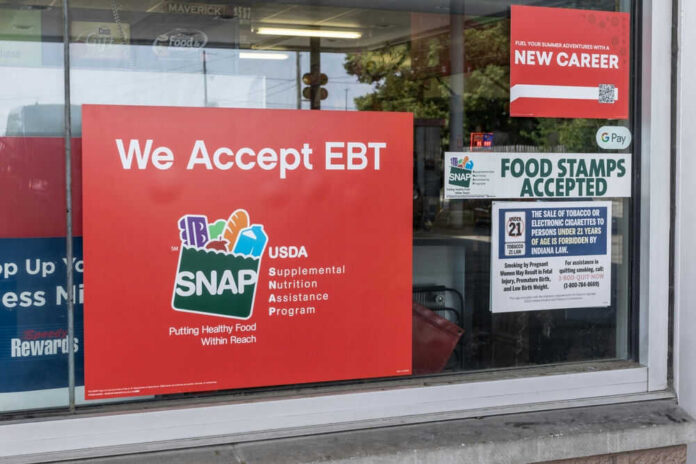
The clock on emergency SNAP funding stops at midnight September 30, and the rules do not blink.
Story Snapshot
- SNAP requires work compliance for most adults, and noncompliance can end benefits.
- The United States Department of Agriculture reported a 10.62% SNAP payment error rate for 2025.
- States with high error rates face financial responsibility and must fix problems.
- Congress set a contingency fund to run only through September 30, 2026.
September’s hard stop meets rules that already exist
The Supplemental Nutrition Assistance Program runs on laws and calendars, not vibes. Federal law ties eligibility to work rules for most adults. The United States Department of Agriculture says people must meet those rules or risk disqualification. That is not new.
It is the baseline that has been in place for years. The focused version for certain adults without dependents sets an 80-hours-a-month target through work or a work program. States already enforce it.
None of that would draw headlines if Congress had not put the contingency fund on a timer. Lawmakers set aside money for emergencies, and they set a precise end date. Legislative texts show the reserve runs through September 30, 2026.
After that, Congress must act again, or the cushion disappears. This is why you hear urgency now. The date is firm, and agencies cannot extend a congressional deadline on their own.
Payment errors and the push for accountability
The United States Department of Agriculture announced that the national payment error rate hit 10.62% for fiscal year 2025. That number does not equal fraud, but it does mean too many dollars missed the target.
Congress tied reforms to a six percent benchmark for accuracy. When states miss that mark, they must pay a share of benefits and submit a plan to fix it.
The United States Department of Agriculture’s research arm explains that, starting in fiscal year 2028, states will share costs based on those error rates.
Nationwide, about 5 million Americans have lost access to SNAP benefits since the One Big Beautiful Bill became law, according to the Center on Budget and Policy Priorities, and SNAP funding could face a major shake-up at the end of September.
Read more: https://t.co/ZpcLLWR3Ld pic.twitter.com/YogSU7nf6X
— ABC News (@ABC) September 14, 2026
Critics argue the clock is punishing, not prudent. Advocacy groups claim millions have already lost access and say tighter time limits cause harm without clear job gains. Some Senate Democrats have pushed to slow down the state cost shift in the farm bill process.
These are policy disagreements, not disputes about whether the law sets work rules or error thresholds. On the facts, the rules and deadlines exist. On the judgment, Americans will weigh fairness and cost.
What “millions dropped” does and does not prove
Headlines say millions left SNAP. That claim leans on advocacy counts and think tank tallies. These figures suggest a large decline since new rules took hold, but they do not show each case failed for the same reason. Some exits come from income gains, some from missed paperwork, and some from time limits or sanctions.
The federal record is stronger on what the rules are than on how many specific closures September will cause. Treat broad claims with care until agencies release case-level data.
Here is the core: Congress set a reserve that ends September 30, 2026. The United States Department of Agriculture says work compliance is part of eligibility. States with high error rates must shoulder costs and correct problems. These three facts drive the current pressure.
If Congress renews the cushion, operations get breathing room. If not, states will lean hard on compliance, notices, and accuracy to manage risk within the rules they already have.
How states, shoppers, and grocers should prepare now
States should plan for tighter processing windows and surge staffing in call centers. Error reduction hinges on clear letters, reachable hotlines, and fast corrections.
Counties should audit their highest-failure steps and stage fixes before volume spikes. Households should keep records of work hours and program attendance and complete recertifications on time.
Grocers should monitor Electronic Benefit Transfer redemption trends and stocking plans. Good administration reduces chaos; panic does not feed a single family.
Rules should be simple, firm, and fair. Work rules should be clear, not tricky. The public should fund benefits for those who qualify, not payments riddled with errors. States that miss basic accuracy should correct fast and share the cost until they do.
Congress should set deadlines and own them. If lawmakers want more time, pass it openly. If not, do not scold agencies that follow the statute as written. Accountability and compassion can both fit inside the same grocery cart.
Sources:
abcnews.com, fna.usda.gov, newsbreak.com, newsweek.com, ers.usda.gov, congress.gov, cato.org