

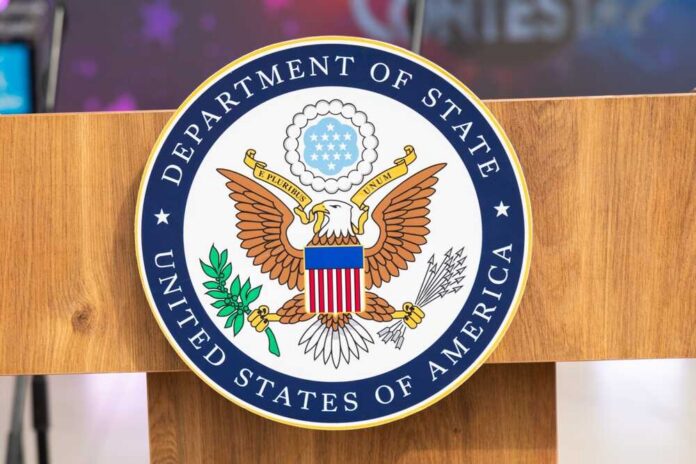
The State Department is poised to cancel up to 200,000 tourist and business visas tied to asylum filings, and it plans to do it on a rolling basis.
Story Snapshot
- Officials say the target pool is B1/B2 visitors who later sought asylum.
- The Department already reported more than 175,000 visa revocations this month.
- Federal law gives wide discretion to revoke visas at any time.
- Critics warn about due process if reviews become category-based.
What is planned and who is affected
Officials described a plan to revoke up to 200,000 B1/B2 visas from foreigners who entered for short-term travel and then applied for asylum, according to State Department documents reported by the Associated Press and summarized by major outlets.
A Department spokesperson said numbers remain dynamic and revocations will occur on a rolling basis, not all at once. The focus sits on visitor visas, not work or student categories. The aim is to curb use of travel visas as a doorway to the asylum system.
Trump admin to target 200,000 foreigners in largest mass visa revocation ever: report https://t.co/rOXCrkHDg3 pic.twitter.com/xf8G8B5PSW
— New York Post (@nypost) August 25, 2026
The scale matters because it could be the largest mass visa revocation in U.S. history. The action would not deport people. It would cancel the visa, affecting travel privileges and potentially shaping future immigration decisions. Individuals inside the United States remain subject to separate Department of Homeland Security processes.
Those outside the country could be denied boarding or entry. The Department frames this as basic enforcement: use the right visa for the right purpose or lose it.
The authority behind the revocations
Congress gave the executive branch broad power to issue, refuse, and revoke visas. The Congressional Research Service explains that the Secretary of State can revoke a visa at any time, in discretion, under federal law. Consular officers also hold revocation authority.
This power is longstanding and does not require a criminal conviction to be triggered. It can rest on ineligibility, misuse, or new information that would have blocked issuance in the first place. One agency report reflects the same point in plain terms.
The Department already showed its appetite for scale. It announced more than 175,000 revocations this month tied to violations, crime, fraud, incitement to violence, abuse of the system, or national security risks.
That move set an enforcement baseline and signaled this next tranche would not be a one-off stunt but part of a wider posture. The current plan applies that posture to the asylum-after-entry pattern that has drawn public concern.
How this fits conservative values and practical common sense
Border policy should reward good-faith travelers and stop gaming of the system. A visitor visa is for short stays with an intent to depart. Filing for asylum after entry is legal, but when it becomes a predictable track, trust in the visa system erodes.
The Department’s stated test echoes a question: if officers had known this information at the time of issuance, would they have granted the visa? If the answer is no, revocation aligns with the law and basic fairness to Americans and lawful immigrants.
Trump is preparing the biggest mass visa revocation in U.S. history.
Up to 200,000 B1/B2 visas could be canceled, per AP.
Visitor visas are for temporary travel, and applicants must show they plan to leave. But asylum cases are individual. The plan covers visas issued from 2016… pic.twitter.com/v39JFbGd0j
— Kereal Sokolov (@sokolovkereal) August 25, 2026
That does not end the debate. Civil liberties groups say past mass actions, especially against international students, lacked proper notice and individualized review, raising due process concerns. One lawsuit said mass terminations violated the Fifth Amendment and the Administrative Procedure Act.
Those cases target different categories than today’s plan, but they preview arguments critics may raise if revocations appear batch-driven or error-prone rather than case-by-case. A recent court ruling that struck down a broad immigrant visa freeze also warns against overreach in related areas.
What questions still need answers
Three details will decide whether this campaign is seen as firm but fair or sloppy and political. First, the standard: what facts will show misuse of a visitor visa tied to asylum filing, beyond the filing itself?
Second, the process: will each revocation receive documented, human review and notice with a path to correct mistakes?
Third, transparency: will Congress and the public see metrics on accuracy, timing, and outcomes? Clear answers will build trust and blunt legal attacks.
The Department’s rolling approach gives room to calibrate. Start with the clearest cases, publish the criteria, track error rates, and fix them fast. Pair visa enforcement with faster asylum screening so legitimate claims move quickly and weak claims do not clog the system.
Sources:
redstate.com, thehill.com, tass.com, theguardian.com, state.gov, myattorneyusa.com, community.lawschool.cornell.edu, lgilawyers.com