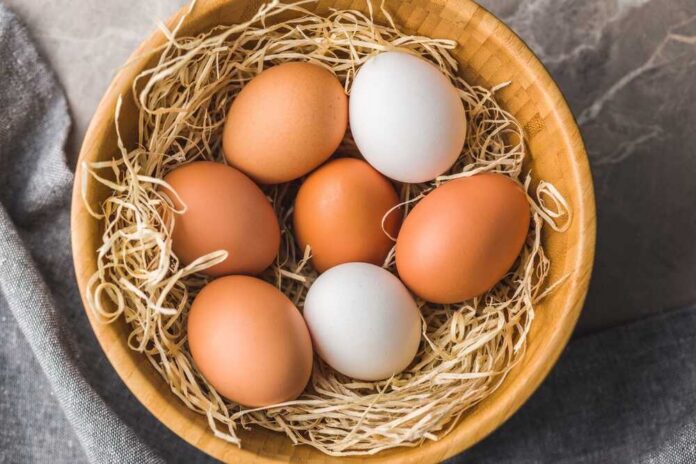
California health officials tied a salmonella outbreak to specific lots of Happy Hens organic eggs and urged people to stop eating them immediately.
Story Snapshot
- Twenty-three Californians got sick; seven were hospitalized; no deaths reported.
- Happy Hens issued a voluntary recall covering three egg lots with set sell-by dates.
- Genetic testing linked the farm’s environment to the strain found in patients.
- County investigators also traced cases to raw-egg mayonnaise at a local market.
Officials Link Illnesses To Specific Egg Lots And Dates
California’s public health department reported 23 illnesses tied to Happy Hens organic shell eggs. Seven people were hospitalized, and no one died. The state said the company issued a voluntary recall.
The recall covered eggs from lot 223 with a sell-by of September 10, lot 226 with a sell-by of September 13, and lot 237 with a sell-by of September 24. Illness onset dates ran from late June through mid-August, which fits a sustained outbreak pattern.
Eggs recalled as salmonella outbreak sickens 23 people https://t.co/4YIxeCzddl
— FOX Business (@FoxBusiness) September 17, 2026
The California Department of Public Health warned consumers not to eat, serve, or sell the recalled eggs. People were told to throw the eggs away or return them for a refund.
That is the standard playbook when a shelf-stable product can spread illness in homes, restaurants, and markets. The warning came as the outbreak was still active in mid-September, which raised the stakes for quick action to prevent more cases.
Lab Evidence And Traceback Support The Recall
Federal food inspectors took samples in the farm’s poultry housing. Tests found Salmonella Enteritidis. Genetic analysis matched the strain found in people who got sick. That match matters. It ties the setting where eggs are produced to the same fingerprint seen in patients.
Health officials often move fast when epidemiology and lab work line up. That is the same approach used in recent egg outbreaks in other states and years.
County investigators in San Diego added another link in the chain. They said unpasteurized Happy Hens eggs were used to make mayonnaise at Ramona Family Naturals Market. Some sick people ate food from that market.
That does not rule out direct egg use at home. It shows how raw-egg dishes can spread this germ far and fast when one batch serves many people at once.
Why Egg Outbreaks Keep Happening
Eggs are a well-known vehicle for Salmonella Enteritidis. Reviews and federal summaries show a clear pattern across many years. Raw or undercooked eggs and foods made with them, like mayo, dressings, or some desserts, are repeat offenders.
Prior federal investigations show the same steps we see here: detect cases, trace back to a likely farm, confirm with lab testing, and recall. When that sequence converges, recalls save people from getting sick.
California warned consumers to avoid Happy Hens eggs after a salmonella outbreak: The California Department of Public Health issued a recall notice for Happy Hens brand organic shell eggs over possible salmonella contamination https://t.co/uGylknguR4 pic.twitter.com/ke9xfvypyM
— Quartz (@qz) September 14, 2026
Consumers ask for simple rules. Here they are. Do not eat recalled eggs. Check lot numbers and sell-by dates on the carton. When in doubt, throw it out. Avoid raw or lightly cooked eggs in any form, especially for kids, seniors, and people with weak immune systems.
Use pasteurized eggs for dressings or sauces that will not be cooked. Keep eggs cold and cook until both the yolk and white are firm. These basics cut risk without guesswork.
What This Means For Accountability And Common Sense
Public health agencies must act when evidence points to a source and people are getting sick. That is not anti-farmer; it is pro-family and pro-common sense. A voluntary recall protects customers and protects the brand from deeper harm.
Company-side pushback appeared in local coverage, but officials cited a genetic match and a clear timeline. On balance, the data support the warning and the recall. When safety is on the line, erring on the side of caution is the right call.
How The Timeline Fits The Risk Window
The outbreak started in late June and ran into mid-August. The state warning came in September. That arc makes sense. Case interviews take time. Lab work takes time. Traceback takes time. Meanwhile, eggs can sit in fridges for weeks.
That is why officials flagged exact lots and sell-by dates. Sharper targeting helps families and businesses pull the right cartons. It also helps limit waste by not over-recalling unrelated product.
Sources:
foxbusiness.com, desertsun.com, health.com, geo.tv, nbcsandiego.com, marlerclark.com, marlerblog.com, researchportal.ukhsa.gov.uk