
Oil did not just rise with war headlines this week; it jumped like a panic button was slapped in the world’s most dangerous shipping lane.
Story Snapshot
- U.S. crude oil blasted past $90 a barrel as fighting around the Strait of Hormuz spread.
- Brent crude neared $100, signaling that markets now price in real risk to global supply.
- U.S. Central Command says strikes on Iran aim to stop attacks on commercial ships and civilian crews.
- Every new tanker incident off Saudi Arabia and near Hormuz now feeds both battlefield tension and pump prices.
Oil spikes as war moves from headlines to tankers
U.S. oil traders woke up to a market that finally believed the war was real, because real ships were getting hit. West Texas Intermediate, the main U.S. crude benchmark, jumped into the $90 range after sitting near the mid-$60s just days earlier, the sharpest weekly move in decades as fresh strikes and tanker attacks shook confidence in safe shipping routes.
Brent crude, the global benchmark, surged into the low-90s and pushed higher as the week went on. This was not a slow trend; it was a shock.
Oil nears $100 a barrel after Houthis claim strikes on Saudi Arabian tankers https://t.co/Mrdb0AKjZZ
— MarketWatch (@MarketWatch) July 23, 2026
Reports of tankers struck off Saudi Arabia landed on trading desks at the same time as news of more U.S. strikes on Iran-linked targets around the Strait of Hormuz. For energy markets, that combination matters.
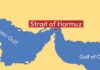
Saudi Arabia is the swing producer in oil, and Hormuz is the choke point where a large share of global crude and liquefied natural gas must pass to reach buyers. When shots land near tankers, traders stop asking “if” the war affects supply and start asking “how fast” and “how bad.”
Strait of Hormuz becomes a battlefield and a bottleneck
U.S. Central Command says Iran and Iran-backed forces have attacked multiple commercial vessels moving through the Strait of Hormuz, including cargo ships and oil tankers.
In response, American forces have carried out repeated rounds of strikes on Iranian missile and drone sites, coastal radar, fast attack boats, and command centers, with public statements stressing a goal to “degrade” Iran’s ability to threaten civilian mariners and commercial ships in the waterway. This is being framed as defense of free navigation, not a grab for territory.
From a common-sense view, keeping a major shipping lane open and safe is a core job of a superpower navy. The U.S. has long treated freedom of navigation as a vital national interest, not a favor to oil companies.
At the same time, repeated strikes on Iranian soil, including deep inside the country, raise hard questions about mission creep, escalation risk, and how far America should go without a clear endgame. Protecting tankers is one thing; drifting into open-ended war is another.
Markets price in risk, not just barrels
Oil futures do not move this fast just because demand changed overnight. They move because traders suddenly see higher odds that supplies could be disrupted, embargoed, or politically weaponized.
After new U.S. strikes on Iran, West Texas Intermediate contracts for near-term delivery jumped back above $90, while Brent climbed toward the high-$90s. Analysts warned that if fighting around Hormuz does not cool, triple-digit oil prices are now possible, even likely in the near term.
Several outlets report that dozens of vessels carrying crude and gas have been left waiting off Iran’s coast, unable to transit freely through Hormuz as both sides trade attacks and threats.
Each waiting ship is a temporary hole in global supply. Markets do not wait for those holes to show up in official export data; they adjust prices the moment risk becomes plausible. For a reader watching gas prices at the corner station, this is the pipeline from missile footage on television to the extra dollars on your receipt.
Washington’s message: defending ships, not chasing oil
U.S. officials insist that the strikes on Iran are a direct response to attacks on commercial vessels and not an effort to seize oil fields or force regime change. Central Command statements describe operations “in self-defense” and say they target military assets used to attack or threaten ships in or near the Strait of Hormuz.
The pattern is clear: tanker or cargo ship hit, evidence blamed on Iran or its forces, then a wave of American strikes advertised as a warning and a shield.
Critics who see every Middle East move as “about oil” miss part of the picture and catch another. These operations do protect flows of energy, which matter to American consumers and allies. But they also fit a long tradition where the United States claims to defend open seas and punishes those who attack civilian crews.
From a rule-of-law view, that is justified when evidence of attacks is strong and clearly shared. When evidence remains mostly in classified channels, trust depends on faith in the institutions and leaders giving the orders.
What this means for your wallet and for U.S. power
For households, the link is brutally simple. Since the conflict around Iran and its allies escalated, U.S. gasoline prices have jumped, adding more than thirty cents a gallon in some reports. Higher crude costs feed straight into higher fuel and freight costs, which then push up the prices of food, goods, and services.
For an economy already wrestling with inflation and high interest rates, another oil shock is like a tax with no vote and no sunset clause.
For U.S. power, the stakes are larger than one week’s price spike. If Washington can keep commercial ships safe and prevent Iran from closing or controlling Hormuz, it reinforces a global order where free trade moves under the watch of the U.S. military and its partners.
If that effort fails, or if war spreads and drags on, America risks being blamed both for higher prices and for a conflict that feels distant but hits every driver. That is why each tanker incident off Saudi Arabia or near Hormuz now matters far beyond the Gulf. It is a test of deterrence, credibility, and how much pain voters will accept to keep the sea lanes open.
Sources:
cnbc.com, centcom.mil, aljazeera.com, reuters.com, bbc.com, nytimes.com, en.wikipedia.org, theguardian.com, facebook.com, thehill.com