

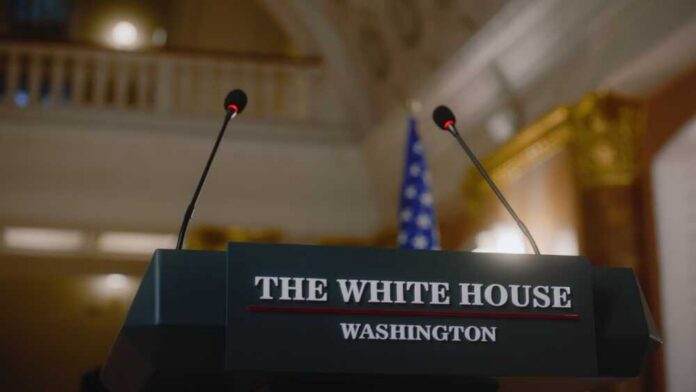
President Trump has discussed moving the White House press corps out of the West Wing and into another building, a shift that would redraw how power and the press meet in Washington.
Story Snapshot
- Trump has weighed relocating the press corps from the James S. Brady Press Briefing Room to another site.
- Advisers and allies have promoted the idea; no final decision has been announced.
- The Brady Room has anchored daily coverage on White House grounds since 1970.
- Past presidents have moved briefings off-site during renovations or for space needs.
What Trump Is Considering And Why It Matters
CBS News reported that Trump discussed moving the press corps to another building, according to two people close to him. The idea includes reclaiming the space above the old indoor pool, which became the current press room under President Richard Nixon. The move would end the media’s day-to-day base inside the West Wing. That change would affect how fast reporters can question officials and how often they witness real-time events and visitors.
🚨 EVICTING THE FAKE NEWS CARTEL! President Trump is looking at moving the corrupt White House press corps out of the Brady Briefing Room—and the legacy media is melting down! 🔥 For too long, weak Democrats let CNN & Politico act as radical left-wing propagandists while coddling…
— Did I Piss You Off? (@DIPYOMUCH) October 21, 2026
Trump’s communications team did not shut the door on the plan. A statement said all options remain on the table and that announcements would come when appropriate. That reply signals room for flexibility and leverage. It also fits a broader policy that White House access is a managed privilege due to space and security, not a blanket right for every outlet. That stance has sharpened since 2025, with tighter West Wing access rules for media workspaces.
The Stakes Of Proximity: Speed, Scrutiny, And The Daily Churn
Physical proximity shapes coverage. The Brady Room sits steps from senior staff. Reporters can sprint to stakeouts, clock who walks past, and catch quick answers in hallways. Moving the corps off-site would slow that rhythm. It would also raise costs for broadcasters who built studios and cabling into the current room over decades. The White House, for its part, could gain space for staff or events and could schedule briefings with more control over timing and optics.
American common sense asks a simple test: does the plan balance security, space, and taxpayer value with the need for on-the-spot questioning? The history suggests the balance can shift without breaking. But it also shows that when the press moves farther away, spontaneity drops and controlled messaging rises. That tradeoff should be clear-eyed, not emotional. The public benefits when hard questions can be asked fast, and answers heard before talking points harden.
History Says Moves Happen; The Details Decide The Impact
Presidents have changed press geography before. In 2006 and 2007, the White House renovated the press area and moved reporters to a temporary site across Jackson Place near Lafayette Square, then brought them back when work was done. In the television era, Nixon replaced Franklin Roosevelt’s pool with the modern briefing room because the old setup no longer fit cameras and crews. These moves show that location can change while daily accountability continues, if access stays predictable and timely.
Institutions evolve because buildings age, security shifts, and technology grows. The question today is not whether a move is allowed; precedent says it is. The question is how a move would be executed. Clear rules on briefings, fast escorts for breaking news, and guaranteed space for the core pool would keep scrutiny sharp. Anything less would feel like a slow walk away from transparency. A White House confident in its message should welcome tough questions within earshot of power.
What To Watch Next: Signals That Reveal The Endgame
Watch the site selection. A move to the Eisenhower Executive Office Building would keep reporters within a secure campus. A site across Pennsylvania Avenue would add delays and weaken stakeouts. Watch the build plan. If a new room comes with broadcast infrastructure and a fixed daily schedule, the administration intends continuity. If not, expect fewer briefings and more staged videos. Finally, watch the tone. Calls for comfort are not the point, but speed and access are the public’s business.
Sources:
cbsnews.com, nytimes.com, ca.news.yahoo.com, politico.com, yahoo.com, whitehousehistory.org, georgewbush-whitehouse.archives.gov