

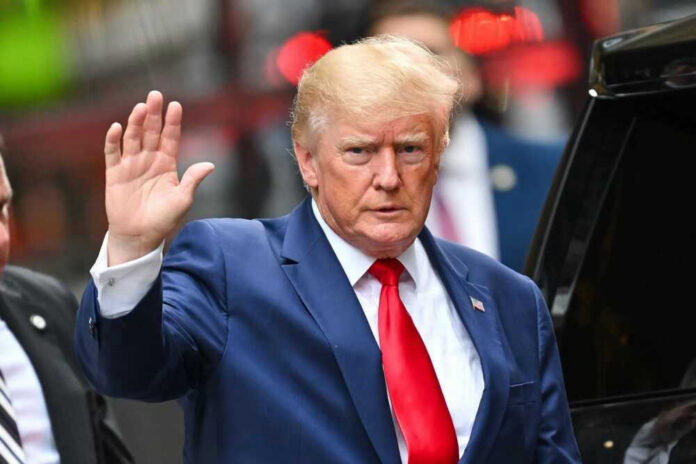
A late-night-style punchline at the Grammys just collided with presidential defamation law as President Trump signals he’s done letting prime-time smears slide.
Quick Take
- Trevor Noah told a Grammys monologue joke implying Trump needed a new “island” after Jeffrey Epstein’s was “gone,” tying the line to Bill Clinton.
- President Trump responded on Truth Social by denying any connection to Epstein’s island and directing his lawyers to pursue legal action.
- The flare-up landed days after the Justice Department released more than three million pages of Epstein-related files, heightening sensitivity and speculation.
- No lawsuit had been filed as of the reporting described in the research, and CBS/the Recording Academy had not publicly commented.
What Trevor Noah Said — and Why It Lit the Fuse
Trevor Noah’s final turn as Grammy Awards host included a monologue that blended pop culture, politics, and the still-radioactive Epstein scandal. The specific line that triggered the dispute joked that because Epstein’s island is gone, Trump “needs a new one,” pairing the punchline with a reference to Trump’s past public talk about Greenland and a jab involving Bill Clinton. The remark aired during a major broadcast, multiplying its reach.
The timing mattered as much as the wording. The research notes the Justice Department had just released more than three million pages of Epstein-related files days earlier, reigniting a national media cycle around who appears in the paperwork and what it does—and does not—prove. In that climate, a punchline can sound less like satire and more like a factual insinuation to a broad audience that never sees the fine print.
Trump’s Response: Denial, Legal Threat, and a Public Line in the Sand
President Trump responded publicly by characterizing the joke as false and defamatory and by saying he had instructed his lawyers to take action. He also issued a categorical denial that he had ever visited Epstein’s island, saying he had “never been to Epstein Island, nor anywhere close.” The research indicates the dispute remained at the threat stage, with no formal lawsuit filed as of the date reporting.
Trump’s broader message was political as well as legal. He criticized the broadcast and insulted Noah personally, framing the segment as another example of entertainment gatekeepers using national TV to push insinuations at conservatives and Republican voters.
From a limited-government perspective, the key question becomes whether powerful media platforms can imply criminal-adjacent conduct about public figures without accountability—especially when the underlying documents are complicated and widely misunderstood.
🚨 NEW: Trevor Noah makes a defamatory joke about Trump going to Epstein’s Island: “What are you to do about it?”
President Trump responds almost immediately saying he’s going to sue to sh!t out of him: “Get ready Noah, I’m going to have some fun with you!”
🔥🍿🤣🤣 pic.twitter.com/djE6uyzAf9
— Chief Nerd (@TheChiefNerd) February 2, 2026
What the Epstein File Dump Does — and Doesn’t — Establish
The research describes a reality that often gets lost in headline culture: Trump’s name appears in thousands of Epstein-related documents, but there is no official accusation in the cited reporting linking him to crimes.
That distinction matters because document appearances can reflect contacts, scheduling, third-party mentions, or investigative context rather than proof of wrongdoing. Trump, according to the research, has argued that the released files absolve him of any misconduct.
That doesn’t end the public debate, but it does shape what can be responsibly claimed as fact. When a major broadcast connects a living public figure to a notorious sex-trafficking scandal through a joke, it risks nudging viewers toward a conclusion the available reporting does not establish.
The research also notes Trump and Epstein had a documented social relationship in the 1990s before Trump publicly distanced himself—a background that makes careful wording even more important.
Defamation vs. Comedy: The Legal and Cultural Tension
The research doesn’t provide outside expert legal commentary, but it highlights the core legal friction: public-figure defamation standards require proving false statements and “actual malice,” and courts often treat jokes and satire differently from straight factual claims.
The hard part is determining whether an audience would reasonably interpret the statement as a factual allegation or as protected comedic hyperbole within an awards-show monologue.
On the culture side, the episode underscores a long-running conservative complaint: elite media and entertainment repeatedly flirt with “guilt by insinuation,” then retreat behind comedy when challenged.
If Trump proceeds, the case could test where that line sits for live entertainment broadcasts, and whether major networks can profit from controversy while outsourcing risk to the performer. The research notes CBS and the Grammys organization had not publicly responded.
Limited information is available on the next steps beyond Trump’s statement that lawyers were instructed to act. The research does not specify what claims would be filed, whether Noah or the broadcaster would be targeted, or how any litigation strategy would address the higher bar public figures face.
For viewers, the immediate takeaway is simpler: in a post-file-dump media environment, insinuations can travel faster than facts, and the pushback is getting sharper.