

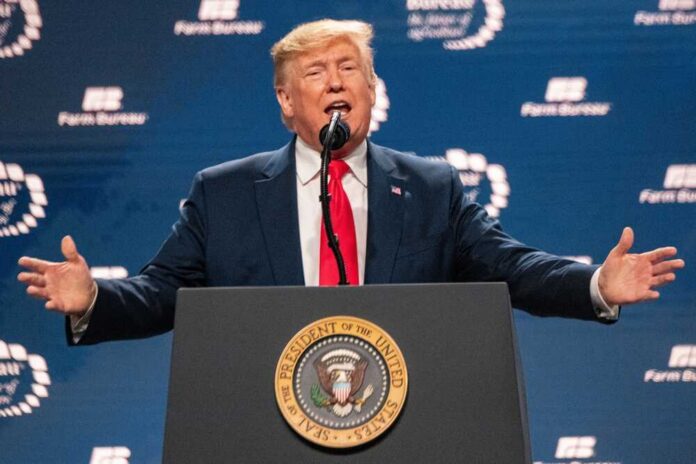
Trump’s claim that the Iran war could be “very complete” is colliding with a fast-moving reality of retaliation, shipping threats, and a widening military campaign that won’t be wrapped up by wishful timelines.
Quick Take
- Operation Epic Fury began Feb. 28, 2026, with a large U.S.-Israeli strike package targeting Iranian air defenses, missiles, and senior leadership.
- Reports across major references say Iran’s Supreme Leader Ali Khamenei was killed early in the campaign, marking a dramatic escalation beyond past U.S.-Iran clashes.
- Iran responded with ballistic missile attacks hitting U.S. bases, Israel, and Gulf-state locations, raising the risk of broader regional conflict.
- Trump and the White House offered varying timelines for completion, while ongoing strikes and maritime risks point to a longer, less predictable phase.
Operation Epic Fury: What Happened and Why It’s Different
President Donald Trump announced Operation Epic Fury after ordering action late Feb. 27 and launching major strikes early Feb. 28 alongside Israel. Public timelines describe nearly 900 strikes in the opening window, aimed at Iranian military infrastructure, air defenses, missile sites, and leadership targets.
Multiple summaries treat this as a shift from proxy pressure to open warfare, with a “decapitation” dynamic that goes well beyond earlier episodes like 2020’s Soleimani strike.
Trump says Iran 'war is very complete,' talks to Putin: Reports https://t.co/1PJTdh2c7H
— CNBC (@CNBC) March 9, 2026
Trump’s messaging leaned heavily on regime change, including a video statement urging Iranians to topple their government and offering immunity to IRGC forces who surrender. That framing matters because it’s not merely deterrence; it sets political expectations that can be hard to control once bombs start falling.
For Americans who watched years of weak diplomacy and contradictory “red lines,” the administration’s posture is a clear break from the indecision that often invited escalation.
Iran’s Retaliation and the Risk to U.S. Forces and Allies
Iran’s response arrived quickly in the form of large ballistic missile salvos directed at Israel, Gulf-state areas, and U.S.-linked sites, including locations tied to the U.S. presence in Bahrain.
Additional reporting described strikes across a wider set of U.S. bases and attacks affecting Iraqi oil facilities, illustrating how fast a “contained” air campaign can become a regional contest. CENTCOM has also described multi-country exposure from Iranian activity, which complicates force protection.
By early March, descriptions of the war’s footprint included strikes in Tehran and western Iranian cities, along with claims of extensive target destruction at sea and on land. Separately, reports highlighted civilian harm, including hospitals being hit and a deadly strike on a girls’ school in Minab amid disputes and investigations over responsibility.
The immediate conservative concern is straightforward: once U.S. troops, bases, and allied civilians are under missile attack, Washington’s duty is to defend Americans first and decisively.
Strait of Hormuz: Energy Prices, Shipping, and the Real-World Pressure Points
Iran’s threats around the Strait of Hormuz introduce a different kind of leverage—economic and logistical—beyond missile exchanges. Coverage notes U.S. escorts for shipping and European moves to expand maritime operations to protect sea lanes, a sign that allies and insurers see real risk.
Any disruption in Hormuz can ripple into higher energy prices, which hits American families and retirees directly and punishes working households still wary after years of inflation and fiscal mismanagement.
“Very Complete” vs. Conflicting Timelines and Hard Limits
Trump’s statements have signaled a desire for a short conflict, while other administration comments pointed to a multi-week window, and later reporting tracked shifting expectations. That gap doesn’t prove deception; it shows uncertainty in war planning once the enemy votes, retaliates, and adapts.
Another limitation appears in assessments that even large strikes on sensitive nuclear sites may delay, rather than permanently erase, nuclear progress—an uncomfortable reminder that airpower can degrade capability without guaranteeing political outcomes.
That leaves the public with two simultaneous truths: the administration chose force after failed negotiations and escalating threats, and the war’s end-state remains contested.
Conservatives will recognize the lesson from decades of Middle East turmoil: strong action can be necessary, but vague “mission complete” language invites skepticism until Americans see measurable results—reduced attacks on U.S. forces, secure waterways, and a clear reduction in Iran’s missile and proxy capacity.
For now, the most solidly supported facts are the strike timeline, the scale of the opening wave, the leadership-targeting nature of the campaign as described in major references, and the breadth of Iranian retaliation.
What remains less settled is the duration and whether “very complete” is a near-term military milestone or a political aspiration. Americans should watch for concrete benchmarks: diminished missile launches, stabilized maritime traffic, and transparent accounting of risks to U.S. troops and constitutional limits at home.
Sources:
https://en.wikipedia.org/wiki/Timeline_of_the_2026_Iran_war
https://www.britannica.com/event/2026-Iran-Conflict
https://www.cfr.org/articles/guide-trumps-second-term-military-strikes-and-actions
https://time.com/7382631/iran-israel-us-war-explainer-trump-middle-east/