
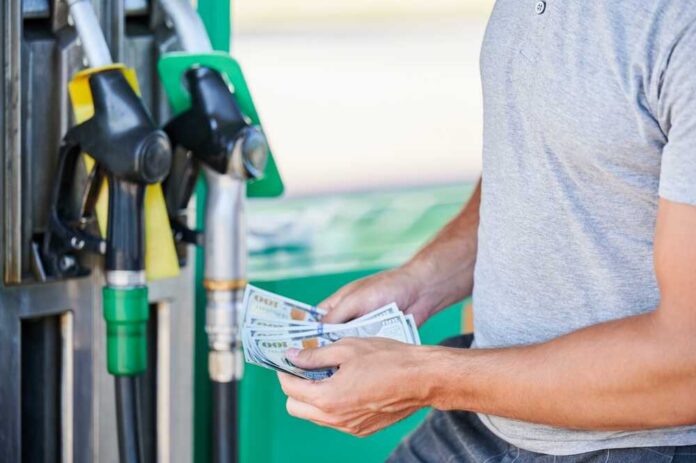
Four-dollar gas is back in America, and this time it arrived on the back of war headlines, blocked oil lanes, and a story nobody in Washington seems eager to tell straight.
Story Snapshot
- National average gas prices have returned to about $4 a gallon during renewed U.S.–Iran fighting, according to the American Automobile Association.
- Oil and gas markets are reacting not just to missiles and blockades, but to refinery problems and trader fear premiums.
- Media and politicians mostly blame the war, while leaving out how policy and planning failures add to the pain at the pump.
- The Strait of Hormuz, a narrow waterway many Americans never see, now quietly dictates what you pay to fill your tank.
Gas prices climb back to $4 as the Iran war heats up again
Drivers woke up to see gas station signs starting with a “4” again, and that is not an accident. The American Automobile Association reported the national average for regular gasoline back at about $4 per gallon after weeks of rising prices.
The New York Times likewise reported AAA data showing the average moved from the upper $3 range to $4 as fighting with Iran escalated again and shipping was hit. This is not a local spike. It is a broad national move that tracks a renewed military cycle.
These highs are not new in this war. Back in late March, gas first broke the $4 line for the first time in more than three years. That jump followed U.S. and Israeli strikes on Iran and a sharp disruption in global energy supply.
The Washington Post and other outlets showed the national average around $4.02, more than a dollar above pre-war levels. In simple terms, once the war started hitting tankers and ports, American families started paying war prices at their corner station.
Strait of Hormuz pressure turns into pain at American pumps
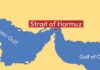
The real lever behind those price signs is a narrow stretch of water halfway around the world. The Strait of Hormuz carries about one-fifth of the world’s oil and gas exports. When Iran attacks shipping or the United States enforces a naval blockade, fewer tankers move through.
Reporters have described tanker traffic dropping to a near standstill as attacks escalated, and energy analysts call this the largest oil supply disruption in history. This kind of choke point risk reliably pushes crude prices up and then hits gasoline within days.
BREAKING: U.S. gas prices have jumped to an average of $4 a gallon again as the U.S. and Iran launch more attacks. https://t.co/axKon9Fysc
— The Associated Press (@AP) July 20, 2026
Recent coverage ties the latest run-up directly to renewed military actions. The New York Times notes that the United States reinstated a naval blockade of Iranian ports and the Strait of Hormuz after a collapsed agreement, hurting shipping and straining already weak refinery supplies.
In that context, Brent crude and United States crude prices have climbed back toward the $90 and mid-$80 range in some trading sessions. When the cost of oil rises that much, gas stations do not absorb it. They pass it through to you.
War headlines are only part of the story behind $4 gas
Many outlets say “Iran war” and stop there, but the data shows more moving parts. Reuters reported that refinery outages inside the United States helped push pump prices near a four-year high, alongside war disruption.
When refineries break down or shut for maintenance, even steady oil supply cannot keep gas cheap. That means some of the squeeze comes from our own energy system being fragile, not just from missiles overseas.
Prices also climbed before the latest attacks, which points to a trend, not just a single shock. Reuters reported gas at about $3.88 on July 10, up six cents in a week, before the average reached $4 later in the month.
PBS reported that gasoline had already risen about 50 percent since the start of the Iran war, with averages around $4.48 at one point. Those numbers show a long grind higher, built from months of conflict, refinery strain, and market fear layered together.
Politics, media framing, and what gets left out
While families juggle budgets, politicians and commentators focus on their own angles. Some leaders talk as if Americans should feel “fortunate” despite prices near $4.50 a gallon, downplaying how hard that hits working commuters and small businesses.
That tone clashes with realism and respect for what families face. When leaders minimize the strain, they make it easier to avoid fixing broken policies on energy and infrastructure.
US gas prices hit an average of $4 a gallon again as the US and Iran launch attackshttps://t.co/tP2ftWAvCq
— ken crichlow (@ken_crichlow) July 20, 2026
Media coverage also leans heavily into the war narrative. Many stories frame the price spike mainly as an Iran war problem, giving less attention to domestic refinery capacity, environmental rules, or seasonal demand changes that tighten supply. Energy traders and analysts talk on television about possible $5 or $6 gas if the Strait stays blocked.
Without clear odds attached, those worst-case forecasts feed fear and volatility. That may help traders who profit from big price swings, but it does not help viewers understand what is likely versus what is only possible.
Common sense questions every driver should be asking
When four-dollar gas returns, the smart question is not just “who fired first?” but “who planned ahead?” A serious approach would ask why the United States let its fuel supply stay so tied to one vulnerable waterway, and why domestic refinery and pipeline capacity has not kept pace with risk.
It would also press regulators on whether emergency rule changes, like relaxed fuel standards or shipping laws, were used quickly enough to cushion families from war shocks.
For now, the facts are clear enough. War in Iran adds a big risk premium to oil. Blockades and attacks through the Strait of Hormuz choke supply. Weak refineries and nervous traders amplify every headline.
Together, those forces are why four-dollar gas is back on your block. The open question is whether anyone in power will treat this as a warning to build a steadier, more independent energy system, or just another talking point to ride until the next crisis.
Sources:
apnews.com, cnbc.com, reuters.com, wsj.com, theguardian.com, time.com, cheddar.com