
The Coast Guard ended its Bahamas search for Lynette Hooker without finding her body, but the real story is what they chose to bring home instead.
Story Snapshot
- The United States Coast Guard ended its latest Bahamas mission without recovering Lynette Hooker’s remains [3][4].
- Investigators seized the couple’s dinghy and sent it to the United States for forensic testing [3][4][9].
- Search teams used divers, underwater robots, drones, and a cadaver dog to scan new “areas of interest” [3][4][8].
- Digital evidence and location data from her husband’s devices drove this new search and raised fresh questions [3][6].
The disappearance that turned a vacation into a crime scene
Lynette Hooker, a 55-year-old woman from Michigan, vanished in early April while boating with her husband in the Sea of Abaco near Hope Town in the Bahamas [1][3].
He told authorities she fell overboard from their small dinghy in rough seas while they were heading back to their sailboat, a 46-foot liveaboard named Soulmate [1][9]. She did not resurface. No one has reported seeing her since that night, and no body has ever been found [2][3].
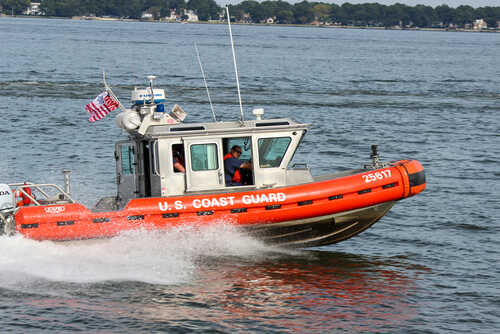
The Coast Guard released new photos Monday as it announced that it has concluded its search in the Bahamas for Lynette Hooker, an American woman who went overboard and vanished two months ago. https://t.co/6RaTCpyU0G
— ABC News (@ABC) June 8, 2026
Bahamas officials and the United States Coast Guard initially treated the case as a missing-person case at sea, then as something more serious. The Coast Guard Investigative Service, the agency’s detective arm, joined the effort and began building a timeline.
They looked at where the couple had traveled, how the dinghy moved that night, and what the husband’s electronics recorded. As weeks passed with no sign of Lynette, the case shifted from a simple boating tragedy toward a possible crime investigation [2][3][4][9].
The intense four-day search that ended with an empty ocean
Two months after Lynette disappeared, the Coast Guard sent a cutter, divers, and a full investigative team back to the Bahamas for a focused, four-day search [3][4]. They did not rely on simple surface sweeps.
They used professional divers, remotely operated underwater vehicles, aerial drones, and a cadaver dog named Maggie to search for new “areas of interest” underwater and along the shoreline [3][4][8]. That level of effort costs serious money and is not launched for a casual hunch.
Those “areas of interest” did not appear by chance. United States officials said forensic evidence from electronic devices belonging to Lynette’s husband pointed investigators to very specific spots in the water [3][6].
One official told ABC News that what he told investigators about his movements did not match the GPS data pulled from his devices [3][6].
That kind of digital conflict is hard to explain away, and it is exactly the type of evidence that pushes a case out of “accident” territory in the minds of many Americans who value facts and accountability.
The dinghy, the data, and the decision to stop searching
During the same mission, Coast Guard investigators seized the small dinghy the couple used the night she vanished [3][4][9]. Bahamian authorities transferred custody of the boat to the Coast Guard, which brought it back to the United States for forensic testing [3][4][9].
Investigators said they would look for blood, hair, or dents that might show a struggle took place on that tiny craft [9]. For many armchair jurors, the dinghy is now the closest thing to a witness in the case.
After those four days of targeted searching, the Coast Guard ended its Bahamas mission and publicly announced the conclusion of its search effort [3][4][5].
A press release made clear that the mission in Bahamian waters was over, but the broader investigation continues [4][5]. News reports repeated the same bottom line: the Coast Guard halted active efforts to find Lynette’s remains in the Bahamas [3][5].
That decision, paired with the depth of the search, supports a practical presumption that she is lost at sea, even if there is no official death declaration yet.
The unresolved questions and what “no body” really means
Federal investigators and local police in the Bahamas have not recovered a body, and they have not publicly announced any charges [2][3][4][5].
For Lynette’s family, that gap cuts both ways. The absence of remains means there is no physical proof of death. It also means there is no chance for a proper burial, which matters a great deal in many American families grounded in faith, tradition, and respect for the dead.
US Coast Guard seizes dinghy from which Lynette Hooker vanished in Bahamas waters. Husband Brian Hooker remains prime suspect after GPS data contradicted his account. Cadaver dogs & divers search… #BahamasMystery #LynetteHooker #MissingPerson #TrueCrimehttps://t.co/lFeisXYMXp
— @GlobalRightWatch (@AutonomusRepost) June 7, 2026
For observers, several points stand out. First, authorities spent real resources and used advanced tools, which signals they see serious red flags, not a freak wave and bad luck [2][3][4][8][9].
Second, the decision to stop the search while keeping the investigation open reflects a hard reality: the government cannot search indefinitely in open waters with no new leads.
That is not cold; it is stewardship of limited resources. The real test now is whether investigators follow the evidence from that dinghy and those devices wherever it leads.
Sources:
[1] Web – Coast Guard ends search for Lynette Hooker in Bahamas
[2] Web – Coast Guard takes custody of dinghy amid new search for Lynette …
[3] Web – U.S. Coast Guard search for Lynette Hooker continues in Bahamas
[4] YouTube – Coast Guard Seizes Boat in Lynette Hooker Disappearance …
[5] Web – Watch Coast Guard searches for Lynette Hooker – FNC | FOX One
[6] YouTube – US Coast Guard searches for missing woman in Bahamas
[8] Web – Lynette Hooker: Investigators seize dinghy as search continues for …
[9] YouTube – Exclusive: Coast Guard Divers Scan For Missing Wife