

Oil is back near pre-war prices, yet OPEC+ just opened the taps again—so who is really steering what you pay at the pump?
Story Snapshot
- Seven OPEC+ heavyweights approved another output hike of 188,000 barrels per day for August.
- Brent crude has dropped from war-spike levels near $120–$126 to the low-$70s as tension eased and flows through the Strait of Hormuz recovered.
- The group has quietly restored about 800,000 barrels per day since April, unwinding earlier cuts while calling the strategy “cautious.”
- Analysts warn soft demand, Russian sanctions, and electric vehicles could turn “stabilization” into a price-crushing glut.
How OPEC+ moved while prices sank back to earth
Seven key producers—Saudi Arabia, Russia, Iraq, Kuwait, Algeria, Kazakhstan, and Oman—agreed to lift their joint August production target by 188,000 barrels per day, their fifth straight monthly increase.
This is not a one-off tweak. Since April, these same countries have brought nearly 800,000 barrels per day back online as they reverse voluntary cuts from 2023. The alliance pitches this as a slow, careful return to normal, not a flood of cheap oil designed to blow up prices.
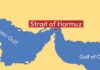
The timing tells the story. Oil had spiked when the United States–Israel war on Iran shut or choked key shipping lanes, especially the Strait of Hormuz.
As fighting eased, shipping restarted and traders stopped panicking. Brent crude slipped from around $120–$126 a barrel at the peak to roughly $70–$75, close to where it sat before the conflict. OPEC+ seized that calmer backdrop to say, in effect, “Crisis over, we can loosen the belt a notch.”
What “recovering supplies” really means—and what it hides
Supporters of the move point to recovering crude exports through Hormuz and falling prices as proof the worst is behind us. But when you look for hard numbers on how many barrels per day actually returned through that chokepoint, you hit fog.
The official language stays vague: “market stabilization,” “easing geopolitical concerns,” and “cautious approach.” There is no public table that says, “Here is the pre-war flow, here is the shutdown low, here is today’s level.” That gap leaves everyday consumers guessing.
Oil prices hover near pre-conflict levels as OPEC+ boosts output again https://t.co/ktSdRqSQni
— FOX Business (@FoxBusiness) July 5, 2026
When a cartel with every incentive to sound confident refuses to publish detailed supply data, the wise response is healthy skepticism, not blind trust. The pattern is familiar.
During past shocks—Russia’s war in Ukraine, Red Sea disruptions—OPEC+ also announced modest hikes while many members quietly missed those promised targets. The gap between quotas and real barrels serves politics first and transparency last.
Confusing numbers and competing storylines
The 188,000-barrel figure itself sounds small, and for the seven core producers it is clear enough. The confusion comes from parallel reporting about larger numbers.
Some coverage cites 548,000 barrels per day tied to a different, earlier agreement involving eight nations, a separate episode that media now blend into this story. For a casual reader, that blurring makes it hard to tell whether OPEC+ is barely nudging supply or slamming the accelerator.
OPEC+ leaders know that ambiguity helps them. A modest official hike reassures governments and green activists that the group is “responsible.” A larger perceived increase, pushed by headlines about “aggressive” moves and “oversupply,” keeps nervous traders in line and reminds rivals who still dominates the narrative.
The result is a schizophrenic media picture: one set of voices praising caution, another warning of a price-smashing wave of oil. That noise is not a bug. It is part of how cartels keep leverage.
The hard math: weak demand and shaky capacity
Behind the talking points sit two stubborn facts. First, demand growth is no longer a sure thing. Electric vehicles, fuel-efficient engines, and slower growth in places like China all drag on oil use.
Analysts now talk openly about “loose” supply conditions and expect non-OPEC+ producers—especially the United States—to drive much of the new output in 2026. That means any extra barrel from OPEC+ has to fight for a buyer instead of coasting into a shortage.
THIS IS STRANGE 🚨
OIL SUPPLY IS STILL 5 MILLION BARRELS A DAY SHORT, BUT PRICES ARE NEAR A 4 MONTH LOW.
Two tankers were hit on the Oman route in the last 24 hours. Iran's IRGC used missiles this time. Previous attacks used drones.
This is an escalation.
Brent is trading at… pic.twitter.com/qIjYY6LA2F
— The Macro Paper (@macropaperr) July 7, 2026
Second, sanctions make Russia the weak link. Western pressure on state giants like Rosneft and Lukoil has already raised doubts about how much they can really pump and ship. Some experts argue that pledged increases on paper will not fully show up in ports and pipelines.
If they are right, the 188,000-barrel headline is more theater than reality. That mismatch between promises and capacity undercuts the cartel’s claim to be the steady hand guiding markets.
What this means for consumers and energy policy
For families and small businesses, today’s setup is a mixed blessing. Lower crude prices near pre-conflict levels offer relief at the pump and for shipping-heavy industries. Yet that comfort rests on a cartel’s political calculus, not on genuine energy independence.
OPEC+ can keep “monitoring conditions” and reverse course the minute prices fall more than they like. They have already signaled they might pause or even re-freeze production if the market “over-corrects.”
The lesson from this latest OPEC+ move is not panic, but clarity. When a handful of foreign governments can nudge your fuel bill with a 188,000-barrel adjustment and a carefully worded statement, the long-term answer is more homegrown production, smarter pipeline and refinery policy, and honest data. The cartel will always act in its own interest. Voters should demand that their own leaders do the same.
Sources:
foxbusiness.com, finance.yahoo.com, apnews.com, reuters.com, newindianexpress.com, youtube.com, facebook.com, linkedin.com, sciencedirect.com