

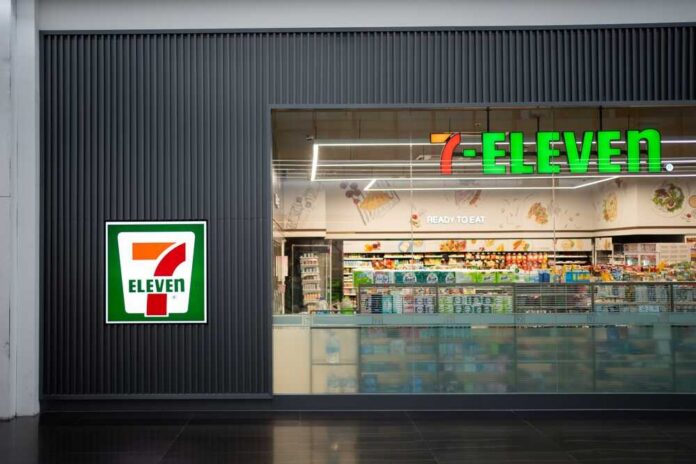
7-Eleven’s plan to close or convert 645 North American stores is less about killing the corner shop and more about rebuilding it as a mini fast-food hub ahead of an expected stock market debut.
Story Snapshot
- Parent company Seven & i Holdings confirmed 645 North American closures or conversions for fiscal 2026.
- The chain is pivoting from cigarettes and cheap snacks toward larger, “food-forward” stores with higher sales.
- Closures will shrink the footprint to around 12,272 convenience outlets across the region.
- Critics see corporate greed and fear higher prices for working-class drivers and families.
7-Eleven is shrinking to grow into a different kind of store
Seven & i Holdings, the Japan-based parent of 7-Eleven, has told investors it will close or convert 645 convenience stores in North America during fiscal 2026, which runs from March 1, 2026 through February 28, 2027. This is not a rumor or clickbait headline.
It is documented in the company’s own earnings reports and repeated in multiple business reports that closely track retail and fuel markets. By the end of this plan, the number of 7-Eleven convenience outlets in North America is expected to drop from more than 13,000 to roughly 12,272.
7-ELEVEN TO CLOSE HUNDREDS OF U.S. STORES: Convenience store giant 7-Eleven plans to close hundreds of locations across the United States as part of a sweeping restructuring effort.
Full Story: https://t.co/MHACg6KY6t pic.twitter.com/KSbftxLiKD
— The Dallas Express News (@DallasExpress) July 19, 2026
The company will open 205 new stores during the same period, but those additions will not fully offset the closures. A portion of the 645 “closures” are really conversions.
Some sites will switch from full-service convenience stores to wholesale fuel locations, where independent operators run the gas pumps under 7-Eleven branding, while the traditional store operations are reduced or removed.
That technical detail matters. Your neighborhood corner may still have 7-Eleven fuel, but the familiar small shop could turn into a more bare-bones operation or vanish entirely.
The Food Forward model: chasing higher sales and an IPO
Inside the company, leaders are clear about why they are doing this. Classic cigarette and packaged snack sales are shrinking, while rivals like Wawa, Sheetz, and Buc-ee’s win customers with hot food, fresh coffee, and roomy stores that feel more like quick-service restaurants than bare-bones gas stations.
7-Eleven has tested larger “food-forward” formats and says those stores drive average daily sales about 18 percent higher than the system-wide average. That is a big jump in unit economics, and it aligns with a plan to take the North American business public after a delay to its initial public offering.
You cut underperforming locations, convert some to simpler fuel operations with less overhead, and push capital toward bigger boxes that sell hot food, coffee, and higher-margin items.
One overview aimed at investors spells it out: closing low-return stores, cleaning up the portfolio, and modernizing old locations is part of getting the numbers in shape for Wall Street. Sound harsh? Maybe. But it follows the same cost discipline many Americans apply to their own budgets when inflation bites.
Underperforming stores, falling cigarettes, and higher costs
Company filings and coverage repeat the phrase “underperforming stores” when they describe recent closures. Over 600 stores were already shut in 2024 and 2025, with several hundred of those in North America.
Researchers who study retail survival find that sales volume, not local politics or media framing, is the strongest driver of whether a store lives or dies. That supports the basic claim that weak traffic and slowing sales can justify closures on cold financial grounds, even when communities feel the loss.
Seven & i Holdings (parent of 7‑Eleven North America) is executing a major reshaping of its U.S. store footprint in fiscal year 2026. An earlier filing said 645 7‑Eleven stores would be closed; the company’s latest quarterly presentation broke that down: plans to permanently c…
— MarketMoodz Sentinel (@MM_Sentinel) July 20, 2026
At the same time, the cost side is getting tougher. Reports note that 7-Eleven’s North American operations face higher costs than some rivals, and inflation has cut into spending by lower-income families, who are a core part of the convenience-store customer base. Cigarette sales, once a reliable profit engine, have dropped sharply since 2019.
When a chain carries higher lease costs, higher labor costs, and weaker tobacco sales, the math stops working at marginal sites first.
Franchisee pain, job losses, and the fear of corporate greed
Yet there is a human side that earnings slides do not convey. The company has not released a list of the specific 645 stores. It has also not disclosed how many jobs will be lost, how many sites will convert to a franchise model versus a fuel-only model, or how many franchisees will be forced out. That silence leaves room for anger and suspicion.
In Australia, investigations have shown franchisees accusing 7-Eleven of “theft” and “rip-off” behavior as corporate moves stripped them of stations and blocked sales. Consumer advocates there call the pattern “systematic,” turning a dry restructuring story into a moral fight.
No U.S. court has ruled against Seven & i’s right to reshape its North American footprint. In fact, key cases, including Patel v. 7-Eleven, have upheld the basic franchise system and its independent contractor status. That legal backdrop matters.
It means critics so far attack the fairness of the closures, not their legality. From this perspective, the burden is on accusers to bring hard data, not just emotional language about greed. So far, no independent audit has surfaced that proves the 645 stores are secretly healthy and sacrificed only to juice short-term profit.
What it means for drivers, towns, and the future of “convenience”
For working and middle-class Americans, the impact will show up quietly. Fewer nearby convenience stores can mean less competition, over time, higher fuel prices, and fewer cheap options for coffee and snacks. That hits rural drivers and lower-income urban areas first, where alternatives may already be thin.
Studies of closures across food and fuel retail find that high-poverty neighborhoods often see more exits and worse service. When 7-Eleven shutters a marginal store in such a place, the spreadsheet smiles but the street gets darker.
On the other hand, the new food-forward boxes may offer better value in places that keep them. Instead of a cramped shop with aging coffee pots, customers may get clean seating, hot sandwiches, and strong loyalty programs. Industry analysis shows that convenience chains that bet on foodservice are becoming real rivals to fast-food restaurants.
That is the deeper story behind the 645 closures: 7-Eleven is trying to stop being a cheap pit stop and start being America’s next quick-food giant. Whether that shift feels like progress or abandonment will depend on which side of town you live on and whether your local 7-Eleven makes the cut.
Sources:
foxbusiness.com, finance.yahoo.com, nypost.com, cstoredive.com, restaurantbusinessonline.com, govinfo.gov, abc.net.au, bostonbar.org, vettedbiz.com, wobm.com