

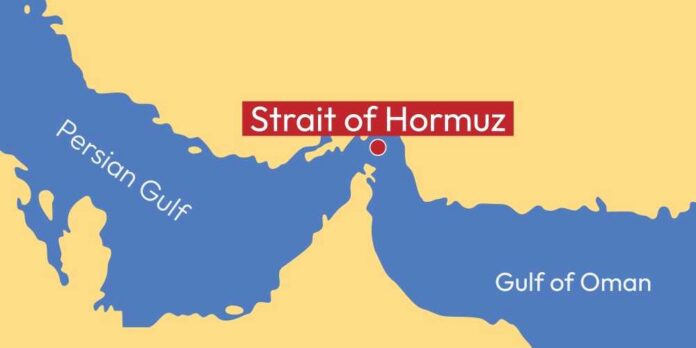
Oil shipments through the Strait of Hormuz have climbed back toward prewar norms, with officials citing daily volumes that indicate the chokepoint is working again.
Story Snapshot
- Treasury’s Chris Wright said flows are “normal” and cited 20 million barrels in one day.
- Scott Bessent told Newsmax flows are “at least 10 million barrels a day,” and rising.
- Goldman Sachs pegs current throughput at about two-thirds of prewar levels, or about 15–16 million barrels a day.
- The Strait moved about 20 million barrels per day before the war, according to global energy benchmarks.
Treasury Signals Normalization, With A Big Number Attached
United States Energy Secretary Chris Wright said crude flows through the Strait of Hormuz look similar to prewar conditions. He cited about 72 ships and roughly 20 million barrels exiting within a single 24-hour window, with military escorts.
That figure matches the prewar benchmark many traders and planners use. The International Energy Agency has described the strait as a 20 million-barrel-a-day artery in recent years, which sets the yardstick for “normal” in policy debates.
Scott Bessent on the Strait of Hormuz:
“I think we got out about 17 million barrels of crude yesterday. That is not Iranian control of the strait.” pic.twitter.com/DGtwDp3fKn
— The American Conservative (@amconmag) September 1, 2026
Markets respond to that kind of clear signal. When a top United States official says “we have normal flows today,” traders hear that supply risk is easing, even if escorts remain part of the picture.
That guidance matters for gasoline prices, inflation, and shipping insurance. It also supports the case for steadier American energy policy: secure lanes, fewer shocks, and a focus on domestic production to keep prices grounded when geopolitics flare.
Analysts See Recovery, But Not Fully Back
Major banks tracking tankers and cargo drafts see a strong rebound, yet not a full return. Goldman Sachs estimates total crude and product exports through the strait at about 15 to 16 million barrels a day. That sits near two-thirds of the prewar pace and well above the spring trough.
This range aligns with the idea that “closer to normal” can still mean fewer ships, fatter cargoes, or more use of pipelines that bypass the waterway.
Other watchers echo a mid-range view. Scott Bessent said “at least 10 million barrels a day” are moving and framed 20 million barrels a day as the prewar baseline. Some experts have suggested 12 to 13 million barrels a day at recent points, arguing the system is not yet at the former peak.
These variants reflect how trackers count: daily transits versus oil volumes, crude versus refined products, and one-day snapshots versus rolling averages.
Why The Definition Of “Flow” Shapes The Headline
Different definitions explain why “normal” means one thing in Washington and another on Wall Street. A single day can clear 20 million barrels if more very large crude carriers pass, drafts deepen, or convoy timing bunches sailings.
But a weekly average can still read lower if weather, security holds, or routing shifts slow the cadence. The rule of thumb remains simple for consumers: the closer Hormuz gets to 20 million barrels a day, the calmer fuel prices tend to stay.
🚨 STRAIT OF HORMUZ COULD LOSE ITS STRATEGIC IMPORTANCE
The Strait of Hormuz could become “worthless” within two years as alternative routes increasingly bypass the critical oil chokepoint, according to U.S. Treasury Secretary Scott Bessent.
🔹 U.S. has held private talks with… pic.twitter.com/nYVs7QBfPz
— Times Of AI (@TimesOfAI_) September 2, 2026
For policy, the lessons are clear. Keep sea lanes open with strength so private commerce can move. Tell the public the truth in plain numbers. Back domestic energy so global shocks have less bite at home.
Those steps reduce inflation pressure, protect retirement savings, and keep businesses planning with confidence—whether flows today print 15 million, 18 million, or around 20 million barrels.
What To Watch Next
Three gauges will decide if “near normal” becomes “normal.” First, sustained daily averages above the mid-teens toward 20 million barrels a day would confirm the rebound.
Second, ship counts should trend higher without heavy escort requirements, signaling lower insurance costs and smoother schedules. Third, refined product cargoes should match crude flows; that pairing shows refineries and storage are synced, not just crude in motion.
Sources:
newsmax.com, bloomberg.com, reuters.com