
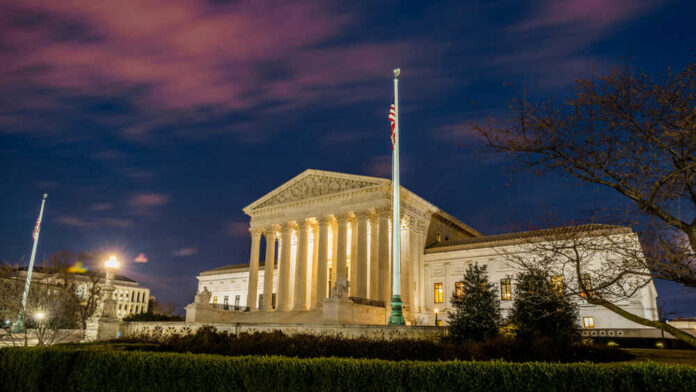
The Supreme Court let President Trump keep building the White House ballroom while the lawsuit continues, signaling the challengers likely cannot even get in the courthouse door.
Story Snapshot
- The Supreme Court allowed construction to continue, focusing on standing, not final legality.
- A federal appeals court had ordered a halt, saying Congress must approve the project.
- Chief Justice John Roberts dissented, calling the project “likely unlawful” without Congress.
- The government says security and continuity needs justify moving forward now.
What The Supreme Court Actually Decided
The Supreme Court issued an order that lets construction continue while the case moves forward. The majority focused on whether the plaintiffs had standing, saying the challengers likely failed to show a concrete injury tied to the project.
The justices did not rule on whether the project is legal. This means work can go on for now, but the fight is not over yet.
Chief Justice John Roberts, joined by the Court’s three liberal justices, disagreed. Roberts said the construction is “likely unlawful” because Congress has not clearly approved it.
He warned that allowing work to continue harms the balance of powers between the branches. His view did not carry the day, but it shows where the legal battle could head in a full decision.
How We Got Here: Lower Courts And A Stop-Work Order
A federal appeals court in Washington, D.C., had ordered the Trump administration to stop building. That court said Congress must approve the ballroom before the executive branch can proceed.
The panel pointed to control of federal property and the power of the purse as core congressional roles. The Supreme Court’s order paused that halt, creating a window for construction to continue during the appeal.
The lawsuit came from a historic preservation group. The group objected after the administration removed the East Wing in 2025 and moved ahead on the new 90,000-square-foot ballroom plan.
The administration argued the project supports security and state functions at the White House. The dispute turned into a classic fight over who can sue, who has authority, and when courts should step in.
Why Standing Matters More Than Slogans
Federal courts require a real injury before anyone can sue. The Supreme Court majority signaled the challengers may not clear that bar here. If the plaintiffs cannot show a specific harm, they cannot block the project in court.
That is why this ruling, even without a final answer on the law, is a practical win for the administration. Work continues, momentum builds, and time favors the builders.
Emergency orders often shape outcomes long before a final opinion arrives. Legal scholars note that such stays can have strong real-world effects even if they carry less precedential value than full opinions.
In plain terms, these orders can decide who acts now and who waits. That is what happened here: the project moves ahead while the merits wait their turn.
Separation Of Powers: Competing Visions
Roberts framed the case as a defense of Congress’s role. He warned the project may sidestep Congress’s control over money and federal property.
He wrote that allowing construction during litigation risks normalizing executive “self-help.” His dissent gives ammunition to those who want Congress to set clearer limits on major changes to the White House grounds.
The administration points to safety, continuity of government, and the needs of official events. Government lawyers said judges should not micromanage the president’s home and office in an emergency posture.
They argued the equities favor finishing core work that supports secure and orderly state functions. The Supreme Court’s order indicates the majority found those practical concerns weighty at this stage.
What Many Should Watch Next
Congress could still act. A bill introduced in the House would explicitly authorize a ballroom at the White House. If that measure passes, it would remove doubt over authority and funding paths.
Until then, the courtroom fight will continue around standing, statutory approval, and the reach of executive power on federal property.
SCOTUSblog said the Supreme Court “allowed” Trump to keep building a White House ballroom. Sit with that verb. A president already tore down the East Wing, hired the crews, and started the work. Then nine people in black robes get described as the ones who let him continue.…
— Flopping Aces (@FloppingAces) September 1, 2026
For readers who value limited government, this phase brings two key truths. First, the Supreme Court recognized weak standing, stopping a legal gambit that could tie up a president’s hands on operational needs.
Second, the Court did not bless or condemn the project on the merits. The rule-of-law path remains open, and so does construction. Keep an eye on Congress and the final ruling. For now, the work goes on at 1600 Pennsylvania Avenue.
Sources:
nytimes.com, newsmax.com, rollcall.com, npr.org, thehill.com, newsweek.com, memeorandum.com, en.wikisource.org, congress.gov, media.cadc.uscourts.gov