
New York City’s chefs built a round-the-clock food lifeline at Ground Zero before relief agencies could catch their breath.
Story Snapshot
- Restaurant leaders formed “Chefs with Spirit” and began hot meal deliveries by Sept. 12.
- The American Red Cross and Salvation Army soon coordinated the operation citywide.
- Meals ran 24/7 for weeks, then shifted into months-long support near the site.
- Boats, makeshift kitchens, and donated food kept thousands of workers fueled.
The First 72 Hours: Kitchens Became Command Posts
Chefs Drew Nieporent and Danny Meyer rallied peers by Sept. 12 under the banner “Chefs with Spirit,” locking in regular deliveries to Ground Zero. That group moved fast with donated food, staff, and gear, turning restaurants into staging hubs for hot meals.
The cadence was simple: cook, load, deliver, repeat. This was a shoulder-to-shoulder response driven by civic pride and muscle memory from busy service lines. The chefs treated rescue workers like honored guests, not a catering contract.
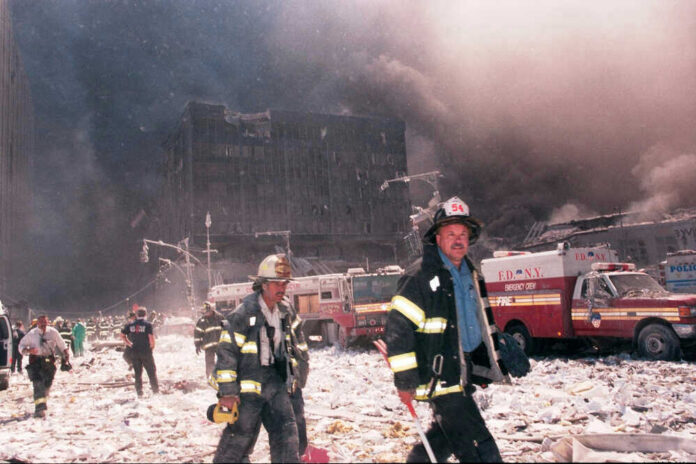
New York City's restaurant community put together a massive operation that fed Ground Zero workers around the clock for two months after the 9/11 attacks.
Read more: https://t.co/EFTa5BuIiv
— ABC News (@ABC) September 8, 2026
Don Pintabona and other leaders met at Chelsea Piers and built a water route to the pile. Crews put food on fast boats, then cooked and served from vessels and makeshift stations. This kept meals steady when roads were shut and air was choked with dust.
The plan favored speed and safety. Firefighters and police got hot food without leaving the work zone. The boats also gave brief quiet moments away from sirens and rubble, which mattered more than calories.
From Ad Hoc To Organized: Relief Agencies Step In
The American Red Cross and The Salvation Army quickly partnered with City Harvest to channel the chef network’s work. This brought badges, logistics, and supply management to a sprint that risked burnout.
Paul Cates of City Harvest said the groups aligned to keep the mission stable under official supervision. That structure let volunteers last through shifts, handle sanitation, and move from day-to-day scrounging to a dependable meal pipeline.
The Salvation Army later counted nearly three million meals served by May 30, when recovery ended at the site. That figure reflects the long tail after the frantic first weeks, when chefs, restaurants, and volunteers fed round the clock.
The pivot from chef-led surge to sustained agency support did not erase the kitchen crews; it protected them and amplified their reach. Good intentions needed clipboards, trucks, and fuel budgets to endure.
Who Showed Up: Names, Places, And A Civic Chain Of Custody
Chefs like Daniel Boulud mobilized their teams the day of the attacks, then joined a 24-hour push for weeks. Bobby Flay and others spent months serving families and workers tied to the site. Nino’s, a mile from Ground Zero, became a free dining room, serving thousands of hot meals daily for much of the nine-month recovery.
These efforts formed a chain of custody for care: restaurants to docks, boats to the pit, and neighborhood dining rooms to exhausted crews.
Media reports and memorial accounts list different durations and totals. That is normal in a sprawling relief scene. What aligns across sources is simple and strong: chefs and volunteers fed Ground Zero without pause early on, and relief agencies scaled the system after.
That arc fits disaster research on spontaneous volunteers who rush in, then get channeled for safety and staying power. In a free society, neighbors move first; institutions make it last.
What Endured: Plain Food, Hard Work, And Moral Clarity
Hot meals did more than fill stomachs. They told workers, and the families waiting on them, that the city had their backs. That message matched common sense: community first, private initiative leading, civil groups supporting, and government partners coordinating.
No one asked what politics you had when you lifted a stockpot. The standard was output: feed the line, clean the station, repeat. The city kept faith by showing up with soup and steam.
Sources:
abcnews.com, slowdown.media, 911memorial.org, cbsnews.com, winespectator.com, downtownny.com, linkedin.com