
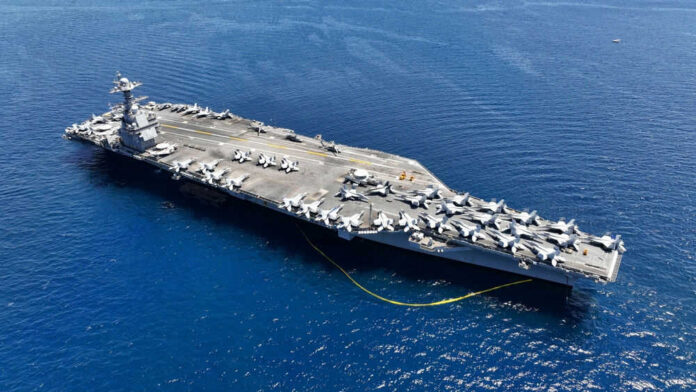
Two Navy pilots punched out of their jet in midair, and four of their shipmates ended up hurt, all in the same chaotic minute on a carrier deck off Virginia.
Quick Take
- Two Navy aviators ejected from their aircraft while landing on the USS Dwight D. Eisenhower on September 28.
- Four sailors on the carrier deck were injured during the same recovery operation.
- The Navy called the event a “mishap” and confirmed search-and-rescue teams recovered both aviators quickly.
- The carrier was operating off the coast of Virginia when the incident happened around 6:18 p.m.
What The Navy Confirmed About The Incident
The Navy said the mishap happened at 6:18 p.m. Eastern time on September 28, aboard the Nimitz-class carrier USS Dwight D. Eisenhower.
The ship was conducting aircraft recovery operations, the routine but high-risk process of bringing jets back onto the flight deck, when something went wrong.
Two aviators assigned to Carrier Air Wing 3 ejected from their aircraft and were pulled from the water by search-and-rescue crews soon after.
2 US Navy aviators eject while landing plane on carrier off Virginia, 4 sailors injured https://t.co/CxxIhkN5qH pic.twitter.com/CSEUttaBQE
— New York Post (@nypost) September 29, 2026
Four other sailors on board were hurt in the same incident, according to Navy statements and multiple news outlets covering the event.
One sailor needed treatment at a medical facility in Norfolk, while the others received care related to the fast-moving ejection sequence, according to reporting on the aftermath.
The Navy has not released the identities of those hurt or the aviators involved, following standard practice while family notifications and initial reviews take place.
Why Carrier Deck Landings Carry Constant Risk
Landing a jet on a carrier is one of the hardest jobs in aviation. Pilots aim for a wire on a moving deck, often at night, with little room for error.
When something goes wrong during that final approach, ejection seats exist for exactly this reason, giving aviators a last chance to escape before a bad landing turns fatal. That both pilots got out and were recovered quickly shows the system worked the way it was designed to.
Naval aviation has dealt with this kind of danger for decades. Dense flight decks, unpredictable weather, and split-second timing make even routine missions capable of turning into emergencies.
Navy safety rules require rapid internal reporting whenever a mishap occurs, followed by a formal investigation to sort out exactly what caused the failure. That process, not a quick public explanation, is how the Navy typically gets to the bottom of these events.
How The Navy Investigates These Mishaps
Under Navy safety instructions, any aircraft mishap triggers a structured chain of notifications, starting with an initial report to the Naval Safety Command within hours of the event.
Investigators then classify the severity, gather maintenance records, and interview those involved before drawing conclusions. This process can take weeks or months, especially when it involves reviewing complex carrier operations and cross-referencing flight deck procedures.
Recent Navy investigations into other carrier strike group incidents show how thorough these reviews can get. A set of reports released on the USS Harry S. Truman’s deployment found that gaps in communication and training played a role in several accidents at sea.
Those findings came out months after the incidents themselves, a reminder that the public often gets basic facts first and fuller answers later.
Two U.S. Navy aviators ejected as they were landing their plane on the USS Dwight D. Eisenhower aircraft carrier off the coast of Virginia on Monday and four sailors aboard the vessel were injured in what the Navy characterized as a “mishap.”https://t.co/ZRxCbdLOwl
— ConflictLive (@conflict_live) September 29, 2026
For now, what’s confirmed lines up across every outlet covering the story: two aviators ejected, four sailors were hurt, and everyone involved was recovered and receiving care.
The Navy’s short statement laid out the timeline plainly, without speculation, which is standard for these early mishap notices. A fuller account of what caused the failure will likely come once the formal safety investigation wraps up.
Sailors serving on a carrier deck accept real risk every time flight operations get underway, and this incident is a stark reminder of that trade-off.
Two aviators walked away from an aircraft that didn’t land the way it was supposed to, and four of their shipmates paid a physical price standing nearby. That’s the reality of naval aviation, handled this week with the discipline the job demands.
Sources:
wlwt.com, x.com, wavy.com, us.headtopics.com, safety.marines.mil, stripes.com