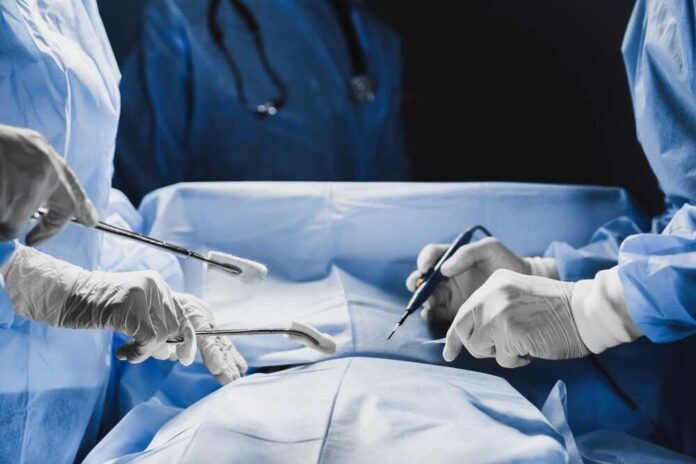
Two two-year-old sisters born fused at the top of their heads are now living as separate little girls, after surgeons in St. Louis spent 25 hours cutting apart the tissue, blood vessels and skull they had shared since birth.
Story Snapshot
- Hiyab and Wuhbto, twin girls from Ethiopia, were separated in a February operation at SSM Health Cardinal Glennon Children’s Hospital in St. Louis.
- The hospital says the procedure ran roughly 25 hours from prep to close, one of the longest and rarest pediatric surgeries done in the United States.
- Doctors performed six earlier surgeries and spent months planning before attempting the final separation on February 24-25, 2026.
- Both girls survived and are now recovering with rehabilitation support at a nearby children’s hospital.
What the Hospital Announced and When
SSM Health Cardinal Glennon Children’s Hospital revealed the outcome in a September 16 news release, months after the operation.
The statement said the girls, born conjoined at the head, underwent a successful cranial separation on February 24 and 25, calling it one of the most complex and rare pediatric procedures performed anywhere in the country.
The twins are craniopagus twins, meaning their skulls and some brain-related tissue were fused together, a condition doctors say occurs in only a small fraction of conjoined twin births. That rarity is exactly why the case drew national coverage once the hospital went public with the news.
Two-year-old conjoined twin sisters saw each other face-to-face for the first time after a successful 24-hour surgery to separate them. Their parents were unable to get visas to travel to the U.S. as their daughters prepared for this life-changing operation, but the hospital says… pic.twitter.com/9pQ4ZqNWLd
— CBS Mornings (@CBSMornings) September 18, 2026
A Year of Preparation Before the Final Cut
Doctors did not walk into an operating room and simply start separating skulls. The hospital says the team carried out six major neurologic and reconstructive surgeries in the months leading up to the final procedure, slowly preparing the girls’ tissue, blood vessels and skin for the moment they would finally be pulled apart.
Dr. Andrew White, one of the physicians who led the effort, described the challenge bluntly. Successful separation, he said, requires sublime precision, meticulous attention to detail, and highly complex coordination across many specialties and partner institutions. That is not hospital marketing talk.
Craniopagus separations demand neurosurgeons, plastic surgeons, anesthesiologists and vascular specialists working almost as one organism for over a full day straight.
The 25-Hour Operation Itself
The main event, the actual separation, stretched more than 24 hours from the first incision to closing the wounds and moving both girls into recovery.
Different outlets have rounded the number slightly differently, some saying 24 hours, others 25, but the picture is consistent: an extraordinarily long, high-stakes surgery that pushed an entire medical team to its limits.
By the early morning of February 25, Hiyab and Wuhbto were separated and placed in their own beds for the first time in their lives. For a family and a surgical team who had spent a year preparing for that single moment, it marked the point where months of planning either paid off or did not. It paid off.
Why This Kind of Surgery Is So Rare
Medical literature on craniopagus separations shows why hospitals treat every successful case as a milestone. A recent 30-year review of reported cases found survival depends heavily on the twins’ shared anatomy, how their blood vessels connect, and whether surgeons can stage the operation in multiple planned steps rather than rushing it in an emergency.
Mortality risk in these cases has historically run as high as 25 percent, according to research published in the New England Journal of Medicine.
Recovery and What Comes Next
Both girls moved to Ranken Jordan Pediatric Bridge Hospital for rehabilitation, where reports describe them hitting new physical milestones as they adjust to life apart for the first time.
Recovery from a surgery this invasive does not end at discharge. It continues for months, sometimes years, as children relearn balance, mobility and daily routines their bodies never had to manage independently before.
🔴 Ethiopian twins separated after 25-hour surgery at St. Louis hospital
Two-year-old girls Hiyab and Wuhbto, born conjoined at the head in a condition called craniopagus affecting fewer than 6% of conjoined twin cases, were surgically separated in February at SSM Health… pic.twitter.com/18ZgoYN8Xs
— NewsTongue (@NewsTongueX) September 18, 2026
The case now joins a short list of documented craniopagus separations worldwide, each one adding to a thin but growing body of medical knowledge about how to safely pull apart two lives that began as one.
For Hiyab and Wuhbto, that history is no longer academic. It is the surgery that gave each girl her own body, her own head, and her own future.
Sources:
ssmhealth.com, wgal.com, fox2now.com, anewz.tv, local12.com, yahoo.com, news.iheart.com, hoodline.com