

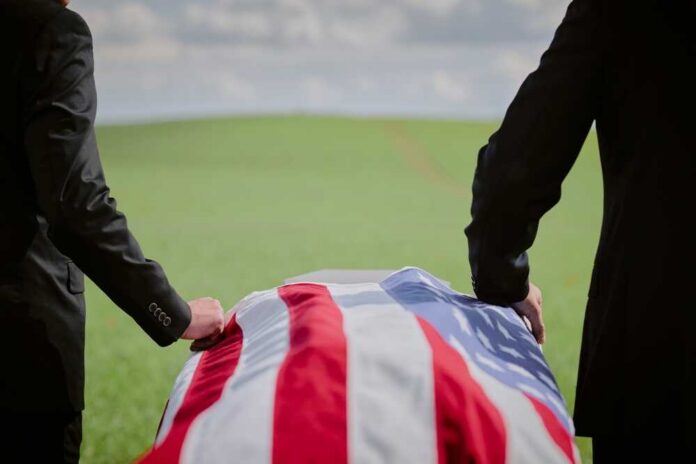
Jay Rockefeller died at his Washington, D.C., home at 89, closing a five-decade arc of public service that began far from the family fortune and ended deep in West Virginia’s hills.
Story Snapshot
- Rockefeller served as West Virginia governor from 1977 to 1985 and as a U.S. senator from 1985 to 2015.
- Major outlets reported his death at home in Washington, D.C., at age 89.
- Coverage highlights his push on health care and economic development.
- The family did not provide a cause of death at the time of reporting.
The day the dynasty came home to West Virginia.
Reporters confirmed Rockefeller’s death with details relayed by a named institutional source tied to his family, which anchored the timing and location. The Associated Press cited Mary Stewart of Washington’s public media station WETA for the confirmation that he died at his Washington, D.C., home, and set his age at 89.
Rockefeller’s résumé reads like a map of commitment chosen, not inherited. He served two terms as West Virginia’s governor from 1977 to 1985 and then five terms in the United States Senate from 1985 to 2015, a longevity that put him at the center of key fights over care, coal, trade, and surveillance. He left office at the close of 2014, marking the end of a 30-year Senate run and nearly 40 consecutive years in statewide service. Those dates are not window dressing; they define the long arc of his influence.
From Parkersburg to Toyota’s shop floor
All politics is local when the mill closes. Rockefeller’s West Virginia years were shaped by the state’s shifting coal economy and the need to build outside it. Coverage of his legacy often points to efforts to lure high-wage employers and modernize training. Toyota’s major plant in Buffalo became shorthand for that push, and the broader pitch was simple: if you want families to stay, give them a reason. That practical test—jobs that last—was the ground truth he chased as governor and senator.
Health care policy became his federal signature. He pressed for programs that protected children and rural hospitals, and he took pride when clinics in the hollers could keep their doors open. Reporters called him a voice for the vulnerable in budget fights that often turned into math by machete. The frame might sound soft, but the work was not; it meant line items, trade-offs, and the grind of committee markups. He built that reputation across decades, not press cycles.
Security, oversight, and the weight of judgment
Committee work on intelligence and commerce set Rockefeller in rooms where the public rarely follows the footnotes. He faced votes on surveillance and war authorities that do not age easily. Friends said he carried those files like a backpack of rocks. Critics said he could be too cautious when clarity was needed. Supporters argued he measured twice before cutting once. Both portraits ring true of a senator who tried to balance safety with American liberty under the law. That balance is the hard part of the job.
Jay Rockefeller, heir to famed dynasty and healthcare advocate in US Senate, dead at 89 https://t.co/8hODTAFbiU pic.twitter.com/lic8BP8toh
— New York Post (@nypost) November 6, 2026
The Rockefeller name always created tension in West Virginia. Voters wanted proof that he chose the state, not a résumé stamp. He responded by moving there young, learning local needs, and staying through defeats and wins. Over time, many saw consistency they could bank on, even if they split with him on national party fights. That was the deal: he showed up, he listened, and he took the vote. In politics, showing up counts more than soaring words when paychecks are thin.
What we know, and what matters now
Major outlets converged: Rockefeller died at 89 at his home in Washington, D.C.; his tenure ran from 1977 to 2015 across state and federal service; and his defining work touched health care access, economic development, and intelligence oversight. The family did not release a cause of death at the time of reporting, and some outlets differed on whether to describe the timing as Thursday night or Friday. The core facts are firm, and they are enough to mark his public life with respect.
Why his record still draws a line
A public servant’s legacy is not one grand law but a sum of small, steady acts. Rockefeller spent his capital where he believed it counted: clinics, factories, and the quiet guardrails of oversight. That approach fits conservative common sense about government’s best work—do the few big things well, be honest about trade-offs, and protect families who play by the rules. You did not have to agree with every vote to see the through-line: people, not headlines, sat at the center of the work.
Sources:
cbsnews.com, washingtonpost.com, post-gazette.com