
A 250-foot arch at Arlington’s front door now pits presidential power against the sanctity of a graveside flame.
Story Snapshot
- Kennedy family members joined a lawsuit to stop a proposed 250-foot arch near Arlington National Cemetery, citing blocked views and shadows on the Eternal Flame.
- The filing says the arch would sever a designed sightline from Arlington Memorial Bridge to the Kennedy gravesites, a view linked to national healing after the Civil War.
- The suit argues the project lacks required congressional authorization under federal commemorative law.
- President Trump says the arch would honor veterans, mark America’s 250th anniversary, and serve national security needs.
The Lawsuit’s Core: A View, A Flame, A Law
Kennedy descendants asked a federal court to block a towering arch planned near Arlington National Cemetery. They argue it would obstruct the clear line of sight from Arlington Memorial Bridge to the Kennedy gravesites and the John F. Kennedy Eternal Flame, which they call essential to the graves’ design. Their filing ties that view to a century-old ceremonial axis meant to symbolize a nation reunited after the Civil War. They also seek a ruling that agencies cannot proceed without clear congressional authorization.
The complaint lands amid other challenges by Washington, D.C., Virginia, veterans, and preservation voices, who say the monument’s size and placement threaten a national memorial landscape. Reports describe a 250-foot structure near the Potomac crossing between the Lincoln Memorial and Arlington. The family’s claim centers on a site-specific harm, not a general dislike of the design. That distinction matters in court and in common sense: you protect what you can point to, measure, and prove.
What The Arch’s Backers Say It Will Do
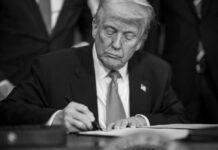
President Trump frames the arch as a gateway that honors veterans and marks the nation’s 250th birthday. A White House statement says it would welcome families of the fallen and remind visitors of the costs of freedom. Officials add a practical pitch: the Interior Department says the project would improve traffic and pedestrian safety around the circle. The administration has also promoted the arch as a dual-purpose monument with national security features to counter drone threats.
Supporters argue the height provides a needed elevation advantage and that security elements could be integrated without changing the public design. The administration also points to early 20th-century planning concepts for monumental forms near the bridge as evidence of continuity. That claim speaks to tradition, but the legal test today still runs through modern commemorative law and the review bodies it names.
The Legal Spine: Congress Sets The Rules
Congress set a clear framework for memorials on federal land in the Commemorative Works Act. The law requires specific acts of Congress to authorize commemorative works on covered lands, plus careful siting to avoid harming existing memorials and open spaces. The Kennedy filing leans on that structure. If there is no explicit authorization and the siting collides with protected vistas, approvals can be vulnerable. That is process, not politics, and it exists to keep sacred ground from mission creep.
Courts weigh concrete injuries. A blocked ceremonial axis viewed from a named bridge toward known gravesites is the sort of tangible claim that earns a hearing. A permanent “shadow” claim will invite testing through sun-path and season models. The record so far reflects the family’s allegation but not a complete engineering analysis in public view. The strongest argument remains the statutory one: follow the law Congress wrote and the agencies must apply.
How This Likely Plays Out Next
Judges tend to freeze the bulldozers when process is in doubt and harms look hard to undo. That is sensible and conservative: measure twice, cut once. Expect the court to press for the full administrative record, specific statutory hooks, and visual-impact evidence that shows the exact extent of any obstruction. Expect the government to stress commemoration, safety, and defense, and to argue that design tweaks can solve conflicts without scrapping the idea.
Americans can hold two truths. Honoring service matters, and so does keeping faith with places made sacred by sacrifice. The better path respects both. If the arch needs Congress, ask Congress. If the view to a graveside flame is part of our national story, share the data in daylight and protect it. Monuments should lift our eyes, not narrow our sight. That is how you build for a century without bulldozing what already binds us.
Sources:
cbsnews.com, bbc.co.uk, courthousenews.com, abc7chicago.com, nytimes.com, bostonglobe.com, washingtonpost.com, congress.gov, uscode.house.gov