

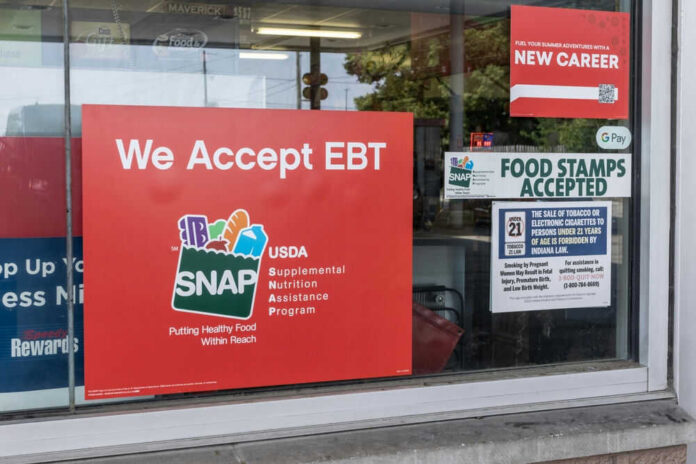
The fight over who should get food aid just turned on a single word: “assistance.”
At a Glance
- USDA proposed narrowing who qualifies for food aid through categorical eligibility.
- Households must receive Temporary Assistance for Needy Families cash aid to qualify automatically.
- USDA projects 6.3 million people could lose benefits in fiscal year 2029.
- Projected five-year federal savings total about $44.6 billion.
What the rule actually changes
The United States Department of Agriculture proposed a rule to tighten how people qualify for the Supplemental Nutrition Assistance Program through categorical eligibility. Many states use a policy called broad-based categorical eligibility. It links food aid to noncash services funded by Temporary Assistance for Needy Families, like job training or informational pamphlets. The new rule would end that path. Only households that receive Temporary Assistance for Needy Families assistance, defined as cash and certain ongoing aid, would qualify automatically.
USDA says this targets benefits to people who meet federal income and asset rules set by law. Today, states using broad-based categorical eligibility can set higher income limits and disregard assets more often. That can keep working families from losing help due to a small raise, but it can also let households with higher resources qualify. The department argues the rule restores the original aim of categorical eligibility while leaving a clear, lawful shortcut through Temporary Assistance for Needy Families itself.
How many people and dollars are at stake
USDA’s analysis projects that about 16.9 percent of participating households, or 17.6 percent of people on the program, would lose benefits because their income or resources are above the federal limits. That equals about 3.2 million households and 6.3 million people in fiscal year 2029, the first full year modeled. The Regulatory Impact Analysis estimates federal benefit payments would drop by roughly $44.649 billion over five years, from fiscal year 2027 through fiscal year 2031. These figures are forecasts, not observed results.
The department also acknowledges possible extra work for states to verify income and assets for more applicants and to recheck current cases that qualified through broad-based categorical eligibility. The proposal notes possible effects on school meal eligibility that rides along with program status. It does not claim zero burden; it weighs those burdens against tighter targeting and lower federal spending.
Why the administration says this aligns with the law
The legal hook is precise. The Food and Nutrition Act allows categorical eligibility when a household gets benefits from Temporary Assistance for Needy Families or certain other programs. Over time, states used Temporary Assistance for Needy Families-funded noncash services to confer that status. USDA now proposes to limit categorical eligibility to households that get Temporary Assistance for Needy Families “assistance” as defined in federal regulations, which centers on ongoing cash and a few specific supports. That draws a bright line the agency says Congress intended.
From a conservative view, this reads like fence repair, not field clearing. Programs need clear gates. The simpler the rule, the fairer the results. If a state wants to help near-poor workers or waive asset tests, it can still do that by checking eligibility directly under the food-aid law. It does not need to hand out a flyer to bypass limits written by Congress.
Pushback and what actually merits scrutiny
Advocacy groups warn of harm to low-income families, citing the 6.3 million figure and the risk of losing linked school meals. They argue that broad-based categorical eligibility reduces paperwork and “benefit cliffs” for people with fluctuating hours. Those concerns reflect real trade-offs, but they do not dispute the core legal change or the department’s projections. The scale number comes from USDA’s own analysis, not outside critics, and should be debated on its methods, not dismissed.
🚨 Big news: The Trump administration is looking to shake things up with SNAP (you know, food stamps). This could affect more than 6.3 million people—roughly 18% of recipients—by cutting off automatic eligibility for families who rely on other aid like TANF.
Here’s what you… pic.twitter.com/EW7GxHx9CU
— Thomas Huffman (@ThomasHuffman79) November 12, 2026
Claims about widespread fraud require careful handling. Public reporting has flagged unverified counts of deceased or duplicate recipients from earlier data pushes. Those assertions have not been backed with underlying case files for independent review. The current rule stands on statutory interpretation and modeled savings, not on those contested fraud tallies. Policy should rest on auditable facts. That means publishing the model code, state inputs, and sensitivity tests so anyone can check the work.
What to watch next: proof, pilots, and guardrails
Three tests will show if this rule delivers. First, transparency: release the modeling methods and state-by-state impacts so lawmakers know which households lose benefits and why. Second, administration: track processing times, error rates, and appeals as states verify more income and assets. Third, protection: monitor whether eligible people fall off due to paperwork while ineligible cases drop as intended. If USDA wants durable reform, phased pilots with published results can turn heat into light.
Sources:
fna.usda.gov, federalregister.gov, khq.com