
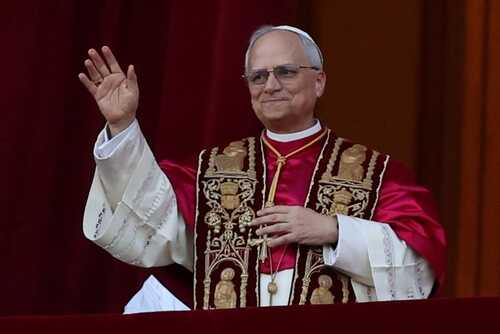
A U.S.-born pope said he mailed a Chicago ballot and called it an act of American pride.
Story Snapshot
- The Holy See said Pope Leo cast a U.S. mail-in ballot.
- Leo told reporters he was proud to be American and to vote.
- Reports cite Chicago as the voting location and a mail ballot.
- Coverage frames it as a first for a sitting pope.
The Vatican confirmed the vote and the pope doubled down
The Holy See press office said Pope Leo “has exercised his right to vote as a United States citizen,” and coverage tied that statement to a mail-in ballot sent from Chicago. Multiple outlets carried the same details. During an in-flight press talk on his South America trip, Leo added the personal note that he is “proud to be an American” and to vote. The Associated Press, CNN, and America magazine each reported the exchange with similar wording and timing.
Leo’s remark did not hint at candidates or party choices. Reporters described the comment as brief and purposeful, centered on civic duty rather than political outcomes. Vatican News placed the voting note within a broader trip update and health questions, which matched the straightforward tone from the Holy See. The practical headline was simple: he voted, by mail, as an American citizen with Chicago roots, and he wanted people to know why he did it.
Chicago roots and a rare step for the papacy
Chicago was the reported origin of the mail-in ballot, a detail that fits Leo’s biography and public persona as the first U.S.-born pontiff. Reporters framed the act as a modern first for a sitting pope, not a break with faith, but a personal exercise of citizenship from afar. That narrow frame matters. The focus remained on the act of voting, not on any attempt to steer voters. The coverage echoed the Vatican’s spare language and avoided any hint of a campaign message.
America magazine described the scene on the papal flight, giving texture to when and how Leo chose to share the news. He connected the vote to gratitude for his country and to the right that every citizen holds. The moment read as a quiet civics lesson rather than a political speech. For many American Catholics, the image of a pope filling out a ballot underscored a point they already teach their kids: rights work only when you use them.
Why this matters beyond symbolism
Americans debate civic duty all the time, but few messengers can make people look up from their phones. A pope who votes does that. The act confirms a basic idea that squares with common sense and conservative ideals: citizenship comes with duties, not just benefits. He did not endorse, rally, or scold. He modeled what millions do each cycle—read, decide, mail the envelope, and move on. That low-drama example is a powerful rebuke to political cynicism.
The cleanest takeaway is also the most useful. Institutions set the rules. Citizens follow them. Chicago offers mail ballots. An American abroad used one. The Holy See stated the fact. The pope explained his reason in a sentence anyone can teach to a teenager. That is how public trust gets built: simple acts, clear words, no spin. The lesson will likely outlast this election and might nudge a few lapsed voters back to the mailbox next time.
Sources:
cbsnews.com, apnews.com, cnn.com, americamagazine.org, vaticannews.va