

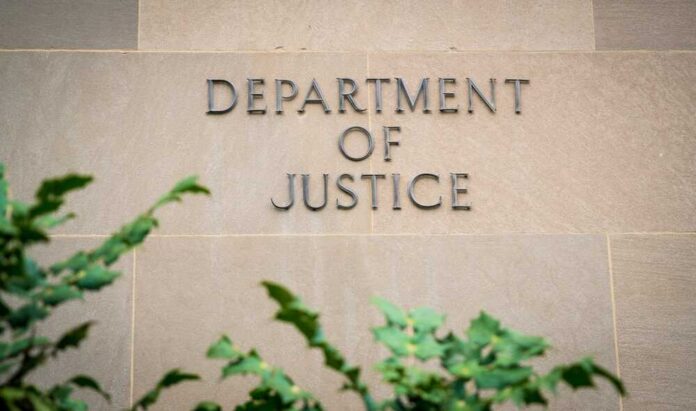
Federal prosecutors want North Korea to give back more than a billion dollars it allegedly stole in crypto’s biggest heist ever.
Quick Take
- The Department of Justice (DOJ) filed a civil case to seize over $1.1 billion in USDC tied to the Binance hack.
- Investigators say North Korean hacking groups Lazarus Group and APT 381 carried out the theft.
- The stolen total from Binance reportedly tops $6 billion, meaning most of the loss is still unrecovered.
- North Korea has publicly denied any role, calling the U.S. claims “absurd rhetoric.”
Justice Department Targets Billions In Stolen Stablecoin
The Department of Justice announced that it filed a civil forfeiture action seeking over $1.1 billion in USDC stablecoin. Prosecutors say the funds trace directly back to the Binance theft and represent laundered proceeds of a crime. The case was filed in federal court in Washington, giving the government a legal path to formally claim the frozen assets if it wins.
Washington wants $1.1B of the Binance hack loot back.
The DOJ filed to permanently forfeit $1.1B+ in frozen USDC tied to the Oct 29 North Korea-linked theft. Of $6B+ stolen, ~$3B is now frozen, seized or returned.
Who should get it? 👀 pic.twitter.com/iW6LGX0pig
— Bpay News (@bpaynews) November 23, 2026
This is not a vague accusation aimed at a faceless hacker. The filing names specific targets: USDC sitting in 36 wallet addresses spread across 18 different blockchains. That level of detail gives a court something concrete to rule on, rather than asking judges to forfeit money based on guesswork alone.
Three Federal Agencies Point To North Korea
This wasn’t one analyst’s hunch. The Secret Service, the Federal Bureau of Investigation (FBI), and the Internal Revenue Service (IRS) criminal division all investigated together. Their joint conclusion names Lazarus Group and APT 381, two hacking units long linked to North Korea’s military, as the likely culprits behind the operation. For readers who’ve watched North Korea bankroll its weapons programs through cybercrime for years, this fits an old pattern, not a new one.
Still, a civil forfeiture filing is a legal request, not a verdict. The government has to prove its case in court before it can keep the money. North Korea, for its part, has flatly denied involvement, with state media dismissing the FBI’s conclusions as “a trite provocation” and “absurd rhetoric” rather than offering any competing account of how the attack actually happened.
Why Stablecoins Make Recovery Possible At All
Here’s the quiet advantage working in the government’s favor. USDC isn’t like bitcoin, which nobody controls. Circle, the company behind USDC, can freeze and blocklist tokens tied to crime. Prosecutors say Circle has agreed to issue the United States brand-new, equivalent USDC once a court signs off on forfeiture, while keeping the original tainted tokens locked down in the meantime.
That mechanism only works because USDC has a corporate gatekeeper. Bitcoin and ether, which made up a huge chunk of the Binance theft, don’t have one. Independent blockchain analysts at Lukka reported that more than $3 billion in stolen assets remain under the attacker’s control precisely because those coins can’t be frozen the way stablecoins can.
A Billion Recovered, Billions Still Missing
Do the math and the gap is stark. The government is chasing roughly $1.1 billion. The total theft, according to multiple reports, runs past $6 billion. That means even a total legal victory in this case would recover less than a fifth of what North Korea allegedly walked away with. The rest sits in wallets authorities either can’t freeze or haven’t yet located.
That gap matters for how Americans should read this story. A billion-dollar forfeiture sounds like a decisive win, and in some ways it is. But treating it as the end of the story oversells the result. The bulk of the alleged theft remains outside anyone’s reach, a reminder that crypto theft on this scale is much easier to commit than to fully unwind.
What Comes Next For Investigators And Binance
Courts still have to weigh the evidence before any money changes hands permanently. Circle’s blocklist buys time, but it isn’t a substitute for a judge’s ruling. Meanwhile, the exact method attackers used to breach Binance’s systems in the first place remains a subject of ongoing technical debate among independent cybersecurity researchers, separate from the forfeiture case itself.
For everyday Americans, the takeaway is straightforward. Federal agencies moved fast, built a specific case, and found a legal lever, Circle’s control over USDC, to actually pull. That’s a rare bright spot in the fight against state-sponsored cybercrime. Whether the rest of the stolen fortune ever comes home is a far tougher question.
Sources:
foxbusiness.com, justice.gov, finance.yahoo.com, news.bloomberglaw.com, thedefiant.io, investmentexecutive.com, apnews.com, hackerstorm.com