

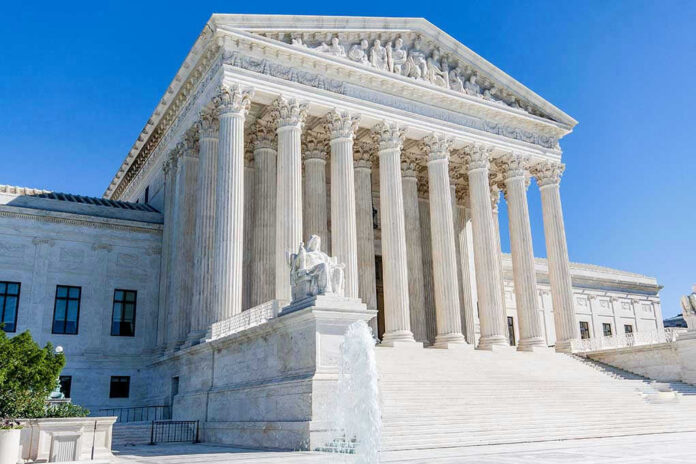
President Trump defiantly raised global tariffs to 15% just one day after the Supreme Court struck down his broader tariff plan, signaling he won’t be deterred by judicial pushback in his mission to protect American economic interests.
Story Snapshot
- Trump announced an immediate increase in global tariffs from 10% to 15% on February 21, 2026, directly responding to a Supreme Court ruling that blocked his sweeping tariff agenda
- The Supreme Court struck down Trump’s broader tariff plan as violating federal law, prompting the President to pursue alternative executive action under Section 122 authority
- Businesses are rushing to import goods during a 150-day window before the higher rates fully take effect on July 24, 2026, potentially creating temporary consumer savings
- US Trade Representative Jason Greer launched investigations into major trading partners following the announcement, signaling continued enforcement of America-first trade policies
Trump’s Swift Executive Response to Court Setback
President Trump announced on Saturday, February 21, 2026, that global tariffs would increase from 10% to 15% effective immediately, just one day after the Supreme Court ruled his sweeping tariff plan violated federal law. The President invoked Section 122 authority under the Trade Act to implement the increase, demonstrating his commitment to protecting American economic interests despite judicial obstacles.
This rapid response showcases Trump’s determination to use every available executive tool to address trade imbalances and strengthen domestic manufacturing. The timing underscores the administration’s refusal to let court rulings derail its economic agenda.
Background of Trump’s Trade War Strategy
Trump’s tariff approach builds on his first-term trade policies, significantly expanded through executive orders under the International Emergency Economic Powers Act and Trade Act authorities. The administration has systematically targeted trade deficits, national security vulnerabilities, and illicit flows through multiple tariff actions since April 2025.
Previous measures included steel and aluminum adjustments in June 2025, progressive increases on Chinese de minimis goods ranging from 90% to 120%, and 100% tariffs on Chinese maritime equipment by October 2025. The Section 122 baseline of 10% global tariffs took effect February 24, 2026, providing the foundation for the latest increase.
BREAKING: Trump raises the global tariff from 10% to 15%, effective immediately.
Says the administration will “determine and issue new and legally permissible tariffs” in the coming months under different legal authority after the Supreme Court struck down IEEPA tariffs… pic.twitter.com/7gAu5eVOTT
— FSMN (@faststocknewss) February 21, 2026
Temporary Window Creates Market Opportunities
Matthew Metzcar, a business professor at UNC Charlotte, explained that businesses now have approximately 150 days to import goods under lower tariff rates before the full 15% takes effect on July 24, 2026. Companies are strategically flooding the market with imports during this window, which could temporarily drive down consumer prices as inventory builds up.
This creates a short-term benefit for American shoppers who may see reduced costs on imported goods as businesses rush to beat the deadline. However, these savings represent a temporary reprieve before higher costs inevitably impact consumers after the summer deadline passes.
Constitutional Authority and Judicial Limits
The Supreme Court’s decision to strike down Trump’s broader tariff plan highlights ongoing tensions between executive power and constitutional limits on trade authority. The Court ruled that the sweeping plan violated federal law, forcing the administration to pursue narrower authorities under Section 122 and existing trade statutes.
This judicial check demonstrates the importance of constitutional guardrails even as the President pursues legitimate policy goals. Trump’s ability to quickly pivot to alternative legal mechanisms shows both the breadth of executive trade powers and the necessity of working within constitutional boundaries.
US Trade Representative Jason Greer opened investigations into major trading partners, ensuring enforcement continues despite the legal setback.
Economic Impact and Future Implications
The tariff increase will affect all imports with limited exemptions, creating broad economic ripples across multiple sectors including automobiles, maritime equipment, and steel products. American businesses and consumers face higher costs after July 2026, with potential inflationary pressure on goods across the supply chain.
Trading partners including China, the European Union, and Russia face escalating countermeasures, with threatened tariffs reaching as high as 500% on Russia-related imports if pending legislation passes.
The administration’s focus on addressing trade deficits and protecting domestic industries reflects conservative principles of economic nationalism and fair trade. While short-term market disruptions are expected, supporters argue these measures strengthen American manufacturing competitiveness and reduce dangerous dependencies on foreign adversaries.