

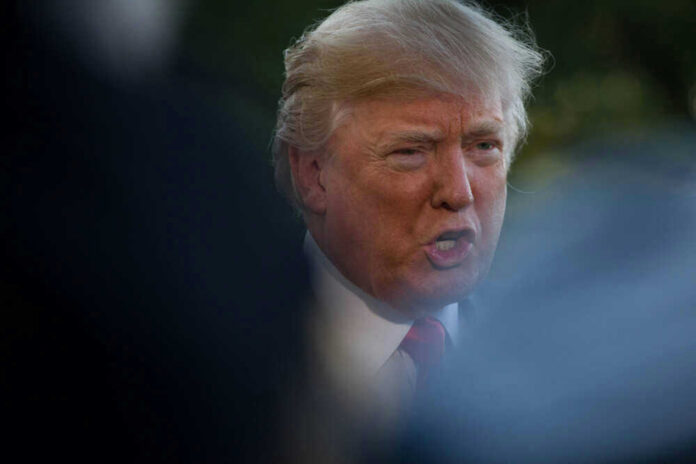
BREAKING UPDATE: TRUMP HAS CANCELED TODAY’S CAMP DAVID MEETING AND WILL HOLD IT AT THE WHITE HOUSE.
A rare Camp David Cabinet meeting signals the White House believes the Iran track just hit a decision point with real consequences for any ceasefire and regional stability.
Story Snapshot
- Camp David was selected for a rare, high-level Cabinet session as Iran negotiations were described as entering a critical phase [1][4].
- Public reporting ties the session to active diplomacy but lacks a detailed readout, fueling speculation beyond confirmed facts [1][4].
- Camp David’s symbolism can overinflate expectations; the site often hosts sensitive talks without guaranteeing breakthroughs [3].
- Signals matter in diplomacy, but outcomes require verifiable commitments, enforcement tools, and clear red lines [2].
Camp David As A Signal, Not A Verdict
Fox News and CBS News both framed the meeting as rare and tied to Iran negotiations moving into a “critical phase,” citing administration positioning and the president’s own optimistic language about talks proceeding “nicely” [1][4]. That linkage makes sense: convening a full Cabinet at the president’s secluded command hub is costly in time and attention, and it publicly advertises urgency. Yet the meeting’s existence proves only one thing definitively: senior officials gathered at a venue built for hard calls, not that a deal is baked or imminent.
The White House’s own description of Camp David underscores why observers leap to conclusions. The site is designed for privacy, decisiveness, and statecraft, long used for sensitive engagements with foreign leaders [3]. Reporters and analysts know this history and treat the location as a strong signal. Signals can be meaningful. However, without a readout detailing decisions, enforcement measures, or timelines, a symbolic choice of venue should not be mistaken for a policy verdict. It indicates the stakes, not the substance.
What The Public Record Establishes—And What It Does Not
The record establishes three core facts. First, a rare Cabinet-level session at Camp David was called for Wednesday [1][4]. Second, the session coincides with intensified Iran diplomacy amid talk of broader understandings after months of conflict and fits the broader pattern of episodic surges in negotiation momentum [2].
Third, prior Camp David huddles in this era have focused on the Iran crisis and Gaza war dynamics, consistent with an administration desire to centralize strategic planning [5]. The record does not establish final ceasefire terms, enforcement architecture, or an operational shift ordered at the meeting.
President Trump is expected to take the unusual step of holding a Cabinet meeting at Camp David on Wednesday, The Washington Times has confirmed. https://t.co/CDCGgU4fnr
— The Washington Times (@WashTimes) May 26, 2026
Claims of “near agreement,” “locked down airspace,” or “deal announcement any hour now” belong to the speculation bucket unless cross-verified by primary briefings or on-the-record commitments with dates, deliverables, and mutual obligations. Media incentives reward urgency framing, and governments often allow that framing to signal resolve or test reactions. Responsible reading separates the government’s chosen optics from confirmed outcomes.
The Substance Test: Red Lines, Verification, And Leverage
Any U.S.–Iran arrangement that flows from this phase will live or die by three pillars: red lines that deter violations, verification that catches cheating early, and leverage that bites when lines are crossed. Reporting about the 2025–2026 negotiation track suggests bursts of progress punctuated by coercive episodes, deadlines, and subsequent pressure campaigns [2].
That rhythm reflects leverage-based bargaining. If the Camp David meeting sharpened these instruments—sanctions snapback, interdictions, or tightly sequenced relief-for-behavior swaps—it could materially change risk calculus without fanfare.
Trump to convene rare Camp David Cabinet meeting amid rising Iran tensionshttps://t.co/30R04msxcO
— ABC 33/40 News (@abc3340) May 26, 2026
From a common-sense lens, results beat atmospherics. Promises without inspection rights are theater. Ceasefire lines without consequences invite probes. Financial relief without behavioral triggers rewards bad timing.
If the administration can emerge with enforceable constraints on proxy activity, missile transfers, and nuclear escalation steps—paired with penalties that activate automatically—then the Camp David signal will have translated into substance. If not, the meeting remains an expensive reminder that symbols cannot outmuscle incentives.
How To Read The Next 72 Hours
Watch for a written readout that includes verbs with teeth—reaffirmed, authorized, directed—rather than gauzy phrasing. Look for specifics on implementation channels: which department leads interdictions, which allied capitals coordinate maritime patrols, and which timelines trigger sanctions return.
Track whether regional partners echo the same milestones, because alignment among Washington, Jerusalem, and key Arab capitals hardens deterrence. If follow-on actions mirror the rhetoric, the “critical phase” label will be justified by outcomes, not just headlines [1][2][4][5].
Sources:
[1] Web – Trump calls rare Camp David Cabinet meeting amid critical Iran talks
[2] Web – 2025–2026 Iran–United States negotiations – Wikipedia
[3] Web – Camp David – The White House
[4] Web – Trump to hold Cabinet meeting at Camp David on Wednesday
[5] Web – Trump discussed Gaza, Iran goals at Camp David strategy session