

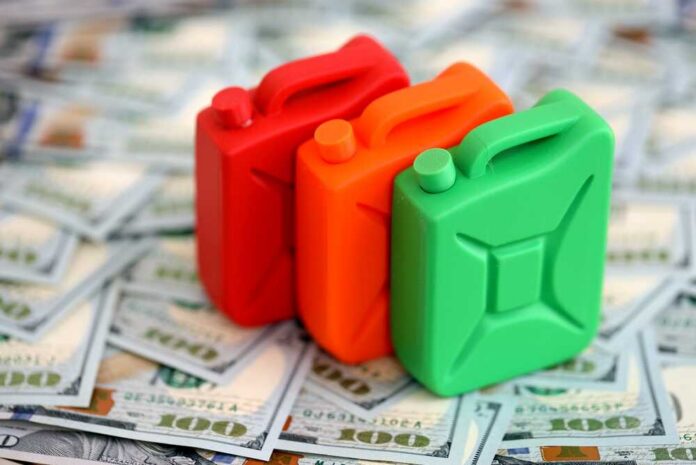
America’s average gas price finally slipped under $4 a gallon, and the why matters more than the wow.
Story Snapshot
- The national average hit $3.98 on November 10, the first sub-$4 since summer.
- Prices dropped about 17 cents in a week and nearly 39 cents in a month.
- Government data also shows a sharp weekly fall to just under $4.
- Many drivers still pay more than $4 because of big regional gaps.
National Average Dips Under $4, Fast
American Automobile Association recorded a national average of $3.9788 per gallon on November 10. That level broke below $4 for the first time since summer and matched broad media reports the same day. The drop was steep in a short span. The average fell about 17 cents in a week and nearly 39 cents in a month, according to coverage that cited American Automobile Association data. For drivers, that means a full 15-gallon tank cost about $6 less than a week earlier.
Official government data tracked the same trend lower. The Energy Information Administration reported $3.995 for regular gas in the week of November 9, down from $4.153 the week before and $4.269 two weeks earlier. That week-to-week slide confirms the pullback wasn’t just a blip at a few stations. It shows a broad market reset as supply improved and demand cooled into late fall.
Why Prices Fell Now, Not Last Week
Motorists always ask what or who caused a price move. The structure of the fuel market gives a plain answer. Pump prices reflect crude oil costs, refining costs and margins, transport and retail costs, and taxes. These parts move with global trade, refinery activity, and seasonal fuel rules. As colder months begin, demand eases, refiners switch from summer to cheaper winter blends, and inventories often build. Prices tend to drift lower into winter, and that pattern showed up again.
Gas prices drop below $4 a gallon for first time since July, after Trump signal no Iran strikes anytime soon https://t.co/PBCll08uIG pic.twitter.com/jBR9pWWPts
— New York Post (@nypost) November 10, 2026
Media coverage linked the timing to familiar drivers: softer oil prices, stronger refinery runs, and typical seasonal relief. One Pennsylvania report also reminded readers that this wasn’t election-week magic, but the same supply-and-demand gears that always control the pump. That account fits common sense and the data. When oil and wholesale gas costs drop, retail prices follow, first in competitive markets, then more slowly where costs stay sticky.
Relief Is Real, But Not Universal
National averages tell a big-picture story. They do not match every receipt. Some regions still sat well above $4 when the average slipped under. Reporters in Pennsylvania cited area prices near $4.20 during the same window. Other outlets noted a similar spread and quoted national readings around $3.98 based on the American Automobile Association. State taxes, local supply chains, boutique fuel rules, and competition levels all shape what drivers see on the street.
One caveat helps keep this milestone in perspective. Prices fell fast, but the Energy Information Administration weekly average near $3.995 still sat much higher than the same time a year earlier, and higher than many prior Novembers. Households felt real relief at the pump, yet many budgets remain tight. That is the tension in this story. The headline number improved, while the long grind of higher costs still weighs on family math.
What Matters Next For Your Wallet
Drivers should watch three signals to see if the drop sticks—first, global crude benchmarks. When crude falls, gas usually follows with a short lag. Second, refinery utilization and gasoline inventories. Strong runs and rising stocks often mean lower wholesale prices that filter to retail—third, regional tax and policy shifts. A local tax hike or a refinery outage can overwhelm a national trend and keep your city above $4 even as the country averages less.
Policy claims will fly because gas is political oxygen. But sound judgment follows the parts list. Cheaper crude, wider refining capacity, and normal winter demand brought prices down. That lines up with the facts and with conservative common sense: markets work when supply expands, and costs fall. Celebrate the savings now. Keep an eye on the inputs that actually move the meter. If those hold, sub-$4 can last longer than a headline cycle.
Sources:
cnbc.com, cnn.com, gasprices.aaa.com, eia.gov, pennlive.com, cbsnews.com, finance.yahoo.com