

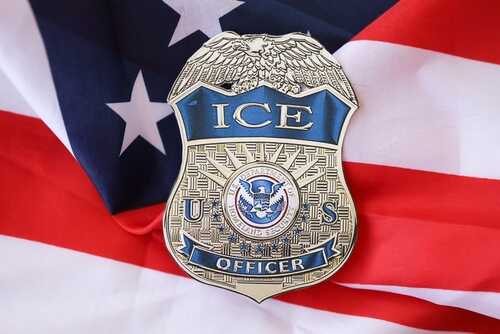
Washington’s shutdown chaos has gotten so bad that ICE is now being used to keep airport security lines moving—and Americans are right to ask who’s really in charge and what rules apply.
Quick Take
- President Trump ordered ICE agents to deploy to U.S. airports starting Monday, March 23, 2026, as TSA lines stretched for hours during a partial DHS shutdown.
- Border Czar Tom Homan says ICE will handle non-screening tasks like crowd control and “moving lines along,” not replacing TSA screeners.
- Critics, including the TSA union and ACLU, argue ICE lacks aviation-security training and could chill travel for immigrant families even without formal enforcement.
- Key operational details remain unclear, including exactly which airports are involved and whether ICE will operate X-ray equipment.
Shutdown travel gridlock triggers an unusual federal workaround
President Donald Trump announced that Immigration and Customs Enforcement agents would deploy to airports beginning Monday, March 23, 2026, as long security lines spread during peak spring travel.
The immediate cause is a partial Department of Homeland Security shutdown that has left TSA understaffed, with workers missing paychecks and absences expected to worsen. Reports cited extreme waits, including about 150 minutes in Houston and more than two hours in Atlanta.
Tom Homan, serving as the White House “border czar,” said the purpose is to free TSA officers for screening by assigning ICE to support roles such as guard duty, line management, and general crowd control.
Atlanta Mayor Andre Dickens said agents at Hartsfield-Jackson were there for line management rather than immigration enforcement. The administration has not publicly detailed every airport involved, though reporting referenced a document suggesting up to 14 airports.
What ICE will do—and the questions officials haven’t fully answered
The central dispute is not just whether the lines improve, but what tasks ICE will perform inside security operations. Transportation Secretary Sean Duffy suggested ICE could run X-ray machines because both agencies sit under DHS, while Homan emphasized ICE would not be doing specialized screening.
That conflict matters because aviation security is not generic law enforcement; it requires specific training, procedures, and oversight to avoid mistakes.
President Trump encouraged ICE agents not to wear masks as they deployed to airports across the country to help manage long security lines amid the lapse in funding for the Department of Homeland Security https://t.co/9VUbLcErfU
— The Wall Street Journal (@WSJ) March 23, 2026
The TSA union, led by AFGE President Everett Kelley, warned that “untrained” agents in a security environment create risks and could complicate already stressed checkpoint operations.
Civil-liberties groups and Democrat leaders raised a different concern: that ICE’s visible presence could intimidate travelers, particularly mixed-status families, even if the official assignment is only crowd control. Those concerns hinge on execution—what agents are instructed to do, and what they actually do.
Congress’ funding fight left ICE flush and TSA strained
This shutdown dynamic has a political backstory that many voters will recognize: Washington picked winners and losers inside the same department. Congress previously funded ICE robustly through the 2025 “One Big Beautiful Bill Act,” while other DHS components—including TSA and FEMA—were left more vulnerable during the current impasse.
The result is a government that can field enforcement manpower while basic travel infrastructure strains under unpaid or absent screeners.
Negotiations have been further complicated by fallout from earlier 2026 shootings in Minneapolis in which two U.S. citizens, Alex Pretti and Renee Good, were killed by federal immigration agents—an episode that sparked Democrat demands for ICE restrictions such as judicial warrant rules and mask bans.
Reporting indicates the White House offered limited concessions, including body cameras and limits on “sensitive locations,” while rejecting other demands. No durable funding deal has been finalized.
Constitutional trust and mission creep worries meet practical security needs
For conservative Americans already exhausted by government dysfunction, the bigger issue is mission clarity and accountability. Airports are sensitive spaces where citizens expect uniform rules, predictable procedures, and minimal political theater.
Using a funded enforcement agency to patch holes created by a funding breakdown may be expedient, but it also risks normalizing emergency workarounds instead of forcing Congress to perform its core duty: funding essential government functions responsibly and transparently.
ICE deployed to some U.S. airports as long security lines persist during partial shutdown https://t.co/5Dm7m3lDSL
— CNBC (@CNBC) March 23, 2026
The administration’s stated goal is narrow—reduce wait times by shifting non-screening tasks off TSA—but the public will judge results and behavior on the ground. If ICE is truly limited to crowd management, officials should be able to spell out duties, oversight, and complaint channels in plain English.
If responsibilities blur into screening or immigration checks at terminals, that is a materially different policy that deserves open debate, not shutdown improvisation.
Sources:
ICE Officers Set to Deploy to Airports as Delays Mount, Border Czar Homan Confirms