

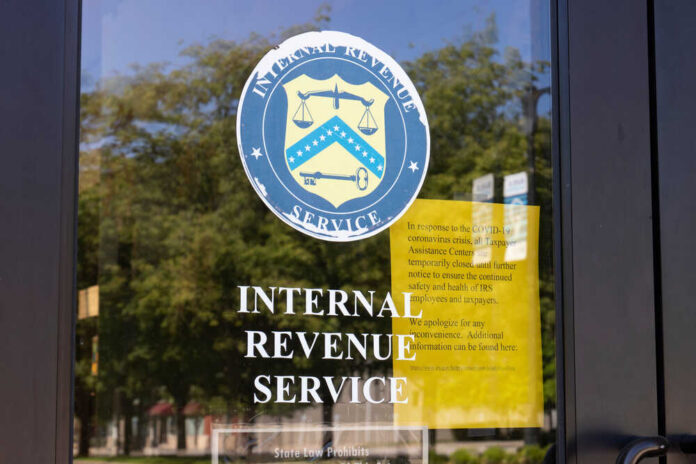
One stolen Social Security number can trap a taxpayer in a long, silent wait that lasts almost two years.
Quick Take
- The National Taxpayer Advocate says the Internal Revenue Service (IRS) took about 676 days on average to resolve identity theft victim cases in fiscal year 2024, up from 556 days in fiscal year 2023 [1].
- The watchdog called those delays “unconscionable” and said the IRS should aim for a 90-day to 120-day fix, not a wait measured in months [1][2].
- The IRS argues that identity verification protects against fraud and says many cases are resolved without taxpayer contact, which cuts against the idea that every case sits for nearly two years [6][12].
- Both things can be true at once: the IRS can stop fraud and still leave victims stranded too long [1][6].
The Case Behind the Outrage
The core complaint is simple. Victims report a brutal gap between filing a paper return with Form 14039 and hearing anything useful back from the IRS [1].
The National Taxpayer Advocate says the average wait rose from 556 days in fiscal year 2023 to 676 days in fiscal year 2024, which is more than 22 months [1]. That kind of delay can swallow a refund before a family can use it.
The IRS does not dispute that identity theft is a real threat. It says the system must verify claims to stop fraud and protect accounts going forward [12].
Treasury Inspector General for Tax Administration data shows the IRS resolved 955,000 identity theft filter selections without contacting taxpayers, which means many cases never reach the slowest stage [6]. That matters, because the public debate can blur fast, automatic resolutions with the cases that truly bog down.
Identity theft victims face 'unconscionable' IRS delays, report says https://t.co/Cr9SmTBeou
— CNBC (@CNBC) June 24, 2026
Why the Process Moves So Slowly
The Taxpayer Advocate Service points to old systems and old habits. It says the IRS still transcribes paper returns digit by digit and uses about 60 case management systems that do not talk to each other [3].
That is not just clumsy. It is the kind of setup that turns one identity theft case into a relay race with no handoff. The IRS also kept using these legacy methods even as the backlog grew [3][4].
Another pressure point is scale. The Taxpayer Advocate Service said the IRS ended fiscal year 2024 with nearly half a million unresolved identity theft cases and that the average resolution time for many victims had climbed to over 22 months [1][2][5].
The agency has taken some steps to reduce the pile, including focusing on a smaller group of aged cases and newer cases that returned refunds to victims, but the improvement has not yet pulled the overall average down enough [5].
Why This Still Feels Personal
This is not an abstract service problem. The Taxpayer Advocate says long waits hit low- and middle-income taxpayers hardest because refunds often pay rent, utility bills, and transportation costs [5].
The IRS can say it is preventing fraud, and that is true. But a system that protects money by freezing it for nearly two years creates a second injury for the victim. That is why the word “unconscionable” has stuck [1][2][5].
A man hacked American tax firms, stole identities, sold fake "letters of credit" — and somehow also had a Hong Kong alias on standby.
This one's a two-for-one fraud special 🧵
Chukwuemeka Victor Amachukwu, extradited from France to face US charges. Also known as "Chukwuemeka… pic.twitter.com/4SAI8bdo41— NaijaFraudWatch (@ksley11) June 25, 2026
The strongest common-sense critique is not that the IRS should ignore fraud. It is that government should not ask honest people to carry the cost of broken administration. A secure tax system must be both tough and efficient.
If the agency can resolve some cases in days after identity checks, it should bring that discipline to the whole pipeline instead of letting victims sit in the dark [6][12].
What the Numbers Leave Unsaid
The headline numbers are powerful, but they do not tell the whole story. The Taxpayer Advocate gives averages, not a full spread of case times, so readers do not know how many victims are stuck near the worst end versus solved sooner [1][5].
The record also does not give a detailed count of financial harm in each case. That leaves room for the IRS to argue that the average hides faster resolutions and that security work has real value [1][6].
Still, the trend line is hard to ignore. The average kept rising, the backlog stayed large, and victims were left waiting with little communication [1][2][5].
The IRS may call that the price of fighting fraud. Critics call it a management failure. The truth is narrower and more useful: a system that cannot separate protection from paralysis needs a redesign, not a slogan.
Sources:
[1] Web – Identity theft victims face ‘unconscionable’ IRS delays, report says
[2] Web – Identity Theft Victims Are Waiting Nearly Two Years to Receive Their …
[3] Web – IRS Refund Delays – Ronald S. Cook, LLM, JD, MBA
[4] Web – NTA Issues Mid-Year Report to Congress 2026 – TAS
[5] Web – [PDF] PROBLEM TITLE IDENTITY THEFT – Taxpayer Advocate Service – IRS
[6] Web – Identity Theft Awareness and Update on IRS Processing of Identity …
[12] Web – [PDF] PROBLEM TITLE IDENTITY THEFT – Taxpayer Advocate Service – IRS