

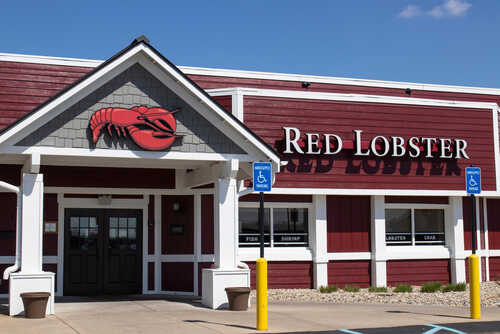
The most visible Red Lobster in America is closing not because New Yorkers stopped eating shrimp, but because the ground beneath Times Square itself is being rearranged for a very different future.
Story Snapshot
- Red Lobster’s three-story Times Square flagship at 5 Times Square will close June 14 after 23 years of operation.
- The company blames prolonged construction and a building conversion from offices to apartments for making the site “economically unsustainable.”
- The shutdown lands in the middle of Red Lobster’s Chapter 11 bankruptcy and a wider wave of more than 100 closures nationwide.
- The story reveals how landlord ambitions, urban redevelopment, and corporate missteps collide on one incredibly expensive corner.
A flagship chain in the brightest spotlight goes dark
Red Lobster did not pick a quiet corner strip mall for its big New York statement; it picked 5 Times Square, a three-story glass box in the middle of the neon storm, and kept it open for nearly a quarter century.[1][2]
The company now says the last cheddar bay biscuit will be served there on June 14, ending a 23‑year run at one of the most heavily trafficked tourist intersections in the country.[2] That is not just another store closure; it is the chain walking away from its most recognizable billboard.[2]
Red Lobster’s explanation is blunt: prolonged and “extensive” construction at the building hammered access, visibility, and foot traffic, and the economics no longer worked.[2] Ongoing work has wrapped the property in scaffolding and disruption as the landlord pushes a conversion from empty offices to residential units above.[2]
The company publicly linked those physical changes to a single conclusion: Times Square’s rent and disruption turned its flagship into a losing proposition, even before considering broader financial trouble.[2]
Construction, conversion, and the high-rent math of Times Square
Times Square real estate is not priced for sentimentality; it is priced for yield. Reports indicate the building’s owners were seeking roughly $2.2 million a year in rent from Red Lobster, a figure that only makes sense if the dining room stays packed and the billboard effect justifies the rest.[1]
Once construction fences go up, tourists do not fight their way to a blocked entrance; they drift to the next bright sign selling pasta or burgers. Business math apply here: when costs are fixed and traffic plunges, you cut your losses.
Red Lobster to close Times Square restaurant after more than 20 years https://t.co/1XYXrwVQOm
— FOX Business (@FoxBusiness) June 1, 2026
Developers in Midtown Manhattan have spent the last several years trying to solve a post-pandemic office glut by turning older towers into housing. That may be smart for long-term property values, but it rarely helps ground-floor tenants that rely on stable patterns of office workers and predictable pedestrian flow.
Red Lobster’s statement that the conversion to apartments would not restore its economics fits that broader pattern: someone may eventually profit from those new residential units; it just will not be the chain that paid to hold the corner during the lean years.[2]
Bankruptcy backdrop and a chain already on defense
Red Lobster did not arrive at this decision from a position of strength. The company filed for Chapter 11 bankruptcy protection in May 2024 and acknowledged more than 100 closures across the country in the period around that filing.[2] Trade press reports say the Times Square site was already on a watch list of locations that might not survive the restructuring.[2]
That context matters: corporate management had every incentive to scrutinize the most expensive leases and exit anything that did not pencil out under other traffic assumptions.
Some commentators frame the Times Square closure as proof that casual dining itself is dying in dense cities. That argument ignores the chain’s broader history of aggressive promotions, questionable menu economics, and shifting ownership decisions that weakened its balance sheet long before scaffolding went up in Midtown.[2]
From a common-sense lens, the more convincing explanation is not cultural decline, but the predictable result of pairing high fixed costs with management decisions that chased volume instead of sustainable profits.
What this says about urban dining, tourists, and corporate spin
The company’s stated reason—construction disruption and redevelopment—faces no meaningful on-record rebuttal. Yet the timing invites a second reading. Corporations often highlight a concrete local cause when they shutter a flagship, while analysts see the same move as part of a broader retrenchment.[2]
Both can be true: the scaffolding and building conversion may have turned a marginal site into a money-loser, and bankruptcy-era cost discipline then forced executives to act where, in boom times, they might have waited for the dust to settle.
🚨 END OF AN ERA:
The Red Lobster in Times Square is closing after 23 years in operation.
The iconic Midtown location will reportedly shut its doors due to ongoing construction impacts in the area.#NYC #TimesSquare #RedLobster #Manhattan #UnfiltNY pic.twitter.com/b6fUSCzEhw
— UnfiltNY | NYC News (@UNFILTNY1) June 1, 2026
New Yorkers react to the closure with the usual mix of nostalgia and mockery—some cheering the end of a chain in Times Square, others remembering late‑night dinners after Broadway shows. Beneath the jokes sits a quieter reality: national brands long used these high-rent showcases to signal stability and bigness.
When even a mass‑market seafood giant walks away from that symbolic heart of American tourism, it signals a reset. Landlords will still find tenants, but they may be dealing with more cautious corporations that now treat “flagship” as a negotiable luxury, not a necessary trophy.[2]
Sources:
[1] Web – Red Lobster to close Times Square restaurant after more than 20 years
[2] Web – Red Lobster’s Flagship Times Square Restaurant Is Closing After 23 …