
America’s military archbishop told Catholic soldiers to ask out of the firing squad, and that one sentence just cracked open a fault line between conscience, command, and a planned public execution.
Story Snapshot
- Archbishop Timothy P. Broglio urged Catholic troops assigned to the firing squad to request exemption.
- His statement also warned that livestreaming the execution would degrade human dignity.
- Army rules allow religious accommodation requests, but selection and approval processes remain unclear.
- Pentagon leaders say President Trump approved a firing-squad execution for Nidal Hasan.
The Direct Order From a Pastor, Not a Commander
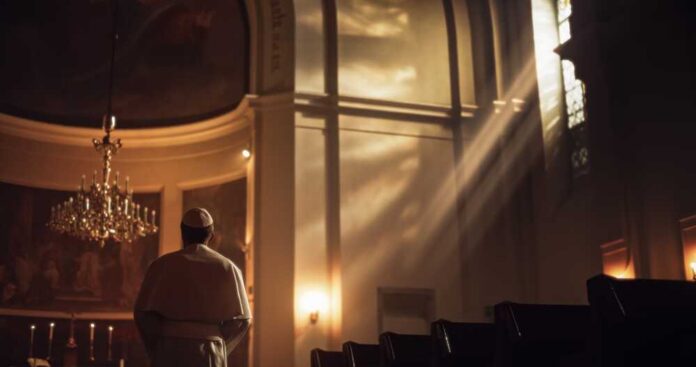
Archbishop Timothy P. Broglio, head of the Archdiocese for the Military Services, issued a clear directive on October 12, 2026. He wrote that any Catholic assigned to the firing squad should request to be excused, calling the role contrary to Church teaching. He framed the guidance as a pastoral obligation to the souls under his care, not as a military command. The Archdiocese posted the statement publicly, removing any doubt about authorship, timing, or intent.
Broglio anchored his objection in human dignity and in the moral agency of the trigger-pullers. He tied his stance to how the event would be shown to the public. He argued that a broadcast risks turning death into spectacle, which adds a second moral problem to the first. Stars and Stripes reported his concern that livestreaming undermines human dignity and turns an execution into a show for the world, not a sober act of justice within strict limits.
What the Government Has Authorized, and What It Has Not Said
The Pentagon said Defense Secretary Pete Hegseth recommended, and President Trump approved, a U.S. Army firing squad for Nidal Hasan, the Fort Hood killer. That decision meets the legal requirement that a president approve a military execution. Officials also said the military would make the execution public, which would mark a break from decades of practice. The Department of Defense has not explained how it will choose the firing squad or handle exemption requests.
Archbishop for the Military Services, USA, has issued a strong statement on the proposed execution of Nidal Malik Hasan by firing squad. Timothy Broglio has condemned the execution. He is also concerned about a proposal to livestream it. Archbishop Timothy Broglio, the Archbishop… pic.twitter.com/VIKEP8OhXx
— EWTN News Nightly (@EWTNNewsNightly) October 14, 2026
Reporting from Canada’s national broadcaster said Army rules allow service members to request religious accommodations. It also said the Army had not explained how it would select firing-squad members. That gap matters. An exemption path only helps if a soldier knows whether they might be assigned, how to opt out, and who decides. The lack of process detail leaves troops guessing and invites confusion between pastoral guidance and command authority.
Three Colliding Questions: Death, Duty, and Display
This case blends three issues that rarely mix at once. First, capital punishment in a military setting. Second, religious conscience in the chain of command. Third, a plan to livestream a state killing. Each has its own rules and history. Together they create new friction points. The archbishop speaks for faith and dignity. The Army speaks for order and mission. The camera adds a stage and an audience that change how every actor feels about the act.
From a conservative common-sense view, the state must punish evil but should do it without turning punishment into entertainment. Closed, orderly procedures guard the public square against blood sport. When the government puts death on a feed, the moral stakes change for participants. That reality strengthens the archbishop’s case that a Catholic ordered to shoot should have a way to step aside in good faith without facing career-ending fallout.
Clear Facts, Live Questions
Several facts stand firm. The archbishop’s statement is public and specific. The Pentagon says the president approved a firing squad. Major outlets describe a plan to make the execution viewable. The open questions start where policy meets people. We do not yet know whether any Catholic soldier has asked out, or how the Army would rule on that request. We also do not know the final selection method for the squad or the exact broadcast format.
One more dispute lingers in the background. Legal scholars at Georgetown Law note that Army regulations identify lethal injection as the approved method. That analysis suggests a regulatory clash with the announced plan, though the Pentagon’s approval signals confidence in its authority. This is a narrow, technical fight, but it could affect timing, process, and the role of assigned personnel in ways that reshape the conscience question on the ground.
The Path That Protects Both Conscience and Command
Practical answers are available if leaders choose prudence. The Army can pre-screen for volunteers, then provide a clean religious-accommodation channel before any formal assignment. Commanders can protect objectors from retaliation while maintaining discipline. The government can limit access to a small witness pool instead of streaming to the world. These steps align punishment with order and dignity, keeping the focus on justice rather than spectacle. That is how a serious nation handles a grave task.
Sources:
vaticannews.va, apnews.com, washingtonexaminer.com, yahoo.com, huffman.house.gov, bbc.com