

The U.S. moved fast after the tanker attacks, and that speed now sits at the center of the story.
Quick Take
- The Trump administration revoked a sanctions waiver for Iranian oil sales after attacks on tankers near the Strait of Hormuz.
- U.S. Central Command called Iran’s conduct “unwarranted, dangerous and a clear violation of the cease-fire.”
- The White House tied the policy change directly to the attacks, then used it as part of a broader military response.
- Iran denied responsibility, but the public record in the provided sources relies mostly on official statements, not released forensic proof.
The Policy Shift Came With the Strikes
The administration revoked the waiver right after the tanker attacks, turning a sanctions question into a live test of force.
Bloomberg and The Hill both reported that the U.S. ended the oil sales authorization after strikes in the Strait of Hormuz, with Bloomberg noting a short grace period for traders and The Hill describing the move as a revocation of the waiver that had let some Iranian oil and petrochemicals move through.
That matters because the policy did not stand alone. The same news cycle also brought U.S. strikes on Iran, which made the sanctions decision look less like a routine Treasury action and more like part of a rapid answer to a maritime attack. The New York Times said the waiver was cut short after the attacks, reinforcing the claim that the change followed directly from events at sea.
What the U.S. Said It Knew
The strongest public claims came from U.S. officials, not from a full evidence dump. U.S. Central Command described Iran’s actions as a “clear violation” of the cease-fire, and the White House framed the attacks as the trigger for the U.S. response. In other words, the administration presented the revocation as punishment for an act already judged hostile, not as a waiting period for more proof.
BREAKING: President Trump confirmed the U.S. launched what he called “very powerful” retaliatory strikes against Iran after the regime fired rockets at ships, warning that any future attacks would be met with overwhelming force.
“We attacked very powerfully last night,” Trump… pic.twitter.com/xmGDV1IUlw
— Breaking911 (@Breaking911) July 8, 2026
That approach leaves one important gap. The sources provided here do not show a public release of radar tracks, satellite images, or recovered weapon fragments tied to the attack. The case rests on government statements, timing, and allied support. That is enough for a policy move, but it is not the same as a courtroom-grade public record.
Iran’s Denial Keeps the Core Fight Open
Iran rejected the blame. In the older Gulf of Oman precedent cited in the research, Iranian officials “categorically” denied responsibility and said other actors were trying to wreck Iran’s ties with the outside world. The same pattern appears here: denial from Tehran, accusation from Washington, and no shared public evidence set that would end the argument in one stroke.
That is why the story still has two layers. The first is the U.S. decision to cut off oil sales authorization. The second is the harder question of proof. The public sources supplied here show a confident U.S. response, but they do not show the kind of released technical evidence that would settle the matter for outsiders. For readers, that distinction is the key to understanding the gap between action and certainty.
Why the Strait of Hormuz Raises the Stakes
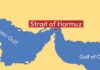
The Strait of Hormuz is not just another shipping lane. It is one of the world’s most sensitive energy chokepoints, so any attack there can shake oil markets fast. The supplied reporting shows that the tanker attacks triggered not only military retaliation but also a fresh round of sanctions pressure, which means the conflict spread from the water into energy policy within hours.
US reinstates sanctions on Iranian oil sales after LNG, oil tanker attacks
WASHINGTON, July 7 (Reuters) – The United States on Tuesday re-imposed sanctions on Iranian oil, as a U.S. official warned that Iran's attacks on vessels in the Strait of Hormuz were "wholly… pic.twitter.com/7yixo2bstE
— Divine Oreoluwa (@Divine_Oreoluwa) July 8, 2026
That chain reaction is what makes this episode bigger than one waiver. A maritime strike can now change sanctions policy, move markets, and reset the diplomatic clock all at once. The U.S. treated the attack as proof of bad faith and answered with force plus financial pressure. Iran answered with denial. Until the public sees stronger evidence, that split will keep the story unsettled.
Sources:
cnbc.com, thehill.com, bloomberg.com, en.wikipedia.org, wsj.com, instagram.com