
Passengers say the jet “started to plummet” after three storm-battered landing attempts, before the crew diverted and landed safely.
Story Snapshot
- A Turkish Airlines flight from Istanbul to Tunisia hit severe turbulence during descent.
- Passengers report three approaches to Tunis-Carthage before a sharp drop and diversion.
- The aircraft landed safely at Enfidha-Hammamet International Airport, according to reports.
- Weather, not a mechanical issue, drove the diversion decision, outlets say.
Stormy Descent, Three Tries, One Smart Diversion
A Turkish Airlines flight bound for Tunis-Carthage International Airport ran into fierce weather on approach Thursday, September 10, 2026. Multiple reports say the pilots attempted to land three times in rough air.
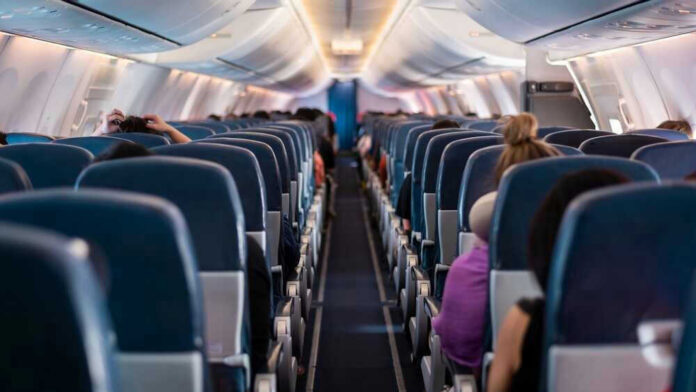
A passenger video and first-hand account describe a sudden drop on the third try, with people screaming and praying as the cabin shook. After those approaches, the crew diverted. The flight circled because of bad weather and later landed safely.
Follow-on coverage identified the diversion airport as Enfidha-Hammamet International Airport. Outlets that aggregated the footage and timeline said the jet landed safely there after breaking off unstable approaches at Tunis-Carthage.
Another outlet matched that picture, citing three unsuccessful attempts and a turn to Enfidha-Hammamet as storms rolled over the capital region. The sequence tracks with common airline practice: try for a safe, stable approach, then divert when the weather does not give you one.
What Passengers Felt Versus What Pilots Did
Cabin video showed a chaotic scene. Overhead bins rattled. People yelled as the plane jolted. One traveler said, “On the third attempt, we started to plummet,” capturing the fear in the moment. That word “plummet” spreads fast online because it feels like the floor went out.
Pilots, however, fly numbers, not feelings. When wind, shear, or turbulence busts a safe profile, they add power and go around. That sharp push can feel like a drop even when it is a controlled escape from a bad setup.
Safety manuals and training back that call. Aviation safety libraries define diversions as standard responses when significant weather blocks a safe landing window. Guidance urges captains to route around thunderstorms and to pick an alternate airport when storm cells crowd an approach path.
A smart diversion is not defeat. It is proof the crew kept their priorities straight: protect the lives on board, protect the airplane, and live to fly the schedule another day.
Airline passengers rocked by turbulence during descent: 'We started to plummet' https://t.co/MWXVUYzSg5
— FOX Business (@FoxBusiness) September 13, 2026
Why Three Approaches Can Still Be Conservative
Three approaches can sound like roulette to non-pilots. In practice, it can be a measured attempt to catch a safe gap. Weather shifts minute by minute. Controllers report winds. Pilots brief the latest data, set targets, and try again if the setup looks better.
The moment the approach gets unstable, they go around. Safety magazines hammer the same lesson again and again: don’t press a bad approach; divert when conditions don’t line up. That is exactly what happened here based on the reporting chain.
Bad weather also pulls in other limits. Thunderstorms and wind shear can force higher approach speeds, longer landing distances, and bigger margins.
If holding and re-trying eats into fuel reserves, the diversion becomes non-negotiable. Diversion best practices make this simple: if you cannot keep safe spacing from storm cells and a stabilized path to the runway, you leave the area and land where the weather meets the rules.
Sorting Drama From Discipline
Outlets shared storm footage and intense cabin audio because it grabs eyes. That does not mean the crew lost control. Reports point to weather as the driver, not a mechanical fault.
As a rule, this crew checked those boxes. They protected their passengers, respected hard limits, and took the longer way home when the short way turned risky. That is discipline, not drama.
TURBULENT LANDING 🛬: Passengers were heard screaming as severe turbulence rattled a Turkish Airlines flight from Istanbul to Tunisia on Thursday. The flight was bound for Tunis-Carthage International Airport but was diverted to nearby Enfidha-Hammamet International Airport due… pic.twitter.com/Ri61fFixWs
— FOX Weather (@foxweather) September 15, 2026
One passenger’s fear can be true and the crew’s judgment can be right at the same time. The safest landing is the one you do not force. The public often hears “failed landing” when they should hear “aborted landing for safety.” The term “go-around” lacks sizzle, but it saves lives.
On this flight, the pattern is clear across reports: unstable weather, repeated go-arounds, then a safe diversion and landing. That is the system working, even when it feels terrifying in row 23.
Sources:
foxbusiness.com, nypost.com, mirror.co.uk, youtube.com, aljazeera.com