
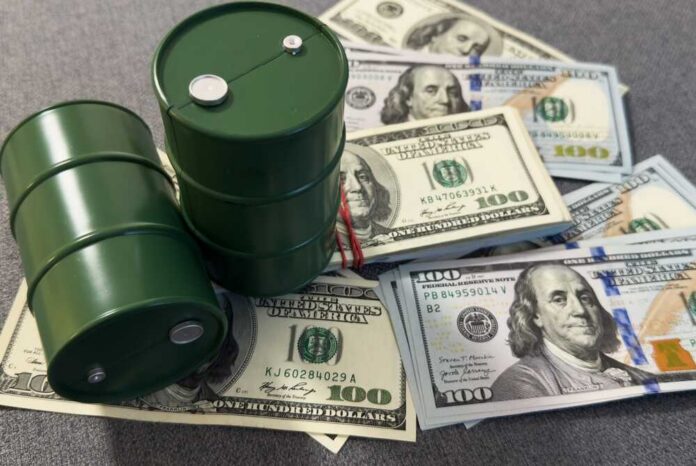
War in Iran turned American gas stations into pain points and turned ExxonMobil and Chevron into targets of President Trump’s anger.
Story Snapshot
- President Trump says ExxonMobil and Chevron made “too much money” from war-fueled oil prices and he “doesn’t like it.”
- Both companies reported record second-quarter profits as crude prices jumped after the Iran war disrupted supply.
- Trump demands that Big Oil “give some of that back” through lower fuel prices for drivers.
- This clash shows the tension between free markets, wartime windfalls, and conservative calls for basic fairness.
Trump Draws A Line Between Wartime Profits And Pump-Price Pain
President Trump did not talk like a quiet ally of Big Oil when he met reporters at the White House on August 3. He said ExxonMobil and Chevron made “too much money” off the spike in crude prices during the Iran conflict and added bluntly, “I don’t like it.”
The same period saw American gasoline prices jump more than a third since the war began, while drivers felt squeezed and oil majors enjoyed their strongest quarter in years. That contrast set up a rare public clash between a conservative president and two flagship energy giants.
President Trump says that despite high oil prices, companies like Chevron and Exxon Mobil are making "too much money," amid the U.S. — Iran war: "I don't like it… They ought to give some of that back to the public." pic.twitter.com/pcYg3BlsRf
— CSPAN (@cspan) August 3, 2026
Trump tied his criticism directly to the shortage created when war in Iran disrupted shipments through key waterways. He said the companies were “making too much money based on a shortage” and warned they should “give some of that back to the public” by cutting retail fuel prices.
For a president often praised as pro-business, the language sounded less like country club talk and more like a neighborhood father staring at a painful gas receipt. His message was simple enough for any commuter: war made prices jump, and someone at the top cashed in.
How The Iran War Turned Into A $26.5 Billion Oil Windfall
The raw numbers behind Trump’s anger read like a Wall Street wish list. In the quarter covering the first full stretch of the Iran war, Chevron’s net income soared to about $12 billion, nearly four times the $2.5 billion it earned a year earlier.
ExxonMobil’s profit more than doubled to roughly $14.5 billion for the same span. Together, the two companies booked around $26.5 billion in net income, a combined windfall that foreign and American outlets described as the best in years for Big Oil.
These profits did not appear in a vacuum. U.S. crude prices averaged close to $95 per barrel between March and June, up from around $66 before the conflict. War in Iran and near-closure of the Strait of Hormuz squeezed global supply, and futures traders pushed prices sharply higher.
Upstream oil producers like ExxonMobil and Chevron earned more on every barrel pumped, while refining margins also widened. From a markets view, this looked like a textbook supply shock.
Free Market Rhetoric Meets Kitchen-Table Conservatism
Trump framed his complaint in language that many conservatives understand well. He said he is “a big free enterprise guy” but insisted that these companies crossed a line by making so much money from a crisis that ordinary Americans did not choose.
That view fits a long-running instinct: markets should reward risk and work, not turn national emergencies into unchecked cash machines.
Oil executives and many analysts answer that they did not set global prices. They point out that oil trades on world markets, that futures spikes drive revenue, and that shareholders expect returns after years of weak commodity prices. Those claims are technically correct and matter for any serious debate.
Yet numbers on a trading screen do not erase the political reality President Trump responded to: American families saw pump prices leap by double digits while hearing that ExxonMobil and Chevron had just posted historic earnings. A free market can coexist with moral pressure; Trump leaned on the latter without proposing an immediate new tax or regulator.
The Long Shadow Of The Windfall Profits Debate
Trump’s comments dropped into a familiar but explosive pattern. During wars, embargoes, or supply shocks, oil prices tend to rise fast, and company earnings spike just as fast. Politicians then accuse firms of “profiting from pain,” while executives claim they simply ride the market and invest the gains.
In earlier conflicts, Congress floated windfall profit taxes, but many warned such moves would hurt investment and push supply even lower. The same arguments echo across decades whenever energy becomes the flash point.
🇺🇸⛽ BREAKING NEWS: U.S. gasoline prices have surged over 37% since the Iran war began in late February , with the national average reaching approximately $4.10 per gallon — a jump from around $2.98 before the conflict .
🏛️💰 President Trump has publicly condemned ExxonMobil… pic.twitter.com/9YzptTSssE
— The World Correspondent (@TheWorldCorresp) August 4, 2026
Today’s clash adds a twist. The criticism comes not from a left-wing senator but from President Trump, who launched the Iran war and who once said, “We make a lot of money” when oil prices rose. Now he sees that “we” split in two camps: corporate balance sheets on one side, middle-class drivers on the other.
His demand that ExxonMobil and Chevron “better cut the retail price” channels a conservative belief that powerful companies owe basic fairness to the nation that defends their assets. Whether boardrooms listen will shape the next chapter in this uneasy marriage of war, oil, and American wallets.
Sources:
thenationalnews.com, finance.yahoo.com, barrons.com, aol.com, en.sedaily.com, biz.chosun.com, cnbc.com, nypost.com, wionews.com, ca.finance.yahoo.com, wsj.com