

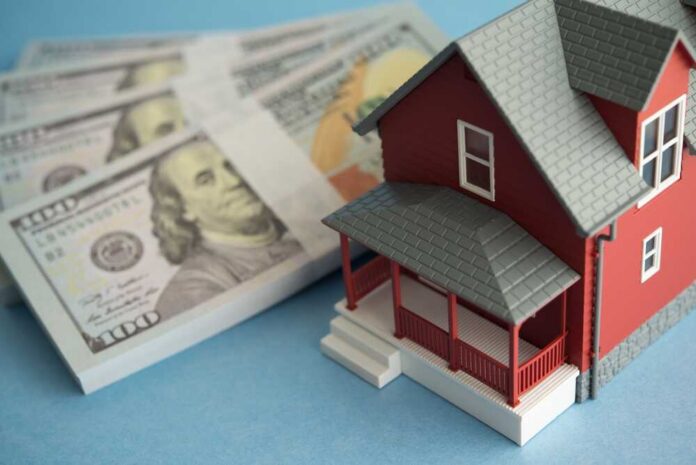
Buying a home now requires an income that nearly half of all American households will never see — and the gap keeps growing.
At a Glance
- Harvard researchers say you now need about $120,000 a year to afford a typical U.S. home, nearly double what was needed in 2020.
- The median home price is now almost five times the median household income — the widest gap ever recorded.
- Nearly 23 million renter households spent more than 30% of their income on housing in 2024, with 12 million paying over half their income just to keep a roof overhead.
- Home sales have hit 30-year lows, construction is down, and household formation has declined for four straight years.
The Income Bar Has Nearly Doubled in Five Years
Harvard University’s Joint Center for Housing Studies released its “State of the Nation’s Housing 2026” report on June 17, 2026. The headline number is brutal. A household needs roughly $120,000 a year to afford a median-priced home today.
Back in 2019, a family earning around $75,000 could afford about half of all homes on the market. Now that same income gets you access to less than a quarter of listings. The math stopped working for middle-class buyers, and it happened fast.[2]
Income required to afford a median-priced home has almost doubled since 2020, report finds https://t.co/Q3DcSs9wXP pic.twitter.com/3lyJaHuJ15
— New York Post (@nypost) June 19, 2026
With mortgage rates holding above 6%, the monthly payment on a median-priced home hit $3,100 in the fourth quarter of 2025.[5] That single number explains why home sales are at their lowest point in 30 years. It is not that people stopped wanting homes.
They simply cannot get there from here on a normal American paycheck. The Federal Reserve’s own survey found that 49% of renters say they cannot afford the monthly mortgage payment on a home they would want to buy.[20]
The Price-to-Income Gap Has Never Been This Wide
The median existing single-family home now costs nearly five times the median household income.[2]
That ratio has never been higher. To put it in plain terms: if your family earns the typical American income, you would need to save every dollar you earn for five full years — with zero spending on food, gas, taxes, or anything else — just to cover the purchase price.
The Federal Reserve Bank of St. Louis confirmed the long-term trend, finding that home prices rose about 207% in nominal terms from 2000 to 2024, while incomes grew only about 155%.[15]
The affordability pain is not the same everywhere, and that context matters. Harvard’s report found that the income required to afford a median-priced home exceeded $100,000 in 169 of the nation’s 387 metro areas in 2025, up from just 31 metros a few years prior.[1]
So while the national headline is stark, buyers in Boise face a very different market than buyers in Buffalo. The crisis is real, but it is not uniform — and policy responses that ignore local conditions will miss the mark.
Renters Are Getting Crushed Even as Rents Soften
Renters might expect relief as the rental market cools slightly. They are not getting it. A record 22.7 million renter households were cost-burdened in 2024, meaning they spent more than 30% of their income on rent and utilities.[7]
Over 12 million of those households paid more than half their income on housing alone.[2] Renter households earning less than $30,000 a year had just $210 left over each month after paying housing costs — down 60% from what that same group had available in 2001.[11] That is not a budget. That is a cliff edge.
A new Harvard housing report finds high home prices, mortgage rates and affordability challenges are slowing household growth and keeping the U.S. housing market subdued, with many young adults delaying homeownership and even forming their own households.https://t.co/FSKxlbzuSe
— WLOS (@WLOS_13) June 21, 2026
The pain is spreading up the income ladder too. Harvard researchers noted growing cost burdens among renters earning between $45,000 and $75,000 — people who would have been considered financially stable renters just a decade ago.[6]
Meanwhile, the number of rental units priced below $1,400 per month dropped by 9.3 million units between 2014 and 2024.[11] The affordable units are disappearing faster than anyone is building new ones.
Supply Is the Core Problem, and Government Has Made It Worse
Every credible research source points to the same root cause: not enough homes were built for decades, and the homes that exist are increasingly priced out of reach for lower earners.
The National Association of Realtors found that a household earning $50,000 can afford only 8.7% of current listings.[17] The National Low Income Housing Coalition estimates a national shortage of 7.2 million rental homes affordable to very low-income renters.[18]
That is not a rounding error. That is a structural failure built up over generations of zoning laws, permitting delays, and regulatory costs that make it nearly impossible to build cheap homes.
Harvard’s researchers argue that only the federal government has the scale to close this gap, and that federal housing assistance currently reaches only a fraction of those who qualify.[3]
That argument deserves scrutiny. Federal programs have a long track record of creating dependency without solving the underlying supply problem.
The stronger case is that cutting the regulatory red tape strangling home builders would do more lasting good than expanding subsidy programs that treat symptoms while the disease keeps spreading.
Building more homes of all types, in more places, with fewer government barriers, is the one solution that does not require a permanent funding line in the federal budget.
Sources:
[1] Web – Income needed to afford a median-priced home has nearly doubled since …
[2] Web – [PDF] The State of the Nation’s Housing 2026
[3] Web – Housing market ‘subdued,’ as household growth held back by …
[5] Web – Harvard’s 2026 Rental Housing Report Points to a Softer Market with …
[6] Web – Ten Takeaways from the 2026 State of the Nation’s Housing
[7] Web – New Report Finds Cooling Rental Markets, But Affordability Crisis …
[11] Web – Housing Affordability – Joint Center for Housing Studies
[15] Web – Home Affordability In ‘Holding Pattern’ As Housing Costs Outpace …
[17] Web – [PDF] Housing Affordability in the United States: Trends, …
[18] Web – Housing Affordability and Supply
[20] Web – Digging Out of the U.S. Housing Affordability Crisis