
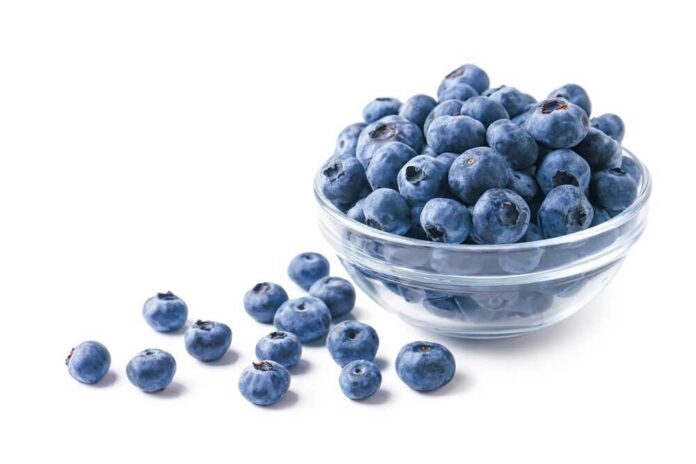
A Florida family says a bag of organic blueberries from Publix ended in a funeral instead of a smoothie.
Story Snapshot
- A Pinellas County lawsuit says Karla Mullins died after eating GreenWise Organic frozen blueberries from Publix.
- The berries were tied to an E. coli O145:H28 outbreak, prompting a Class I recall of all lots.
- Federal health tallies during the outbreak reported illnesses and hospitalizations but listed no deaths, a gap the lawsuit now challenges.
- The suit names Publix, distributor Quirch Foods, and Chilean grower Frutas y Hortalizas del Sur S.A. in the supply chain.
What The Lawsuit Claims Happened
Richard Mullins filed suit in Pinellas County, saying his wife Karla ate GreenWise Organic frozen blueberries bought at Publix and later died. He also claims their son, Spencer, got sick after eating the same berries.
The complaint points to a supply chain running from Publix back to distributor Quirch Foods and then to Frutas y Hortalizas del Sur S.A., a Chilean grower and harvester named as the source of the fruit.
Florida woman died after eating E coli-tainted frozen blueberries from Publix, lawsuit alleges https://t.co/nb0NyIfwEf
— FOX Business (@FoxBusiness) September 23, 2026
Publix pulled the specific product first. The recall covered 10-ounce GreenWise Organic frozen blueberries with lot code 60401 and a best-by date of February 9, 2028, sold across eight states.
Within weeks, Publix widened the recall to cover every lot of its GreenWise Organic frozen blueberries and mixed berries, a sign the company could not pin the contamination to one narrow batch.
How Health Agencies Tracked The Outbreak
The Centers for Disease Control and Prevention (CDC) and the Food and Drug Administration (FDA) opened a joint investigation into E. coli O145:H28, a strain that produces Shiga toxin and can cause severe kidney damage.
Publix tested its own GreenWise blueberry samples, and one came back positive for the exact outbreak strain, giving investigators lab-level proof the product carried the bacteria.
Case counts grew as the investigation continued. Early reporting cited 12 confirmed illnesses linked to the berries, and later federal updates raised that number to 17 people sickened across Florida and Georgia, with six hospitalized. The CDC formally declared the outbreak over on September 21, 2026, after cases stopped appearing.
The Gap Between Recall Data And The Death Claim
Here is where the story gets complicated, and where a careful reader should pay attention. Multiple federal updates during the outbreak, including reporting tied to the CDC’s own case counts, stated no deaths had been reported among the confirmed illnesses.
That detail matters because it does not automatically disprove the lawsuit, but it does mean the death allegation currently rests on the family’s civil complaint rather than on a line item in the government’s official outbreak tally.
That is not unusual in food-safety litigation. Recalls and outbreak investigations prove a product carried a dangerous pathogen and prove a group of people got sick from it.
They rarely settle, on their own, whether one specific person’s death came from that exposure instead of some other illness or condition.
Courts exist precisely to sort out that kind of individual causation question, using medical records, autopsy findings, and expert testimony the public has not yet seen.
Why The Supply Chain Details Matter
Naming Quirch Foods and the Chilean grower in the lawsuit does more than spread blame around. It signals the family’s legal team plans to argue the contamination happened somewhere upstream of the Publix store shelf, not inside the store itself.
Chilean import screening for frozen berries has already drawn scrutiny in past outbreaks tied to imported produce, which gives this argument some real-world footing beyond a single bad batch.
For consumers, the practical lesson is simple and worth repeating: freezing does not kill E. coli. A bag sitting untouched in a home freezer since last winter can still carry live bacteria months later.
Anyone holding GreenWise Organic frozen blueberries or mixed berries with the recalled lot codes should check FDA and Publix recall notices and throw the product out rather than risk it.
What Comes Next In Court
The Pinellas County case will likely hinge on records the public has not yet seen: hospital charts, toxicology results, and whether lab testing on the deceased or her son matched the outbreak strain genetically.
Publix, Quirch Foods, and the Chilean supplier have not publicly disputed the contamination findings themselves, but none appear to have responded yet to the specific death and injury allegations in the complaint. That silence will not last through discovery.
Families deserve straight answers from the companies that put food on grocery shelves, and this case will test whether the recall record alone can carry a wrongful-death claim across the finish line.
Until medical proof surfaces publicly, the fairest read is that the product-contamination facts are well established, while the individual causation claim remains a serious, pending allegation rather than a settled fact.
Sources:
foxbusiness.com, goodhousekeeping.com, wsbtv.com, fda.gov, local3news.com