

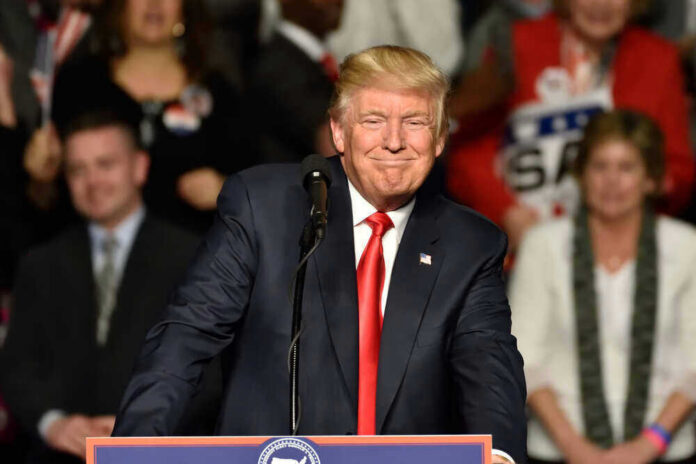
America’s most powerful CEOs just put their names on a one-minute sales pitch for President Trump’s growth playbook.
Story Snapshot
- Treasury prepared a short video of top executives praising pro-business policy moves.
- Jamie Dimon and David Solomon highlighted deregulation and growth-focused steps.
- Clips were recorded during the G20 ministerial in Asheville, North Carolina.
- The message framed lower red tape and capital freedom as safer and stronger for business.
What Happened And Why CEOs Are Leaning In
Treasury Department planned a one-minute video featuring top executives praising the administration’s growth vision. The clips came from interviews at the G20 ministerial in Asheville, North Carolina, and centered on deregulation, tax clarity, and faster approvals.
Jamie Dimon used a pointed image: years of nonstop rules had built up “like barnacles on a boat,” and trimming them could free capital and liquidity while making the system safer. David Solomon echoed the pro-growth theme.
Jamie Dimon, David Solomon, other top execs praise Trump admin's pro-business policies https://t.co/jFKPnwWFhX
— FOX Business (@FoxBusiness) September 14, 2026
The video’s timing matters. Markets live on confidence, cost of capital, and clear rules. When the nation’s largest banks and blue-chip firms say policy is unlocking capital, boards listen and hiring plans move. A single minute of strong endorsements can do more than a thick report.
It tells investors, employees, and local leaders that there is room for expansion. That message, from names who sign off on billion-dollar bets, lands with weight.
The Policies CEOs Say Move The Needle
Executives pointed to fewer duplicative rules, streamlined oversight, and tax certainty as the core drivers. Deregulation gets caricatured as a free-for-all, but the pitch here is surgical: cut overlapping forms, align exam standards, and speed decisions so capital does not sit idle.
That helps banks lend faster and manufacturers break ground sooner. Dimon’s claim that system safety can improve even as red tape falls rests on smarter, not looser, supervision paired with stronger capital planning.
David Solomon has framed tariffs and trade as areas where companies always prefer lower costs, yet he still credits the broader push to make it easier to do business in America. That view matches a simple ledger. If compliance time and uncertainty fall, return on investment rises.
If approvals speed up, projects start sooner. The net effect shows up in payrolls, orders, and durable capital spending—exactly where Main Street feels national policy.
Why This Chorus Matters Beyond One News Cycle
Chief executives often line up with Republican-aligned agendas on taxes and regulation, a pattern long shown in research and reporting. That does not make every praise clip political theater. It reflects incentives. Companies face real costs from delay and rule sprawl, and elected leaders set the field.
When President Trump says “build it here,” and agencies follow with faster, clearer processes, firms that live in heavily regulated lanes respond. The public endorsements signal they see real operational relief, not just a talking point.
Jamie Dimon, David Solomon, other top execs praise Trump admin's pro-business policies https://t.co/qrjnUY0TEY #FoxBusiness
— CallieBenson (@CallieforTrump) September 15, 2026
Americans prize growth, ownership, and accountability. On that score, the CEOs’ case rings true. Growth starts when capital moves, not when it stalls in paperwork. Accountability works best when rules are simple, measured, and enforced consistently, not by volume.
If deregulation focuses on clarity and duplication, not core safety, it can both lower costs and protect the system—Dimon’s core argument. Voters and savers judge by outcomes they can see: more jobs, more plants, and steadier prices.
What To Watch Next: From Words To Groundbreakings
The test now shifts from praise to proof. Watch commercial lending trends and corporate capital plans over the next two quarters. Check permitting timelines on energy, chips, and roads. Track whether midsize firms, not just the giants, report faster turns from agencies.
Watch bank credit standards and small-business hiring. If the thesis holds, you will see earlier shovels, tighter bid-ask spreads on financing, and stronger durable goods orders. If not, this video becomes a footnote instead of a marker.
Sources:
foxbusiness.com, wfae.org, axios.com