

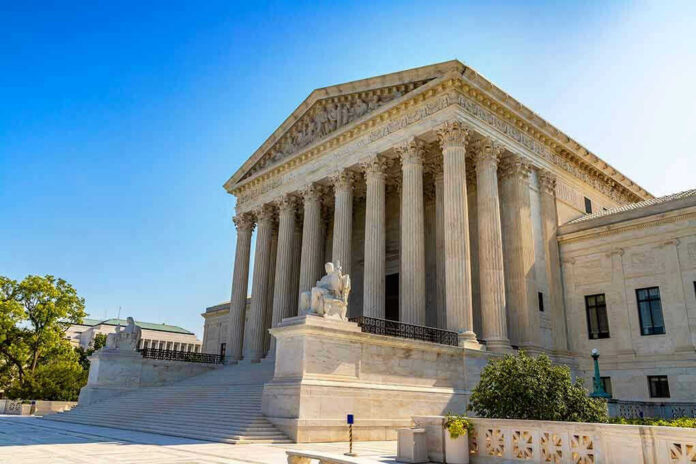
Chief Justice John Roberts let the hammers keep swinging on President Trump’s $400 million White House ballroom—at least for now.
At a Glance
- Roberts allowed construction to continue temporarily while the Supreme Court reviews an emergency request.
- Lower courts said the project needs explicit approval from Congress before it can proceed.
- The administration asked the Supreme Court to pause those rulings during appeals.
- Republicans in Congress are moving a bill to fund and authorize the project outright.
What Roberts Allowed And Why It Matters
Chief Justice Roberts permitted work on the project to continue while the Supreme Court weighs the Trump administration’s emergency bid. That temporary green light does not decide the case. It only preserves the current pace on the ground while the justices consider next steps.
The move signals the Court sees enough legal weight to review the request. It also keeps a major presidential building plan from freezing in place during peak legal maneuvering, which can take weeks or months.
Supreme Court chief justice allows work on Trump’s $400M White House ballroom to continue for nowhttps://t.co/4HBmPx7mKM
— Phil Stripling (@civex) August 21, 2026
The Justice Department framed the ask as a standard interim step. The administration wants to avoid expensive stop-and-start delays while it fights the lower court orders. Those orders put the brakes on the ballroom unless Congress blesses it first.
The administration argues it has the authority to continue while it appeals. The Associated Press and the British Broadcasting Corporation reported the filing and its timing, which came days after an appeals court setback.
What Lower Courts Have Already Said
A federal judge first ordered the project paused, finding that the President could not demolish the East Wing and build a massive new venue without Congress approving it. A federal appeals court agreed and kept the pause in place.
The rulings leaned on the idea that Congress controls federal property and that big structural changes at the White House need explicit legislative approval. Those opinions did not reject future authorization. They said the administration must get it before moving ahead at full tilt.
The National Trust for Historic Preservation led the lawsuit. The group argues no law grants the President a unilateral right to reshape the White House at this scale.
It pressed for a stop to construction until Congress speaks, and told the Supreme Court that no constitutional or statutory authority covers this build without express approval.
On one point, the Trust is on solid ground: courts often require Congress to sign off on large, permanent changes to federal property. That track record makes the Trust’s claim aligned with common sense checks and balances.
Congress Steps Toward A Legislative Fix
Senate Republicans answered the court’s call for clarity with a bill to fund and authorize the ballroom. Senator Lindsey Graham, now steering the effort, pitched it as a security upgrade and a functional need for large gatherings.
Outlets reported that the measure would direct $400 million to the project and fold in hardened features. If Congress passes this bill and the President signs it, the main legal fight over authority would end as a matter of law.
This path reflects a basic constitutional order: Congress holds the purse and sets the rules for federal buildings. Presidents execute those rules. When presidents act first and seek approval later, lawsuits fly. The wiser route is to get Congress on record.
If lawmakers see the ballroom as safety, not vanity, they can own the decision and set guardrails—size, use, and security standards included.
Security Claims And The Scale Question
The administration has argued that modern threats demand a secure, flexible space. The Trust replies that need does not erase the law or the required public review for major federal projects. A federal judge also signaled skepticism that the entire project qualifies as a blanket “national security” necessity.
The point is not that security is fake; it is that the claim must match the scope of the build and the authorities on the books. Law and logic both demand that fit.
Here is the prudential view: if parts of the design harden the complex and protect officials, Congress should say so in plain text. That aligns the mission with the mandate. It also speeds the work by insulating it from more injunctions. Americans do not want critical security work stalled by process fights.
They also do not want presidents to rewrite the nation’s house by impulse. The balance is simple: authorize what is needed, oversee what is built, and publish what taxpayers fund.
What Comes Next At The Court
The Supreme Court will decide whether to keep the project moving during the appeal or to reinstate the pause. That interim ruling will not settle the case. It will, however, guide the pace on the ground.
Meanwhile, Congress can end the legal cloud by passing clear authorization. If that happens, the courtroom drama fades, and construction shifts to compliance and oversight. That is the cleanest exit ramp for everyone involved, including the Court.
Bottom line for those who just want the punchline: Roberts kept the lights on while the justices review the request. Lower courts said Congress must bless the ballroom. Senate Republicans aim to do exactly that. If they succeed, the cranes keep moving—and the Constitution keeps its shape.
Sources:
apnews.com, bbc.com, reuters.com, congress.gov, cnn.com, washingtonexaminer.com, cbsnews.com