

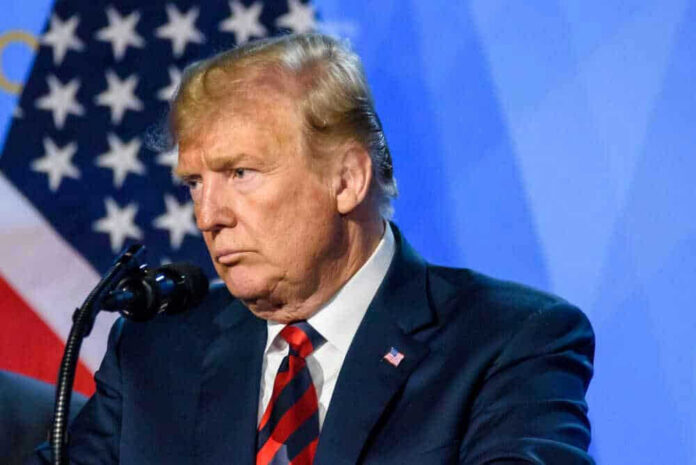
A federal judge said the $100,000 H-1B “fee” was really a tax—and that changed everything.
Story Snapshot
- A federal judge struck down the $100,000 charge on new H-1B visa petitions [1][3].
- The court said the payment worked like a tax, not a fee [1].
- The judge found no clear law from Congress that allowed the charge [1].
- The court voided the policy in full under the Administrative Procedure Act [1][3].
Judge calls the $100,000 charge a tax, not a fee
U.S. District Judge Leo Sorokin ruled that the $100,000 payment on new H-1B petitions functioned as a tax, not a fee, and therefore could not stand without a clear act of Congress [1]. The court focused on substance over labels. A fee defrays service costs.
A tax raises revenue or changes behavior. The record, as reported, showed no link between the $100,000 and the actual cost to process a petition [1]. That made the policy vulnerable the moment the court drew the tax line.
The legal hook matters because the Constitution gives Congress, not the president, the power to tax. Agencies can set fees when Congress tells them to and when the fee fits cost recovery.
The judge saw neither here. If the money mainly punishes or deters filings, it looks like a tax. That framing also undercuts claims that normal agency fee rules apply. The label the administration chose did not control the court’s analysis [1].
Congress did not clearly authorize this charge
The court concluded the administration lacked statutory authority to impose a six-figure payment on each new H-1B petition [1]. The decision emphasized the absence of a clear law that permits a tax-like charge of this size for this purpose.
Immigration law gives the executive branch some leeway on admissions and program rules. It does not grant a blank check to create major revenue streams. Without a clear delegation from Congress, the judge said the policy overstepped [1].
Congress writes the tax laws, and agencies do not invent them. If the executive can add a $100,000 price tag to a lawful petition today, it could price out other legal rights tomorrow.
The line the court drew guards separation of powers and limits backdoor taxes. Even those who want tighter H-1B controls should prefer clear laws passed by elected lawmakers over sweeping executive add-ons [1][3].
Twenty-state lawsuit, thin record, sweeping remedy
A coalition of twenty states challenged the policy and won. Reports say the judge found the administrative record did not give a reasonable, evidence-based explanation for the charge [1].
When an agency cannot show its work, courts often send the policy back. Here, the judge did more. He vacated the policy outright under the Administrative Procedure Act, which means the $100,000 requirement is off the books unless reversed on appeal or reissued under lawful authority [1][3].
🚨 BREAKING NEWS
🇺🇸 Federal Judge Strikes Down $100,000 H-1B Visa Fee
📍 Location: Boston, Massachusetts, USA
📅 Date: June 8, 2026
🕒 Updated: 6:31 PM EDT
A federal judge in Boston has struck down the Trump administration’s proposed $100,000 fee on new H-1B visa applications,… pic.twitter.com/bawjk6izWD— zain abbas (@zaintanju) June 9, 2026
Media accounts describe a clean win for the states: unlawful, vacated, set aside in full [1][3]. The states argued the fee harmed employers, universities, and hospitals that rely on high-skill workers.
The order removes a jarring, six-figure shock to planning and budgets while litigation sorts the limits of executive power. The available reports do not show follow-on steps like a stay or appeal, so durability beyond the district court remains to be seen [1][3].
What this means for employers, workers, and the rulebook
Employers gain near-term certainty. New H-1B petitions no longer carry a six-figure add-on under this policy. Hospitals and tech firms that flagged strain on hiring pipelines get relief [3][4]. Workers avoid a rule that could have priced out legitimate opportunities. The deeper impact lands in the rulebook.
Agencies got a reminder: do not call a tax a fee, and do not skip the proof. If you want to deter demand, ask Congress first, then build an evidence record that fits the law [1][3][4].
Critics of the ruling may argue for broad executive authority over entry and program integrity. A prior report even noted a court reading that the immigration statute used “exceedingly broad” language in a different case [8].
But breadth is not infinity. Courts trim reach when the executive claims power that looks fiscal, not administrative. The safer path for lasting policy is open debate in Congress, a clear statute, and a fee schedule tied to real costs rather than policy goals alone [1][3][8].
The bigger fight: policy by pen or by statute
This case sits in a long tug-of-war. Presidents push fast with orders. States, schools, and employers sue. Judges ask two questions: Did Congress allow this? Did the agency show its work? Outcomes often turn on those, not on polling or headlines.
If a future administration wants to reshape H-1B costs, it can. It must do it the right way: through Congress for taxes, through evidence-based fees for processing, and through clear, public rulemaking that explains every step [3][4].
The headline says a judge voided a Trump policy. The lasting note is simpler and sharper: Call things what they are, follow the statute, and respect the purse power. That is a common sense reading of the Constitution, and the only way policies survive in court.
If lawmakers believe high-skill visas need tougher price signals, they should vote for them. Courts will not bless a tax that sneaks in wearing a fee’s name tag [1][3][4].
Sources:
[3] Web – Trump’s $100K fee for H-1B visas struck down | Higher Ed Dive
[4] Web – Trump admin’s $100K H-1B visa fee policy tossed by federal judge
[8] Web – Trump can order employers to pay extra H-1B fee, court holds