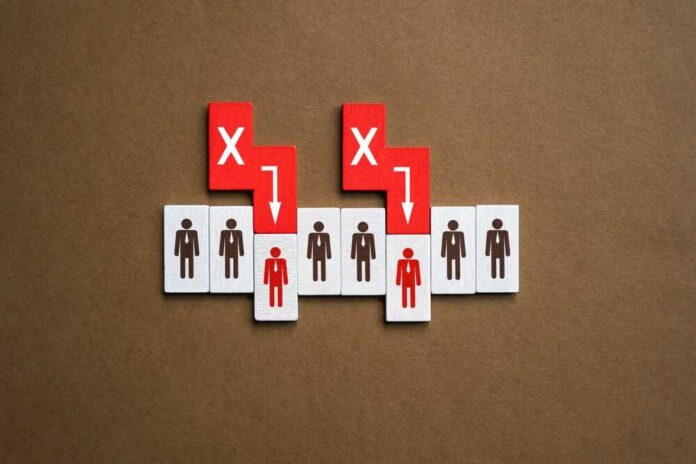
Nearly two out of three federal workers now say they would never sign up for a government job again.
Quick Take
- A National Active and Retired Federal Employees Association survey found almost two-thirds of federal workers would not enter public service again, blaming shrinking job security and benefits.
- The complaints point to the current federal climate, not regret over past career choices.
- New rules under Schedule Policy/Career stripped civil service protections from thousands of workers this year.
- Federal benefits still beat many private-sector packages on paper, showing a gap between real numbers and how workers feel.
A Stark Number From The Front Lines Of Government Work
The National Active and Retired Federal Employees Association surveyed active and retired government employees this past July. Nearly two-thirds said they would not choose public service again if given the chance.
They pointed to eroding job security and shrinking benefits as the reason. Their answers focused on today’s federal climate, not on old regrets about picking a government career in the first place.
Nearly two-thirds of U.S. federal workers said they wouldn't enter public service again, citing eroding job security and benefits, according to a recent poll of active and retired government employees.
https://t.co/9iNojl3MHI— CBS News (@CBSNews) August 3, 2026
That distinction matters. Workers are not saying the government job was a bad idea years ago. They are saying it feels different right now, in 2026, under current conditions.
Anyone who has worked inside a large organization knows the difference between disliking a job and losing faith in the deal that job was supposed to guarantee. That second feeling is harder to reverse.
Real Policy Changes Behind The Frustration
The sentiment did not appear out of nowhere. In June, an executive order created a new job category called Schedule Policy/Career. Nearly 8,000 federal workers learned their civil service protections had been revoked under the new rules.
Civil service protection has long been the main reason people accepted lower private-sector pay for government work. Removing that shield changes the basic bargain for anyone still on the payroll.
The numbers on departures back up the mood. By mid-June, more than 214,000 civil servants had left federal jobs through voluntary and involuntary programs meant to shrink the workforce. That is not a rounding error.
It is a wave large enough to reshape how remaining employees think about their own future stability, whether or not they personally face a layoff notice.
The Benefits Case Still Cuts The Other Way
Here is where the story gets more complicated than a single scary headline. The Congressional Budget Office found that in 2022, federal benefits, including retirement pay and paid leave, still cost more and delivered more value than private-sector benefits for most education levels.
On paper, the federal benefits package has not collapsed. It remains one of the strongest in the country, including pension, health coverage, and leave. That gap between hard numbers and gut feeling is not unusual.
Pew Research found that most American workers overall still report at least a fair amount of job security, with sentiment barely changed from two years earlier.
Feelings about security often move faster than the underlying facts. Federal workers may be reacting to headlines about cuts and policy fights as much as to their own paycheck or benefits statement.
Morale Numbers Point The Same Direction As The Survey
Independent morale tracking backs up the discontent, even if it does not prove benefits themselves have shrunk. A Partnership for Public Service review of roughly 11,000 federal employees found governmentwide engagement scores sitting at just 32 out of 100, with 58 percent saying their engagement had worsened since 2024. Only 7.5 percent agreed that political leaders at their agencies inspired confidence, a strikingly low number for any workplace.
Brookings research from past years already showed many federal workers took government jobs mainly for security and steady pay, not idealism. That makes the current mood especially damaging.
If security was the whole reason someone joined, and security now feels shaky, the entire motivation for staying starts to crumble. This is not simply workers being ungrateful. It is a workforce reacting to a real shift in the terms they signed up under.
What This Means Going Forward
Those who back a leaner, more accountable federal government should not dismiss these numbers as mere grumbling. A government that cannot recruit and retain skilled workers becomes less efficient, not more.
The goal of reform should be a workforce held to real performance standards, not one so demoralized that competent people quit and only the most risk-averse stay behind. Cutting bloat and protecting a functioning civil service are not opposing goals.
Nearly two-thirds of U.S. federal workers said they wouldn't enter public service again, citing eroding job security and benefits, according to a recent poll of active and retired government employees.
https://t.co/9iNojl3MHI— CBS News (@CBSNews) August 3, 2026
The honest reading is this: federal benefits remain strong by the numbers, but the sense of a stable career has taken a real hit under new policies that strip protections and drive mass departures. Both things are true at once. Fixing the perception problem will take more than a pay chart. It will take proof that the rules of the job will not keep changing every few months.
Sources:
opm.gov, pewresearch.org, brookings.edu, cbo.gov, govexec.com, youtube.com, bls.gov