
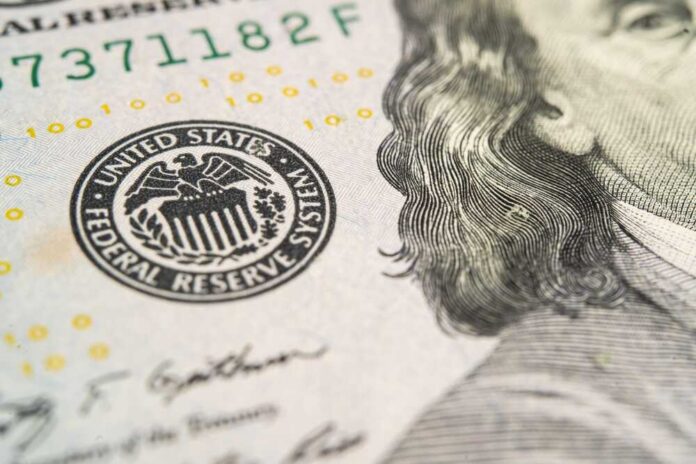
The most powerful economic job in America just changed hands, and the man holding it says he intends to reform the institution from the inside out.
Watch the videos below this post
Story Snapshot
- Kevin Warsh was sworn in as the 17th Chairman of the Federal Reserve at a White House ceremony, replacing Jerome Powell.
- Warsh pledged to lead a reform-oriented Federal Reserve focused on price stability, maximum employment, and institutional independence.
- President Trump publicly told Warsh to “be independent” at the swearing-in, an unusual public directive that underscores the tension surrounding the appointment.
- Warsh is expected to push for structural changes at the Fed, including reducing its massive balance sheet, currently estimated at nearly $6.7 trillion.
A New Era Begins at the Federal Reserve
Kevin Warsh took the oath of office as Federal Reserve chair at a White House ceremony on May 22, 2026, becoming the 17th person to lead the central bank. [1]
The ceremony itself was notable for its setting. Fed chairs are not typically sworn in at the White House, and the optics of a president presiding over the moment signaled that this transition is anything but routine. Warsh stepped into one of the most consequential economic roles on earth at a moment of genuine uncertainty.
Jerome Powell’s tenure was defined by the post-pandemic inflation surge, the most aggressive rate-hiking cycle in four decades, and a running public feud with President Trump over the pace of rate cuts. Warsh now inherits an institution that has weathered enormous political pressure while trying to preserve its credibility.
His predecessor leaves behind a Fed that is still unwinding its pandemic-era balance sheet and navigating stubborn inflation pressures that have pushed mortgage rates to a nine-month high.
BREAKING: Kevin Warsh is officially sworn in as the new Chair of the Federal Reserve pic.twitter.com/oR2p1GtDpT
— Hedgeye (@Hedgeye) May 22, 2026
What Warsh Actually Said After Taking the Oath
Warsh did not offer vague pleasantries after being sworn in. He declared that he would lead a reform-oriented Federal Reserve and reaffirmed the institution’s statutory dual mandate: promoting price stability and maximum employment. [4]
He also told lawmakers during his confirmation process that he would never predetermine interest rates, a direct signal to markets and to the White House that his decisions would follow data, not political calendars. [1]
These are the right words. Whether the institution backs them up with action is what markets will watch closely.
The reform language is worth taking seriously. Warsh has long been a critic of the Fed’s expanded role in financial markets, particularly its use of large-scale asset purchases as a routine policy tool. Reducing the Fed’s balance sheet is not a minor housekeeping task.
It represents a philosophical shift about how much the central bank should be embedded in the day-to-day functioning of credit markets. Warsh appears to believe the Fed overstepped, and he has the institutional position to act on that belief. [8]
The Independence Question Is Not Going Away
Trump’s public instruction to Warsh to “be independent” is one of the stranger moments in recent Fed history. A president telling a Fed chair to be independent is a bit like a team owner telling a referee to be fair — the instruction itself raises the question of why it needed to be said at all.
To his credit, Warsh has been consistent in his public statements about protecting the Fed’s monetary policy independence. The strength of that commitment will be tested the first time the White House and the data point in different directions.
Featured News of Today:
⚪ Kevin Warsh sworn in as Federal Reserve chair
🔴 Mortgage rates surge to 9‐month high amid market turmoil
🔴 Real wages start to shrink in developed countries
🔴 ECB Should Hike Rates in June, Schnabel Tells Reuters
⚪ CMS finalizes major changes to ACA… pic.twitter.com/JxpuHbVT6z— Lumida Invest (@LumidaEarnings) May 26, 2026
Central bank independence is not a technocratic abstraction. It is the structural feature that allows a Fed chair to raise rates in an election year without being fired, which is exactly the kind of decision that keeps inflation expectations anchored over time.
Warsh’s background as a former Fed governor under Ben Bernanke, combined with his Wall Street experience, suggests he understands the institutional stakes. The question is whether the political environment of 2026 gives him the room to act on that understanding when the pressure is highest.
The Reform Agenda Has Real Substance Behind It
Beyond the balance sheet, Warsh has signaled interest in how the Fed communicates, models inflation, and responds to emerging economic forces, including artificial intelligence as a potential disinflationary driver.
These are not fringe ideas. The 1990s productivity boom genuinely suppressed inflation even as the economy ran hot, and if AI delivers a comparable structural shift, the Fed’s models need to account for it.
A chair willing to question institutional assumptions rather than defend them reflexively is a meaningful change from recent years.
Warsh enters office with market credibility, a reform mandate, and a political environment that will test both. The Fed chair cannot cancel the national debt, cannot single-handedly tame inflation, and cannot make the economy grow faster by sheer force of will.
What the chair can do is set the tone, protect the institution’s independence, and make decisions that prioritize long-term price stability over short-term political comfort. Warsh has said all the right things. The reform era he is promising starts now. [2]
Sources:
[1] Web – Kevin Warsh sworn in as new Fed chair at White House … – CBS News
[2] YouTube – Kevin Warsh Sworn in as New Federal Reserve Chair
[4] YouTube – Kevin Warsh sworn in as Fed chair: ‘I will lead reform …
[8] Web – Kevin Warsh has been sworn in as the 17th Chairman of …