

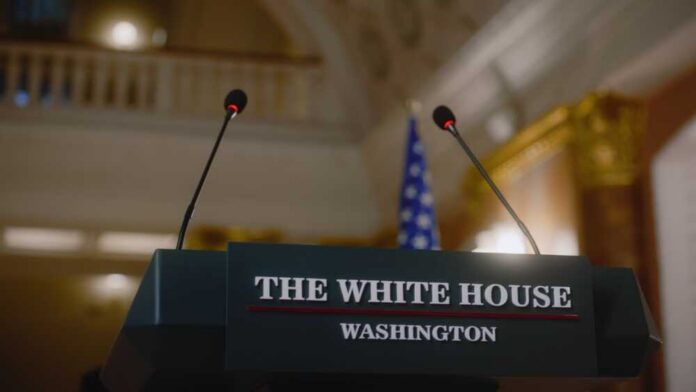
Karoline Leavitt is leaving the White House press podium by month’s end, and the timing tells a bigger story about power, pace, and family.
Story Snapshot
- President Trump said Leavitt will step down by the end of August.
- Leavitt cited her children and family as the reason for her decision.
- No successor was named at the time of the announcement.
- The exit follows her return from maternity leave earlier this summer.
What Was Announced, By Whom, And When
President Trump announced that White House Press Secretary Karoline Leavitt will leave the job by the end of August. He framed the decision as a family choice and praised her service. That same day, Leavitt confirmed the move in her own statement, saying the role’s grind pulled time from her young children.
Coverage also noted what was missing: the name of a successor. The White House had not yet said who will take the lectern after Leavitt’s last day.
That gap does not change the resignation itself. It does signal a live personnel process, which is normal in a fast-moving West Wing. The press operation runs every day, so expect an acting setup or a quick appointment to avoid any lull at briefings.
Why The Role Burns Hot And Turns Over Fast
The press secretary job is a sprint at marathon distance. The person fields reporters, aligns messaging across agencies, and preps statements at all hours. The camera lights never turn off. That pace collides with new parenthood.
Leavitt returned from maternity leave only weeks ago. Her choice echoes a truth most families know: time is the one resource you cannot print, borrow, or spin. Her explanation reads credible because the workload is public and relentless.
California native emerges as possible replacement for White House press secretary Karoline Leavitt https://t.co/XHcys66jCJ pic.twitter.com/wZsi3JB6kG
— New York Post (@nypost) August 12, 2026
Political watchers sometimes rush to find hidden drama in a staff exit. That instinct misses a simpler frame here. Leavitt said she wants to be present for her children. President Trump backed that reason in plain terms.
In politics, people debate everything. But when the facts line up and the people involved speak clearly, common sense says take the yes and move on.
What This Means For The White House Message Machine
Every White House lives by rhythm. The briefing room sets that beat. A veteran deputy, a communications director, or a trusted outside voice can steady the line for a stretch.
The next pick must do three things on day one: keep clarity, keep discipline, and keep it human. Clarity tells voters what happened. Discipline keeps the story tight. Humanity shows respect for the press and for the public that watches from home.
Voters will judge the handoff by whether briefings stay focused, facts land first, and the team avoids drama. That is not about spin. It is about order and priorities. Say what you know, skip what you don’t, and be ready to correct fast when new facts arrive.
The Stakes In The Next 30 Days
The near-term checklist is simple. First, name an acting or permanent press secretary. Second, align the staff so message prep, fact sheets, and media booking run clean.
Third, keep policy leads close to the podium to answer complex questions without delay. That tight loop matters more than any single personality. Systems beat star power when the calendar gets heavy and the news cycle shoots curveballs.
Leavitt exits as one of the youngest people to hold the job, and she held it through a hard year. The record shows a clear, uncontested resignation and a clear reason.
The open question is not why she is leaving. It is how the White House locks in the next voice without a hitch. The public will not grade the résumé. They will grade the briefings. Hit that mark, and the transition becomes a footnote rather than a headline.
Sources:
apnews.com, cnbc.com, youtube.com